Tag: coffee beans

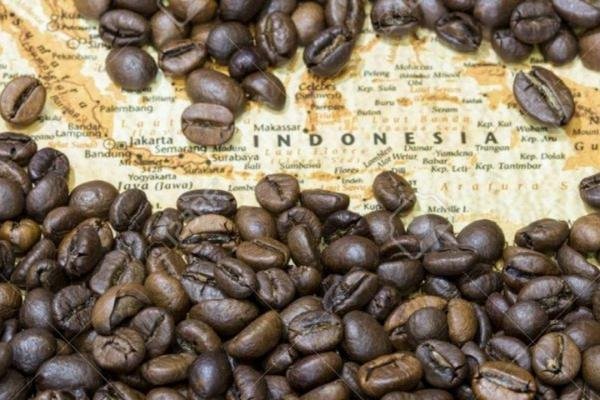
Coffee holds a special place in the hearts of many worldwide, and Indonesia stands out as a key player in the global coffee industry. Renowned for its diverse flavors, unique processing methods, and rich cultural heritage, Indonesian coffee has carved a niche in the international market. This comprehensive guide delves into the essence of Indonesian coffee beans, exploring their origins, varieties, cultivation methods, processing techniques, flavor profiles, economic significance, and the cultural impact of this beloved beverage.

1. Origins and Varieties

1.1 Indonesia’s Coffee History
Indonesia’s coffee journey dates back to the late 1600s when the Dutch began cultivating coffee in the archipelago. Today, Indonesia is the fourth-largest coffee producer globally, renowned for its high-quality beans.

1.2 Main Varieties
-Sumatra – Known for its full-bodied, earthy flavors with low acidity. Mandheling, Gayo, and Lintong are popular Sumatran coffee varieties.
-Java – Originating from the island of Java, it offers a clean, balanced cup with a medium body and a slightly sweet taste.
-Bali – Exhibits a smooth, vibrant profile with hints of chocolate and citrus.
-Sulawesi (Celebes) – Renowned for its rich, syrupy body and notes of spice and cocoa.
-Flores – Grown in volcanic soil, it presents a unique blend of sweetness and a slightly smoky aroma.

2. Cultivation and Processing

2.1 Growing Regions
-Altitude: Indonesian coffee is often grown at high altitudes, contributing to its unique flavor profile.
-Regions: Aceh, Sulawesi, Java, Bali, and Flores are key coffee-producing regions.

2.2 Cultivation Practices
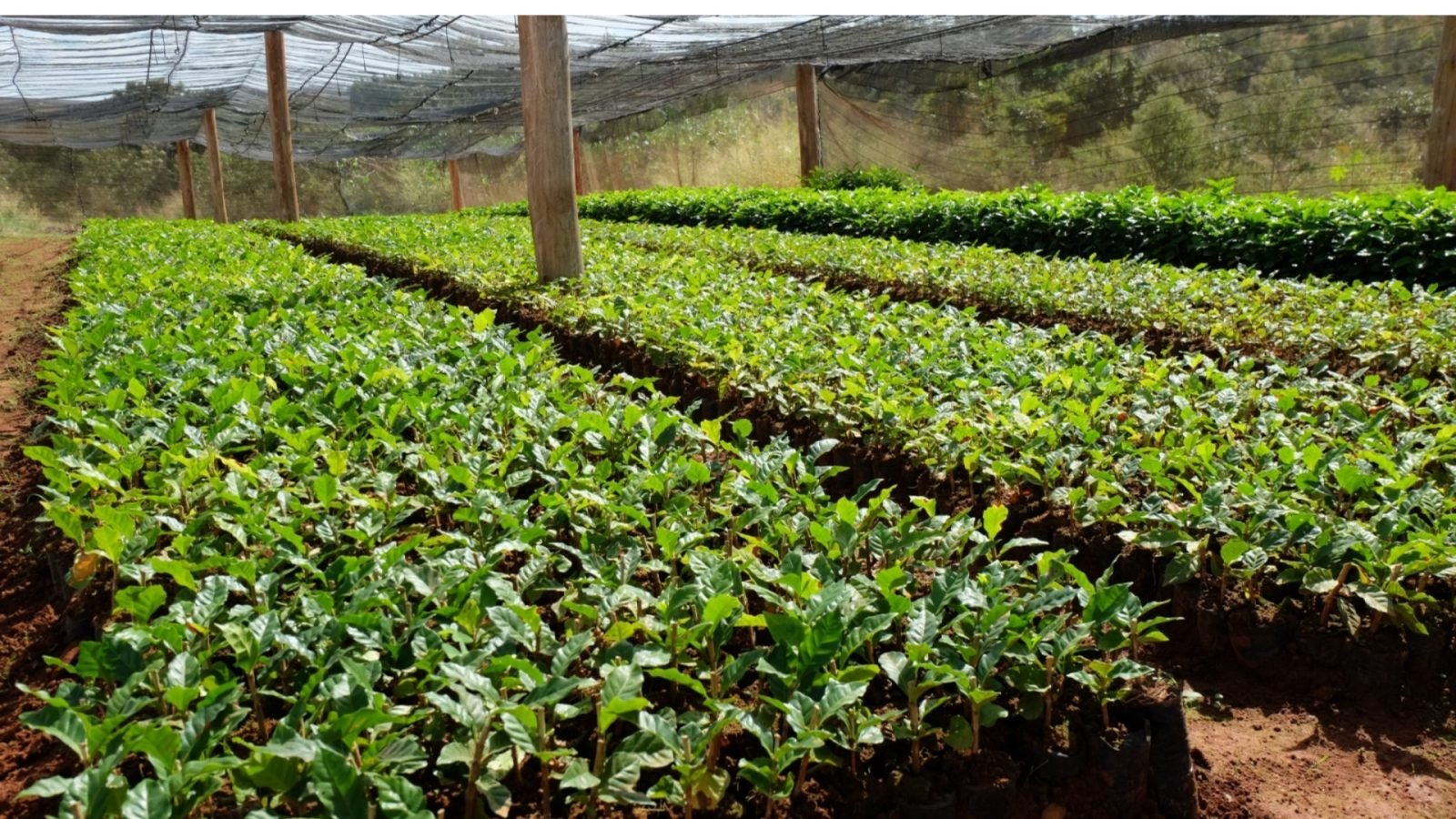
-Traditional Methods: Many farmers use traditional methods of cultivation, with shade-grown coffee being a common practice.
-Organic Farming: Some regions emphasize organic farming practices, ensuring environmentally friendly and sustainable coffee production.

2.3 Processing Techniques
-Wet-Hulling (Giling Basah): This uniquely Indonesian method involves drying the beans partially, resulting in distinct flavors and a hallmark of Sumatran coffee.
-Dry Processing: Used in regions like Java and Bali, where beans are sun-dried with their fruit pulp intact, adding complexity to the cup profile.

3. Flavor Profile and Characteristics

3.1 Aroma and Taste Notes
-Sumatran Coffee: Earthy, herbal, with hints of chocolate and a syrupy body.
-Javanese Coffee: Medium-bodied, with a clean taste and subtle acidity.
-Balinese Coffee: Smooth, with notes of citrus and chocolate.
-Sulawesi Coffee: Rich and full-bodied, often showcasing spice and cocoa undertones.
-Flores Coffee: Sweetness accompanied by a slightly smoky aroma.

4. Economic Significance and Cultural Impact

4.1 Economic Importance
-Export Industry: Indonesian coffee is a significant export commodity, contributing to the country’s economy.
-Employment: Coffee cultivation provides livelihoods for many Indonesians, particularly in rural areas.

4.2 Cultural Influence
-Coffee Ceremonies: Coffee plays a central role in Indonesian social gatherings, with traditional ceremonies celebrating its preparation and consumption.
-Cultural Identity: Coffee is deeply intertwined with Indonesia’s cultural fabric, reflecting in art, literature, and rituals.

5. Sustainability and Challenges

5.1 Sustainability Efforts
-Certifications: Some farms are Rainforest Alliance or Fair Trade certified, promoting sustainable practices and fair wages.
-Conservation: Efforts to conserve biodiversity and protect ecosystems are gaining momentum.

5.2 Challenges
-Climate Change: Changing weather patterns and rising temperatures pose threats to coffee production.
-Market Competition: Balancing global demand while maintaining quality and authenticity presents challenges for Indonesian coffee growers.

—

Conclusion

Indonesian coffee beans represent more than just a beverage; they encapsulate centuries of history, culture, and craftsmanship. Their distinctive flavors, rooted in diverse regions and unique processing methods, make them stand out in the global coffee landscape. Despite challenges, the Indonesian coffee industry continues to evolve, emphasizing sustainability and quality while maintaining its cultural significance. For coffee enthusiasts, exploring the nuanced profiles of Sumatran, Javanese, Balinese, Sulawesi, and Floresian coffee offers an enriching journey into the world of coffee.

  • Exploring the Regions Where Coffee Beans Grow Best

    Exploring the Regions Where Coffee Beans Grow Best

    Where Coffee Beans Grown

    As a coffee snob who’s always curious about your caffeine, you are certainly wondering where do coffee beans come from or how to produce coffee beans with the best quality. Check out this article to get more information about where coffee beans grow and what conditions enable a coffee producer to produce high-quality coffee. 

    What Plants Grow Coffee Beans?

    Plants Grow Coffee Beans
    Plants Grow Coffee Beans

    The types of plants that produce coffee beans are generally divided into two. The first genus is Robusta or widely known as Coffea canephora. 75-80 percent of the world’s coffee production comes from this coffee plant species. At the same time, the second genus that is popular in the world is Arabica coffee. Both coffee plants can grow up to 10 meters, but most coffee producers keep their coffee plants shorter to make harvesting easier.

    Coffee Beans Growing on Plants or Trees? 

    Coffee Beans Growing on Plants or Trees
    Plants or Tree?

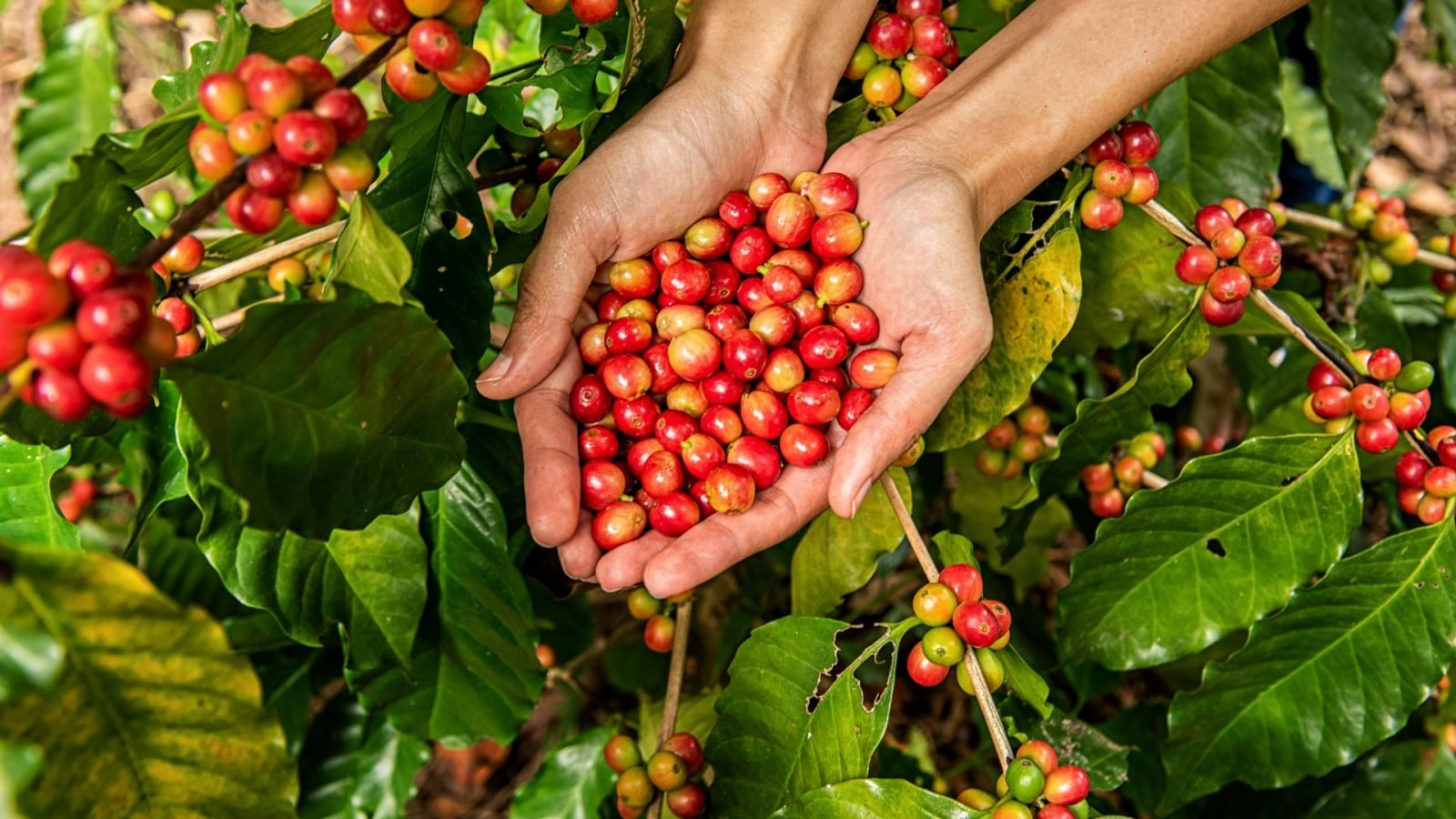
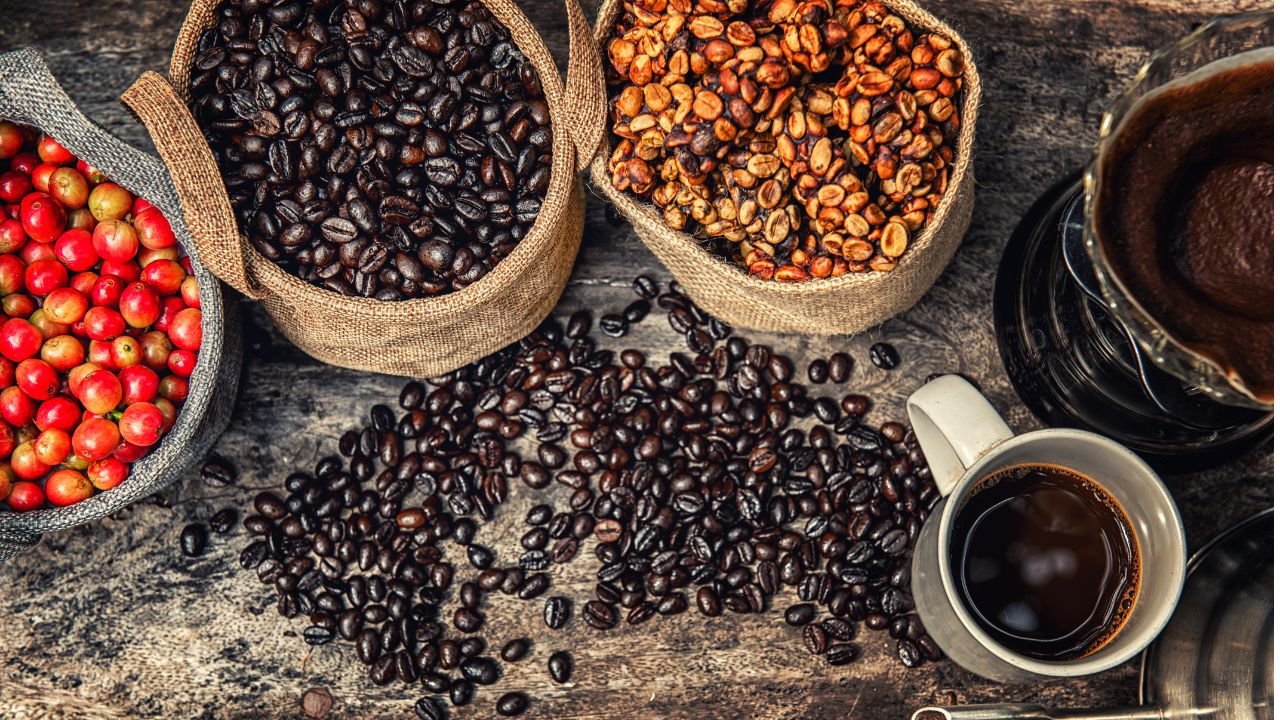
    Coffee beans develop actually inside a “cherry fruit” that grows in coffee plants. It usually needs coffee plants with ages of between two and four years old to get perfectly ripe coffee beans. You will also find 2 seeds in each cherry-like fruit of the coffee plant.

    The coffee producer will pick the cherries when their level of ripeness is sufficient for the good-quality coffee characteristics. However, it should be noted that each type of coffee beans has its own specific ripeness and harvesting process. 

    After the coffee cherries are picked, the coffee producer will extract the beans from the fruit and roast them. In the next stage, the roasted coffee seeds will become the dark brown beans we usually know.

    The Best Areas for Growing Coffee Beans in The World 
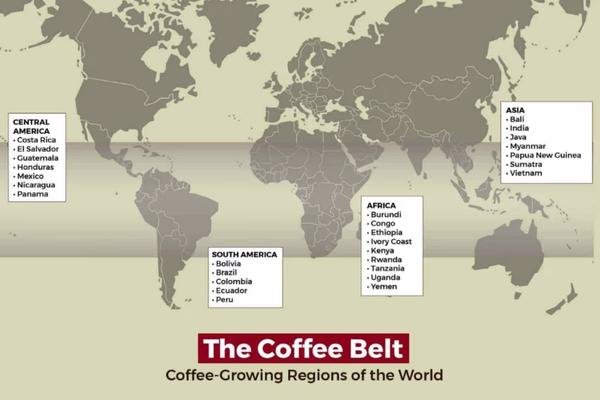
    The Coffee Belt in The World

    Tropical and subtropical become the best climate for growing coffee. Because of this, if you ask where coffee beans grow, the answer is most of the world’s coffee grows within the Bean Belt an area around the equatorial zone. This region includes parts of Africa, Central and South America, Southeast Asia, and the Middle East.

    Central and South America Regions 

    As part of the Bean Belt, the famous coffee-producing regions in Central America are Nicaragua, Guatemala, Honduras, El Salvador, and Costa Rica. In this case, Costa Rica is known as a region that produces the most high-quality coffee with a very aromatic flavor.

    Meanwhile, the regions in South America recognized for their coffee production are Colombia, Brazil, Ecuador, and Bolivia. However, Brazil has the highest volume of coffee production in this region and also in the world due to its amazing growing conditions.

    Africa and Middle East Regions 

    For African areas, Kenya, Tanzania, and Ethiopia have become the most regions that contribute to coffee production. Coffee beans from this region are known for their fruity, sweet, and delicate floral aroma. Meanwhile, the Middle East area has Yemen as the most coffee producer in that region. Because Yemen coffee originates from Ethiopia, it has characteristics like being citrusy and brighter with high acidity. 

    Southeast Asia Regions 

    Coffee has also become a major commodity in the Southeast Asian region, especially Indonesia and Vietnam, since the late seventeenth century. As one of the best coffee bean producers in the world, Indonesia coffee beans supplier and distributor is definitely known for its excellent quality coffee production. In addition, many coffee plantations can be visited in Indonesia. For example, the best coffee plantation to visit in Bali offers interesting tasting activities and the manufacturing processes of Kopi Luwak or civet coffee, the world’s most expensive coffee.

    Besides Indonesia, Vietnam is one of the largest coffee exporters in the Asian region. Their coffee beans have a delicate and mild taste. Meanwhile, coffee beans produced in Indonesia (Sulawesi, Sumatra, and Java) offer a more nutty and juicy fruit aroma.

    Also Read: 8 Types of Coffee Beans in Indonesia, Unique & You Must Try!

    Coffee Bean Harvesting 

    Take a look at a quick guide to wet and dry coffee processing methods. 

    Wet Processing Method
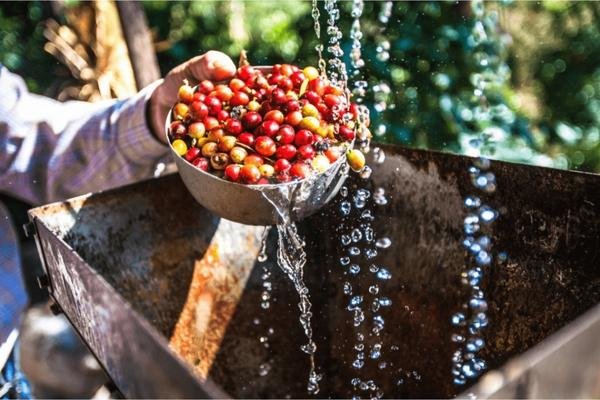
    Wet Processing Method Coffee Beans
    Wet Processing Method Coffee Beans

    As the name suggests, coffee cherries are soaked in water to ferment them and help separate the coffee fruits from the beans. After the green coffee beans are separated from the coffee cherries, they will be washed again until clean; this process also helps remove any residue still attached to the cherries’ surface. After that, the green coffee beans are sun-dried. The flavor of coffee using this method has a cleaner, brighter, and fruitier profile.

    Also Read: Wet Hulled Coffee Process: Unique Technique from Indonesia

    Dry Processing Method
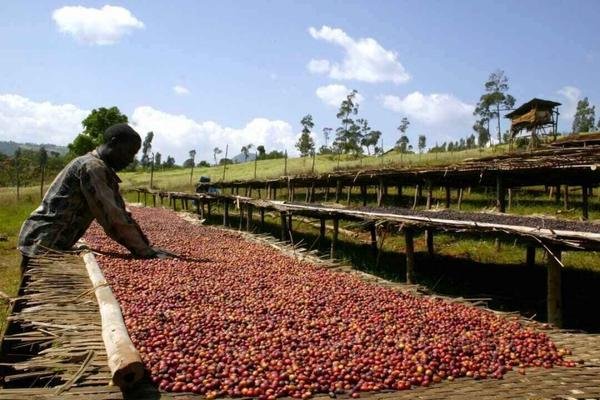
    Dry Processing Method Coffee Beans
    Dry Processing Method Coffee Beans

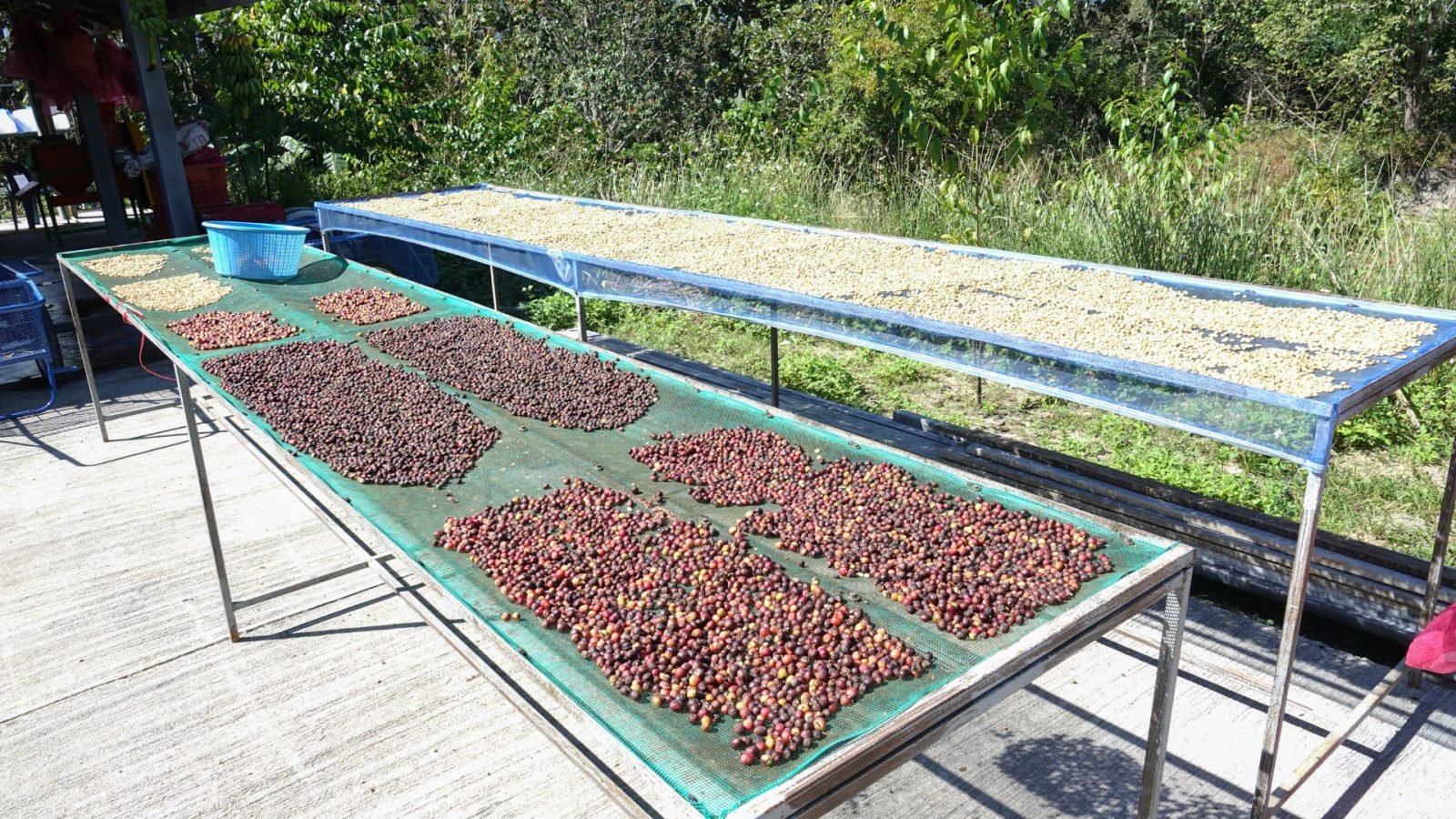
    Unlike the wet process, freshly-picked coffee cherries are not soaked in water but are dried directly in the sun. Coffee producers repeatedly turn and rake coffee fruits to separate green coffee beans from their cherries. Even though the dry process can produce a unique taste in coffee, this method is considered risky. 

    This is because rain and high humidity can mold the coffee cherries and destroy the harvest. In terms of characteristics, dry-processed coffee beans are often described as having a red wine-like taste compared to washed ones.

    Hopefully, our article can help every coffee lover who’s curious about the question “where coffee beans grow?” get the details that they want. 
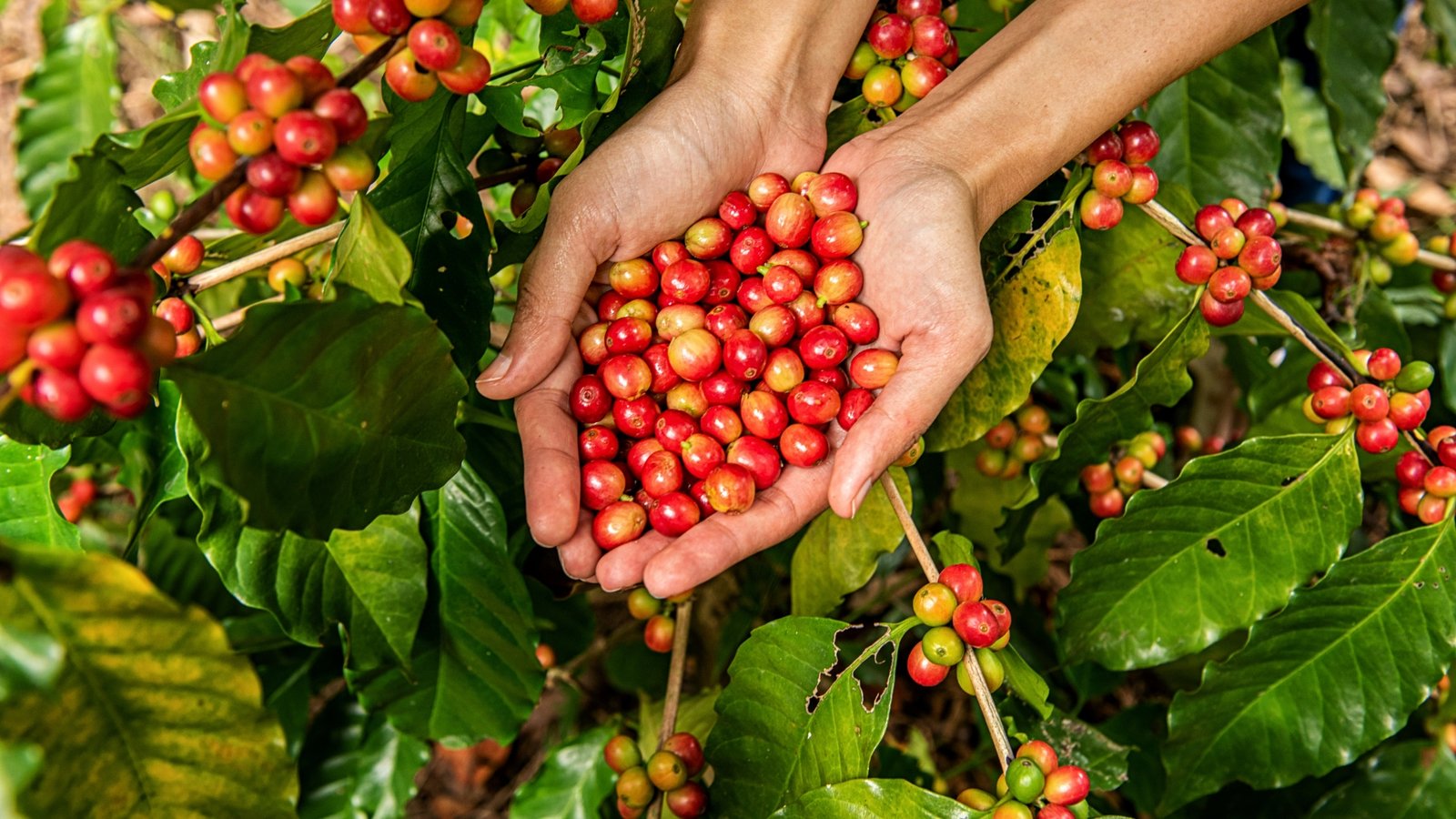
  • 8 Types of Coffee Beans in Indonesia, Unique & You Must Try!

    8 Types of Coffee Beans in Indonesia, Unique & You Must Try!

    Types Coffee Beans in Indonesia

    As one of the most consumed beverages globally, coffee is ranked as one of the top commodities in the world. According to Visual Capitalist data, Indonesia is positioned in the 4th rank among the largest producers of coffee in the world in 2020.

    Out of many types of coffee beans in Indonesia, there are four main coffee bean categories that Indonesia produces annually. They are the following types:

    • Arabica coffee beans, 
    • Robusta coffee beans,
    • Indonesian specialty coffee beans like Luwak coffee one of the rarest green coffee beans of Indonesia processed in the tummy of the Asian wild civet, and
    • Liberica coffee beans.

    The four types mentioned have captured both coffee lovers and casual people globally. They are known as well as the best Indonesian coffee beans.

    Best Coffee Beans from Indonesia 

    Coffee Beans From Province Indonesia
    Coffee Beans in Indonesia

    1. Gayo Coffee Beans, From Aceh (Arabica)

    Gayo coffee beans are produced in the Northern part of Indonesia in Aceh. The most producing areas of Gayo coffee beans are Central Aceh, Bener Meriah, and a part of Gayo Lues. 

    Gayo coffee beans is known widely for its rich yet remarkable taste, which tends to be buttery and nutty. It has a good acidity level that shapes powerful characteristics yet provides a clean aftertaste. The aroma may vary, but it is considered to have hints of spicy aroma.

    Also Read: You Never Know This! 7 Benefits of Gayo Coffee for Your Body

    2. Mandheling Coffee Beans, From North Sumatra (Arabica)

    The name was taken after a north Sumatranese ethnic group from the Batak region, Mandailing. The beans grow in volcanic soil at an altitude between 750 to 1500 above sea level in west-central Sumatra, Aceh. 

    The varieties of Arabica beans that are mostly used are the Catimor and Typica. Mandheling coffee beans taste is considered to have an enjoyable amount of acidity with a deep herbal aroma and woody yet clean earthy notes. 

    3. Kintamani Coffee Beans, From Bali (Arabica)

    Kintamani coffee beans provide a distinctive taste, suitable for those who do not like the bitter taste generally found in coffee. As a substitute, you’ll get a milder taste and sweet flavor with a hint of sour freshness. 

    The citrus-like sour taste is developed since the coffee farmers grow the coffee in the same areas as vegetables and oranges. They also implement subak irrigation systems to grow the coffee organically. Bali Beans Plantation is the best coffee plantation to visit in Bali to taste the coffee and know the end-to-end process better. 

    4. Toraja Coffee Beans, From Toraja (Arabica)

    Cultivated mostly by numerous individuals in the north of Makassar, South Sulawesi, the Toraja Coffee Beans have left a taste of sensation that has become a favorite for Northern European countries. 

    The flavor it offers is also complex. Aside from spicy notes similar to other Indonesian coffee beans, it hints at a savory note, along with an intensely fruity and earthy taste. In addition, it also offers a pleasant aroma mixed with spices like cinnamon, nutmeg, and cloves. Still, the aftertaste is clean and balanced. 

    5. Luwak Coffee Beans (Indonesian Specialty Coffee)

    Indonesian Luwak coffee beans are cultivated in only a few regions and become part of Indonesia specialty coffee beans. The largest producing regions are in the Sumatra Islands, which are Central Aceh, Sidikalang, West Sumatra, and Lampung. 

    It is called so since Luwak, or Asian palm civet, has a major role in its production. Civet eats coffee beans but only the perfectly ripe ones, then known to be the best quality coffee beans.

    It goes to their digestive system for around 24 to 36 hours before it comes out within the animal’s poop and can be washed, roasted, and grounded. The exclusivity in the process is what makes its flavor particular and pricey. 

    6. Temanggung Coffee Beans, From Central Java (Robusta)

    Robusta is still the largest coffee bean variety that is cultivated in Indonesia. One of the types comes from a region in Central Java, which is called Temanggung. 

    The Temanggung coffee beans offer a slight taste of tobacco. Generally, it has a medium level of acidity along with a balanced sweet and bitter taste and a toothsome aroma of mocha. 

    7. Ijen Raung’s Java Coffee, East Java (Arabica)

    Ijen Raung’s Java coffee beans taste exotic with thinner bitterness, lower acidity level with a nutty flavor, and hints of chocolate. This coffee bean cultivation is located in the eastern part of Java Island, in Bondowoso, precisely in the mountains of Ijen and Raung. 

    8. Wamena Coffee Beans, Papua (Arabica)

    If other coffee beans in Indonesia have a similar flavor with a spicy aroma and nutty hint, it is a different case for Wamena coffee beans. 

    The coffee plantation is located in the valley on the east side of Gunung Jaya Wijaya, the only snowy mountain in Indonesia, which offers a perfect climate and altitude to grow the best quality coffee beans. The farmers avoid using pesticides to grow their coffee, and it is what is considered to develop the floral aroma it has. Within the altitude of 1,200 – 1,600 masl, the volcanic soil is organically fertile and has the best climate for growing coffee, especially for the Arabica bean variety. 

    If you are curious about more types of coffee beans in Indonesia, find out the extensive list in Fnb Tech Indonesia!

  • Here’s How to Grind Coffee Beans Best!

    Here’s How to Grind Coffee Beans Best!

    Here's How to Grind Coffee Beans Best!

    A cup of coffee… A cup of coffee… A cup of coffee… a drink adored worldwide and a way of life for its fans. On the same side, some people think that coffee is identical to a drink with no health benefits. However, this view does not seem to affect coffee connoisseurs. Here’s everything you need to know about how to grind coffee beans and the best scoops per cup.

    How Many Scoops Of Coffee Per Cup

    The most important thing to know is the acidity of the coffee, so it doesn’t affect stomach acid. If you feel the coffee you are brewing still doesn’t taste good, try checking the hot water you use for brewing. Make sure the water is just boiling, not the one stored in the thermos. Making 6 ounces of brewed coffee takes as much as 11.25 grams of ground coffee (equivalent to 2 tablespoons) with water. 

    Scoops of A Cup of Black Coffee (Black Coffee):

    • Two teaspoons of ground coffee.
    • Two teaspoons of sugar

    While the Scoops For Coffee Milk (Coffee Milk):

    • Two teaspoons of ground coffee.
    • One teaspoon of granulated sugar
    • Two teaspoons of powdered milk

    How To Grind Coffee Beans

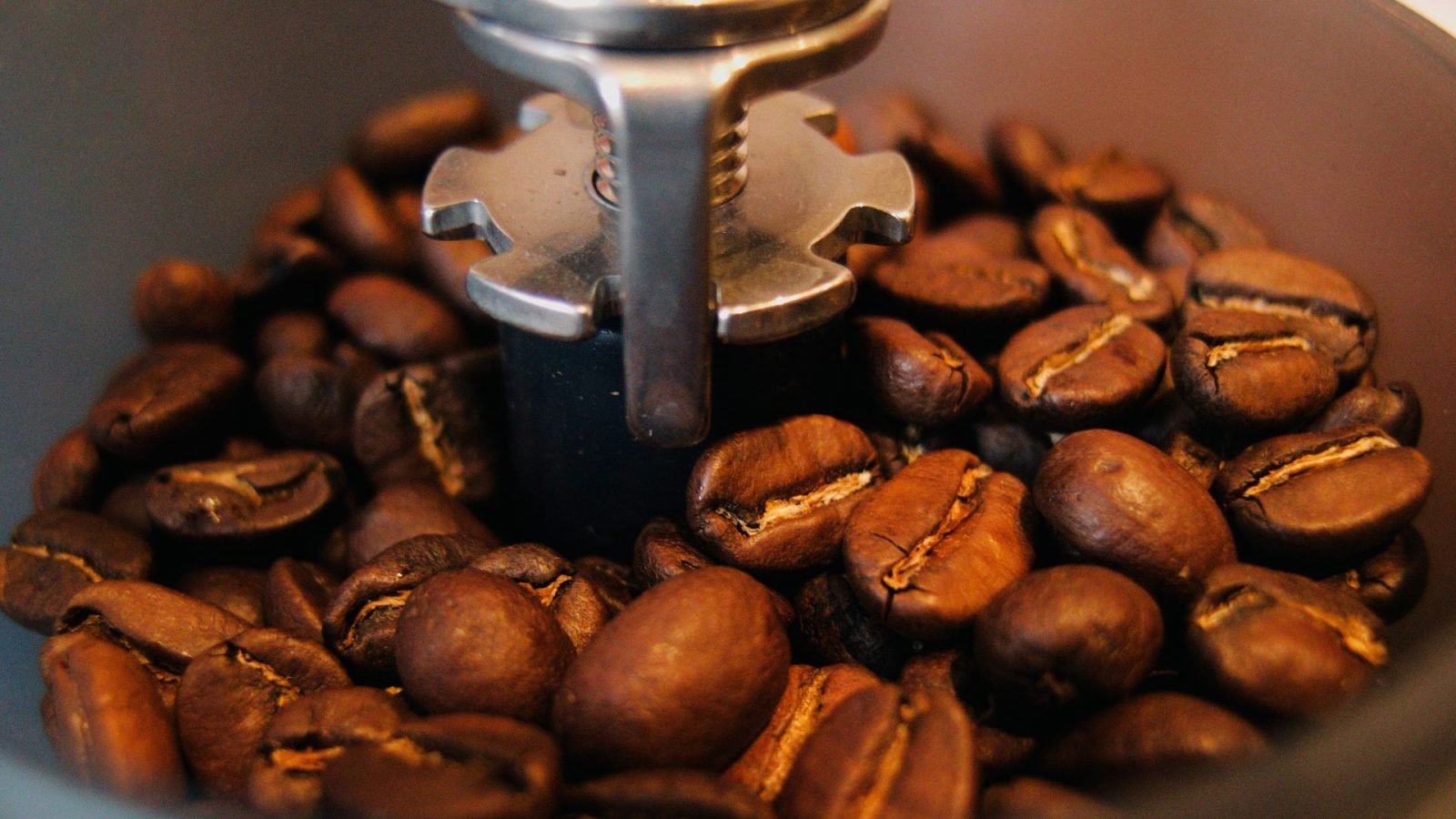
    How to grind coffee beans at home is very pleasant for coffee lovers. Because by grinding your coffee beans at home, you will no longer worry about losing the aroma and taste of each type of coffee beans. In addition, by grinding coffee beans at home, you can also try various manual brewing methods using Indonesian Arabica coffee.

    On this occasion, we will give tips on grinding coffee properly. Here are the tips you need to know:

    1. Never Pre-Grind

    Ground coffee has a longer shelf life than whole coffee beans. We recommend purchasing roasted beans rather than ground coffee so you can grind them yourself at home before brewing the coffee. How to grind coffee beans needs to start with your coffee beans kept away from sunlight and stored in an airtight container to maintain the quality of the coffee.

    2. Maintaining Consistency

    Consistency is vital when it comes to grinding coffee beans. The Consistency you need for your coffee grounds depends on how you brew it. Sure grinding Consistency works best with specific coffee brewing methods to give you the best cup.

    How to Grind Coffee Beans To Produce Peak Flavour

    You must have felt the taste of coffee that does not disappear from your memory, right? It could be the coffee that has the ideal extraction. The ideal extraction can occur due to several things, such as the Consistency of the grind size, the water used, the water temperature, and the water ratio to coffee.

    There are several levels of grind that you should know about, including:

    • Coarse / Coarse: The grind size is similar to the size of sea salt and is usually used for brewing using a French Press and cupping.
    • Medium: Similar to sand is this medium mill size. Pour-over brewing may be done with a medium grind size.
    • Fine: This grind resembles table salt in size. For brewing espresso, Moka pot, and Aeropress, utilize fine grind size.
    • Very Fine: The size of this mill is as fine as flour. The fine grind size suits the Ibrik brewing method or Turkish coffee.

    Also, only some grinders can produce the same coffee grind. That’s why we have to adjust the grinder to produce the level of fineness we want. Coffee brewing experiments, like gaining new concepts, are required to achieve the best outcomes.

    How FnB Tech Indonesia Grind Coffee Beans?

    You don’t have to worry about how to grind coffee beans perfectly because our Robusta beans, Arabica beans, and even our Green beans are perfect. A home grinding can slay it all! With the expertise of coffee farmers throughout Indonesia, FnB Tech Indonesia successfully produces, distributes, and delivers to you all coffee connoisseurs the best quality beans.

  • Where Do Sumatra Coffee Beans Come From?

    Where Do Sumatra Coffee Beans Come From?

    Where Do Sumatra Coffee Beans Come From

    Indonesia is known as a country that has abundant natural wealth. There are many natural products that we can enjoy because the soil in Indonesia is very fertile. It is one of the explanations for Indonesia’s large number of coffee plantations, many of which are on the island of Sumatra. Now, the question might start with where Sumatra coffee beans come from? Find out more about Sumatra coffee and more here.

    Getting to Know the Taste of Sumatra Coffee 

    Sumatra coffee is indeed very famous, not only in Indonesia but also abroad. Some of the most well-known varieties of Sumatran coffee, such as Sidikalang coffee from North Sumatra, Gayo coffee from Aceh, Mandailing Natal coffee from North Sumatra, Lahat coffee, Lampung coffee, and many more.

    Where do Sumatra coffee beans come from? Talking about coffee originating from Sumatra, although there are many variants, there are similarities in taste and characteristics. Only a few people know that most of Indonesia’s coffee shops and coffees come from the island of Sumatra. It is not without reason that coffee shop owners prefer to use Sumatra coffee. Sumatra coffee has a unique taste that makes many people fall in love and become addicted. 

    Where Do Sumatra Coffee Beans Come From?

    Why is North Sumatra declared the best coffee producer? Because it is dominated by mountainous areas suitable for planting coffee beans. One of them, Arabica coffee which thrives at an altitude of 600-2000 meters above sea level, is cold and requires moisture, good soil texture, and sufficient sunlight.

    Types Of Sumatra Coffee Beans

    1. Gayo Coffee 

    Gayo coffee is an arabica coffee variety that is one of the leading commodities from the Gayo highlands, Central Aceh. This coffee received Fair Trade Certified™ from the Fair Trade International Organization on May 27, 2010. Gayo coffee received an IG (Geographical Indication) certificate submitted by the Ministry of Law and Human Rights of the Republic of Indonesia. Then at the Indonesian Coffee Special Auction Event on October 10, 2010, in Bali, again Gayo Arabica coffee got the highest rank during the cupping score. These certifications and achievements have further strengthened Gayo Coffee’s position as the world’s best organic coffee.

    1. Lintong Coffee 

    The Dutch colonials brought Lintong coffee seeds for the first time around 1888. The Bukit Barisan mountains, which are close to Lake Toba and have the perfect height for growing coffee trees, are where most coffee was produced at that time. Typically, coffee-growing regions are found in the Lintong Nihuta District in the Humbang Hasundutan Regency. Therefore, the term Lintong coffee was taken from the word Lintong Nihuta. Since the first, Lintong coffee has been a favorite among European coffee drinkers because of its strong taste and distinctive aroma.

    2. Mandheling Coffee

    Arabica coffee with a distinctive aroma and taste. This coffee is usually served differently from the others, using coconut shells, and is commonly referred to as takar coffee. This coffee was first grown in the Mandheling Natal (Madina) area, near the border of North Sumatra and West Sumatra, precisely in the Pekantan area. Quality Mandheling coffee is also produced in the interior of Sumatra, such as Tapanuli and Pakpak.

    3. Lampung Coffee 

    Coffee is a leading commodity in Lampung, and it is no secret that one of Indonesia’s most well-known instant coffee companies has a plantation here. Lampung is also famous as a producer of robusta coffees because the area is considered ideal for growing robusta varieties. However, in recent years arabica varieties have also received increasing attention, even though the number is still less than robusta. Since the beginning of 2016, coffee production and sales of Lampung coffees have increased significantly compared to previous years.

    The Best Sumatra Coffee Beans You Could Find

    In addition to the delicious aroma and taste, coffee has many benefits for the body if consumed properly. For example, it can improve brain function and mood, relieve headaches, prevent Parkinson’s disease, reduce the risk of diabetes, and much more.

    Where do Sumatra coffee beans come from? If you are interested in buying quality selected coffee products, you can visit the Official Website of FnB Tech Indonesia. Guaranteed unique items developed by North Sumatra’s creative economy contributors, available in various tastes. Never be hesitant to purchase the best coffee beans produced by the country’s youth since Indonesia is proud to be the country of premium coffee beans.

  • Choosing the Best Green Coffee Beans Wholesale for Your Cafe

    Choosing the Best Green Coffee Beans Wholesale for Your Cafe

    Choosing the Best Green Coffee Beans Wholesale for Your Cafe

    Drinking coffee in Indonesia is becoming a lifestyle trend, no longer a drink to relieve sleepiness. The demand for coffee from farmers also soared. This phenomenon has made several regions begin to develop their specialty coffees.

    Not wanting to depend on wholesalers, few café or coffee shop owners hunt for coffee directly from farmers in the regions. Here’s how you choose the best green coffee beans wholesale.

    Tips for Choosing a Green coffee Beans Wholesaler for Your Coffee Shop Needs

    Choosing coffee beans wholesale is a serious matter. For coffee shop owners, making decisions for their coffee shops must first be analyzed and considered. Starting from the target market to be achieved, how the interior and exterior of their coffee shop, what costs need to be incurred, and most importantly, from which coffee wholesaler to meet the needs of our coffee shop.

    1. Choose Green Coffee Beans Wholesale

    Before choosing one of the many coffee wholesalers, try to find references from anywhere, whether cyberspace or acquaintances with fellow coffee shop owners. 

    After the contact data is collected, then where to start? Start with the coffee wholesaler that you think is interesting. This list minimizes the possibility that you can look for another wholesaler if one wholesale green coffee beans runs out of coffee stock.

    2. Coffee Samples

    After choosing a coffee wholesaler, for you serious buyers, the wholesaler is not reluctant to send us a sample of the coffee they sell. And each green coffee beans wholesaler has a different way of serving potential buyers. 

    They have terms and conditions for coffee wholesalers to send samples of the coffee they sell. After you receive a coffee sample, try to study the coffee sample. If the taste profile interests you, you can decide whether to buy it.

    3. Testimonials

    Ask him which coffee shop has worked with the wholesaler. What the testimonies are if you meet a wholesaler you were unaware of (even if there is no information about him online).

    4. Try Local Green Coffee

    Choosing outside green coffee beans is not okay, but it would be nice to try local beans where your coffee shop operates. At least one local origin fills the bar table of our coffee shop, and it could be that local coffee is your specialty. Who knows?

    5. Visiting

    Suppose you want to be more particular about choosing a coffee wholesaler. In that case, you can visit his storage area or the coffee wholesaler’s coffee garden. The types of coffee wholesalers may vary. Some are only intermediaries. Some are directly involved as coffee farmers and green coffee beans wholesale suppliers.

    6. Choose Your Favorable Green Beans

    If you are interested in a coffee wholesaler but the shipping procedure is too complicated for you, it’s better to look for another. Try to find green coffee bean wholesalers who send coffee beans to many areas.

    Final Words

    These are just some tips. Some coffee shop owners also have a way of cooperating with coffee wholesalers. So, what do you think? Have you ever had an exciting experience with a coffee wholesaler? In FnB Tech Indonesia, we provide premium wholesale coffee, especially green beans.

    As green coffee beans wholesale company, FnB Tech Indonesia. Also, you can find us on our Instagram and enjoy our social media content.

  • Unroasted Green Coffee Beans: Better Tasting Espresso

    Unroasted Green Coffee Beans: Better Tasting Espresso

    Unroasted Green Coffee Beans: The Secret to a Better Tasting Espresso – Every cup of coffee we drink has a unique story. Starting from the type of coffee, the plantation’s origin, the processing, the post-harvest techniques, and the roasting technique. 

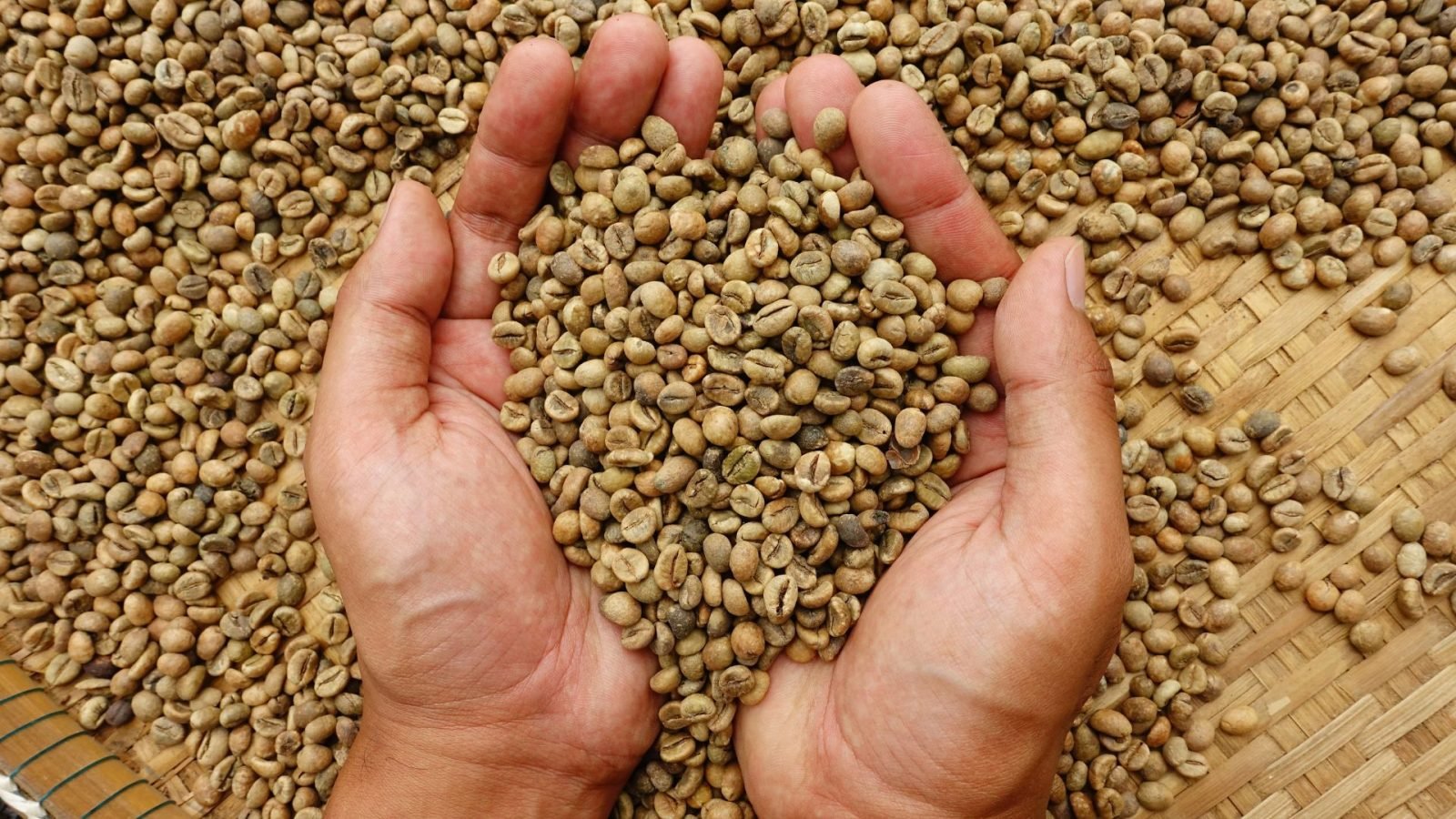
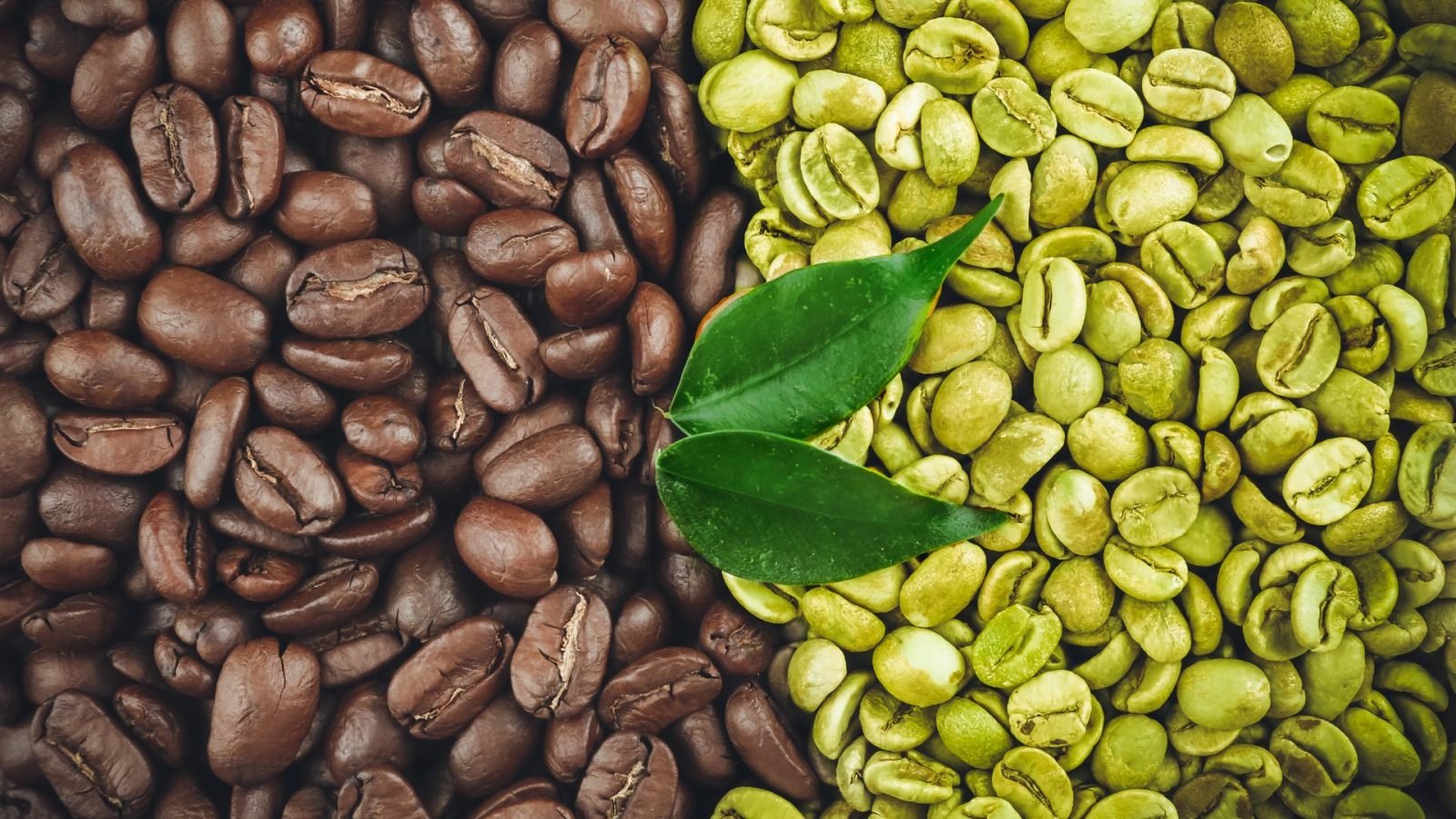
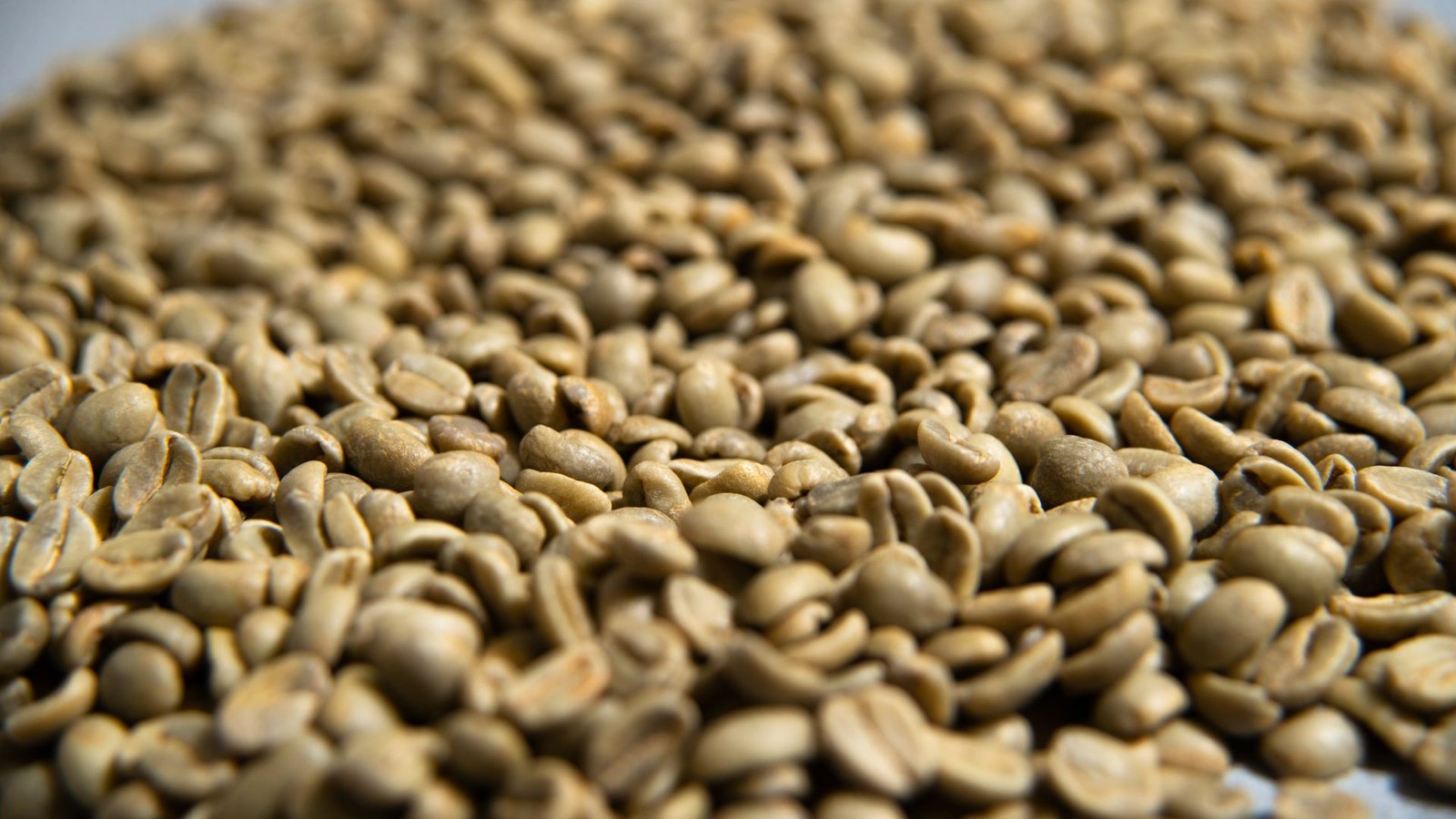
    Coffee beans, especially unroasted green coffee beans, generally have light brown colour with different variations of green hue. Raw or unroasted coffee beans are also known as rice coffee.

    The Art of Processing Unroasted Green Coffee Beans to Roasted Green Coffee Beans

    Have you ever considered the lengthy trip that coffee beans take before being eventually served in the cup of coffee you typically enjoy? Yes, it turns out that several steps and procedures are involved in turning coffee beans into the delectable beverage that millions of people worldwide enjoy.

    1. Maximizing the Taste of Coffee Beans

    Processing unroasted green coffee beans into roasted coffee beans is a blend of art and science. A coffee roaster is a craftsman who uses his senses and gauges to develop the flavour of each coffee bean. The roasting process on beans or green beans is to produce and maximize the taste of the beans, from the aroma, sweetness, acidity, and body, to the aftertaste. 

    2. Calibration to Meet Standards

    Calibration steps are also required to maintain the consistency of taste quality and maximize coffee. FnB Tech Indonesia carries out this process painstakingly. The barista can taste the coffee and set a standard for the taste of the coffee at this calibration stage. Because unroasted green coffee beans have a variable nature, finding the perfect balance of variables is the primary goal of calibration.

    At this stage, the coffee that has arrived in the hands of the manager will determine the gradation of the coffee grounds by weighing them accurately and choosing the right coffee size. The goal is so that the position of the coffee powder is not higher or lower. The coffee is then levelled using portafilters and distribution devices to make espresso. 

    3. Unroasted Coffee Beans Now Went Through a Detailed Process

    A detailed process indeed produces perfect extraction. Some coffee grounds are slightly down or too high, significantly affecting the extraction. When the position of the portafilter is too up or down, it will not deliver ideal pressure results. 

    The coffee flow can only come out of the portafilter hole on the right or left. If the coffee flow only comes out on one side, there is a tilt. The left portafilter position may be heavier than the right side.

    Meet FnB TECH INDONESIA Best Selling Unroasted Green Coffee Beans!

    1. Sumatra Super Peaberry

    unroasted Sumatra Super Peaberry

    Peaberry beans are typically valued higher than regular coffee beans because they are thought to have a more concentrated flavour. Instead of the usual two half-beans inside each cherry, a Peaberry has just one coffee bean. In actuality, peaberry only makes up roughly 5–7% of any particular coffee harvest.

    Also Read: Taste Like Heaven! You Need to try Sumatra Peaberry Coffee!

    2. Bali, Java, Gayo, and Mandheling Wine 

    Unroasted green Coffee beans - Bali, Java, Gayo, and Mandheling Wine 

    As goodquinic acid seeps into the processed coffee beans, glucose is modified to create a wine-like taste in the mouth, making the flavour taste like wine.

    Also read: Taste Like Nothing You Ever Had! Try This Wine Coffee Beans!

    3. Lasuna Special 

    lasuna special coffee

    The combination of acidity and body in Lasuna Special results in its mild taste, lightness, and a reasonable amount of wetness.

    For more information about FnB Tech Indonesia, visit our website and choose your favourite unroasted green coffee beans that match your taste. You also can visit our social media instagram to get the latest content and product.

  • Java Arabica Coffee Beans: Characteristics, Taste & Where to Buy!

    Java Arabica Coffee Beans: Characteristics, Taste & Where to Buy!

    Java Arabica Coffee Beans Characteristics, Taste & Where to Buy!

    It is impossible to separate the influence of Dutch colonization from the History of coffee in Indonesia. The spread of coffee was started in 1696 by the Dutch. At that time, the Dutch brought the first coffee seeds from Malabar, India, to the island of Java. A Dutch governor who served in Malabar, India, took the initiative to send seeds known to be of the arabica type to another Dutch governor on duty in Batavia, now called Jakarta. The seeds themselves come from Yemen.

    Let’s learn more about the History and characteristics of Java Arabica coffee beans. Happy reading.

    Also read: Robusta and Arabica Beans: Can You Really Tell the Differences?

    The History of Java Arabica Coffee Beans

    As previously mentioned, coffee seeds were first brought to Indonesia during the Dutch colonial period. Then, the coffee seeds were first tested on the private land of the VOC Governor-General Willem van Oudtshoorn. The first harvest of Java coffee was immediately sent to Hortus Botanicus Amsterdam for research. Biologists at Hortus Botanicus Amsterdam are amazed by the quality of Java Arabica coffee.

    According to them, the quality and taste of Java coffee are extraordinary and have the potential to dominate the European market, which is above their expectations. In the end, the world recognizes that the strong taste and distinctive aroma are the main attraction of Java coffee. Over time, the term a Cup of Java appeared in the western world; this suggests that coffee is synonymous with Java coffee.

    The production of this Arabica type of Java coffee has made many Javanese entrepreneurs successful in coffee trading. The price of Arabica coffee, mainly produced in Java, is higher than Robusta coffee.

    The Characteristics of Java Arabica Coffee

    The characteristics of Java Arabica coffee are almost the same as Arabica coffee in general, such as having a smaller bean size than Robusta coffee, low caffeine content, and delicious taste and aroma.

    Java Arabica coffee has a characteristic thin spice aroma with medium thickness, acidity, and a balanced taste. With the wet grinding method, Java coffee tastes are not as strong as coffee from Sulawesi and Sumatra. However, there are still many Javanese coffee enthusiasts because of the aroma of spices and herbs that other types of coffee in Indonesia don’t have.

    The Features of Java Arabica Coffee

    java arabica coffee beans
    • Has a unique taste – One of the features of this Java coffee is that it has a unique taste and characteristics. This brewed coffee that comes from the land of Java usually has a very distinctive aroma of spices that makes Java coffee different from coffee from other regions in Indonesia.
    • It has good quality – Java coffee is famous for creating delicious and aromatic brewed coffee from high-quality coffee beans.
    • It has a distinctive aroma – Javanese coffee is famous for its very distinctive coffee aroma. The aroma of Javanese coffee is known to be very fragrant and delicious.
    • It has a viscosity that is not too high – Java Arabica coffee beans has a medium viscosity, which is to say that it is not overly dense. With these advantages, people often say that Java coffee is one of the kings of coffee.

    Final Words

    That’s all about the History and characteristics of Java Arabica Coffee beans. To enjoy a delicious cup of Java Arabica coffee, you can get it at PT FANDB TECH INDONESIA, visit the website here; not only Java Arabica Coffee, but you can also try another taste.

    Those who like the original taste can enjoy it without using sugar. You will get the original taste of Java Arabica coffee beans with the aroma of spices combined with the charming aroma of coffee itself.

  • Taste Like Nothing You Ever Had! Try This Wine Coffee Beans!

    Taste Like Nothing You Ever Had! Try This Wine Coffee Beans!

    If you’re bored of the regular coffee variants, wine coffee can be your next best morning brew. When you hear of wine, you may think about an alcoholic beverage made of fermented grapes. Despite the intriguing name, wine and coffee are two entirely different entities. This kind of coffee

    Unlike wine, coffee beans’ production does not involve fermented ingredients to produce alcoholic beverages. This coffee is made by fermenting coffee beans—typically arabica beans—to create fresh coffee beans with more excellent acidity. The higher acidity level gives the coffee its signature aroma.

    This article tells everything you need to know about wine coffee. This may include its production steps, aroma, and how you can get a bag of coffee for yourself. So, without further ado, here’s everything you need to know to understand the alluring charm of wine coffee.

    What is Wine Coffee Beans?

    Wine coffee beans are the new coffee bean variant made by fermenting unpeeled coffee beans over a specific time. This fermentation process resulted in coffee beans with higher acidity levels. Due to the high acidity level, these fermented coffee beans produce a noticeable wine-like aroma when roasted, grounded, and brewed.

    Arabica Gayo and Robusta Lampung are the two most preferable coffee beans to produce coffee. This is because those two coffee bean variants are considered the highest in terms of quality. In addition, the two coffee variants have a distinct aroma and taste, making them the perfect candidate for the intensive fermentation process.

    It is worth noting that the wine-like quality is only reflected in the coffee beans’ aroma. Flavor-wise, this coffee does not taste like wine at all. In addition, this new coffee bean variant doesn’t contain any alcohol when brewed, making it tolerable for coffee enthusiasts who can’t drink alcohol for specific reasons.

    History of Wine Coffee Beans

    The Philippines’ region to the north of Manila is where “wine coffee” is produced. The nation is well-known for its coffee, which has been grown by local farmers since the 1700s. More recently, local coffee beans have been used to make wine. Coffee companies have commercially bottled it. You might be able to discover coffee wine on the shelves in the Philippines, along with many other unique wines!

    Making The Fermented Coffee Beans

    The process of producing starts from the selection of the beans. For instance, farmers from certain places in Indonesia prefer coffee beans cultivated at 1,500 meters above sea level. This is crucial as coffee beans cultivated at higher elevations will have higher sap content, which results in higher acidity levels.

    In addition, farmers often prefer the coffee cherry with full bright-red color, indicating that the coffee beans are ready to be cultivated. Once the coffee beans have been harvested, the newly picked coffee cherry will be processed through a step known as the drying process. In this process, the cultivated beans will be sun-dried to let dry naturally.

    If regular coffee variants require a two-week of drying process, this kind of coffee beans requires a full 30 to 60 days. The long drying process is preferred to absorb the cherry sap into the coffee beans, resulting in a higher acidity level. The absorbed sap resulted in the wine-like aroma of the coffee beans.

    Products of Wine Coffee Beans

    The final Wine Robusta Coffee product underwent laboratory testing, showing that it contains less than 2% caffeine and chlorogenic acid. As long as the caffeine content isn’t going beyond 4%, this can be considered an antioxidant under SNI guidelines. Additionally, Wine Coffee discovered no alcohol content or its compounds.

    According to some published research, Robusta coffee has more chlorogenic acid than Arabica. Of course, this is a clear benefit of the Wine Robusta Coffee product.

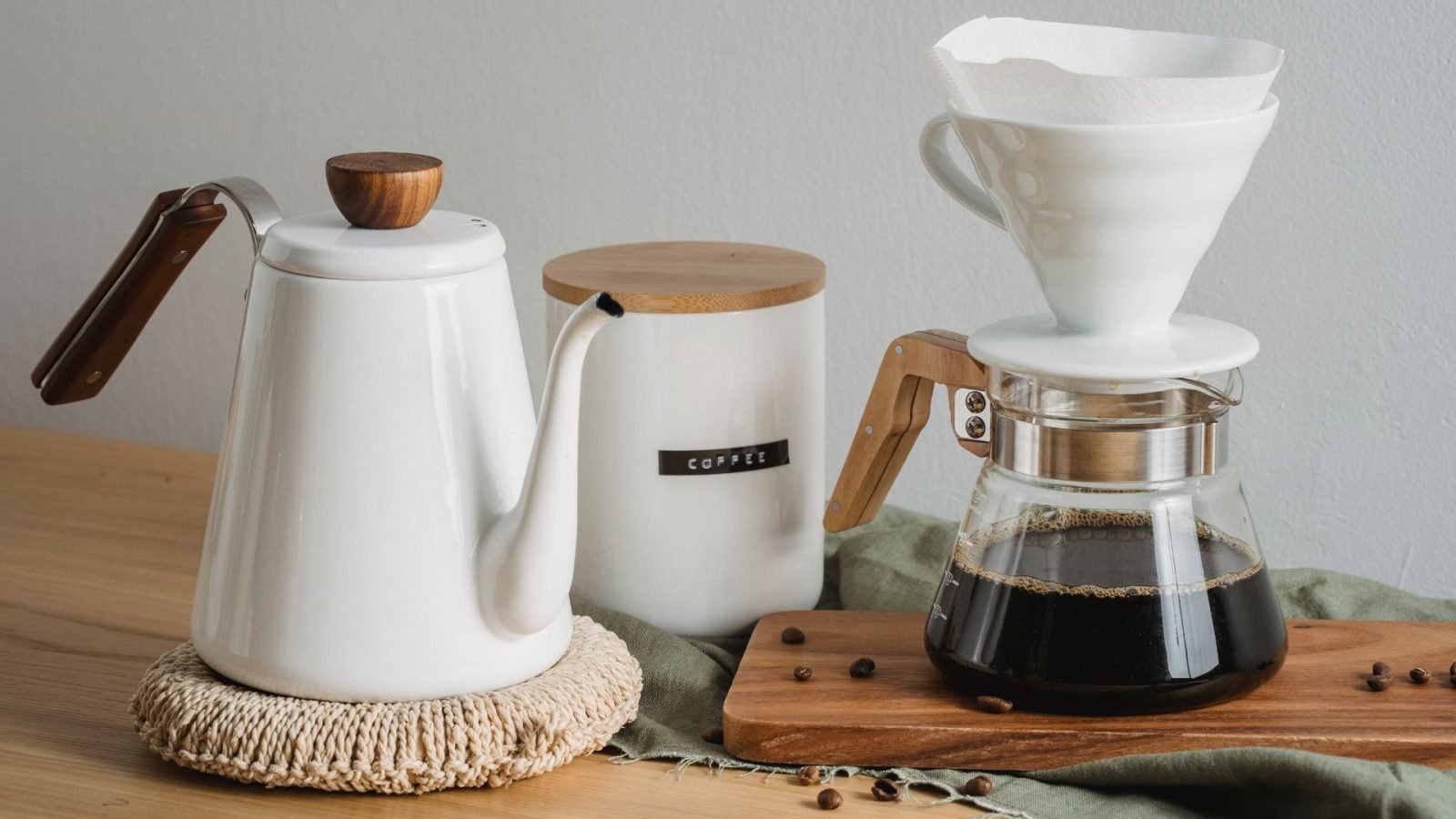
    For the aroma of the wine to come out and have health benefits, the amount of water and heat must be carefully examined when consuming this Wine Robusta Coffee. People can brew this coffee with 12 grams of coffee and 150 ml of water in a V60 dripper.

    This results in coffee impacting human health; it is recommended to consume coffee without sugar and brew it at a temperature of between 85 and 90 degrees Celsius.

    Despite being relatively new to the market, “coffee wine” is a delightful, full-flavored wine progressively gaining recognition thanks to modest producers. PT FcB Tech only produced a small quantity of this coffee; the general public does not have as much access to it.

    However, if you’re interested and want to try the unusual wine, you can make your own at home. You can use basic materials, a home brewing kit, or even a few pots and containers.

    Coffee wine is on the verge of becoming a household name in the wine market because it combines the excellent beverage for the morning and the best beverage for the evening into one delicious drink.

    Is it possible to brew at home?

    brew wine coffee beans at home

    Yes, it is possible to produce coffee wine. However, this procedure is more complex than simply flavoring your cold brew or infusing vodka. A few odd materials, such as tannin powder and yeast nutrition, are required. It takes around a year to complete. Why not try it if you have a lot of winemaking experience? You should order this coffee bean in some stores and enjoy your coffee. You may purchase a cold brew-infused wine from some stores, and your neighborhood liquor store may also carry other kinds.

    Also Read: Cold Brew vs Hot brew: Everything You Need to Know

    What does wine coffee taste like?

    When brewed, the coffee gives a new sensation that you’ll never experience in a cup of coffee. In terms of aroma, it has a wine-like quality and fruity aroma due to its extensive fermentation process. In terms of taste, most coffee enthusiasts describe the taste of this coffee as fresh and fruity. There are also complex notes from the fermentation process and the carefully picked red coffee cherry.

    So, how can you get a bag of these wine coffee beans? If you want to get you’re coffee beans fresh from the source, you can look at our coffee catalog at FnB Tech. Our company provides a wide variety of coffee sourced from local farms in Sumatera Utara Province, Indonesia. So, if you want to taste high-quality wine coffee beans, purchase them from FnB Tech.