A cup of coffee… A cup of coffee… A cup of coffee… a drink adored worldwide and a way of life for its fans. On the same side, some people think that coffee is identical to a drink with no health benefits. However, this view does not seem to affect coffee connoisseurs. Here’s everything you need to know about how to grind coffee beans and the best scoops per cup.
How Many Scoops Of Coffee Per Cup
The most important thing to know is the acidity of the coffee, so it doesn’t affect stomach acid. If you feel the coffee you are brewing still doesn’t taste good, try checking the hot water you use for brewing. Make sure the water is just boiling, not the one stored in the thermos. Making 6 ounces of brewed coffee takes as much as 11.25 grams of ground coffee (equivalent to 2 tablespoons) with water.
Scoops of A Cup of Black Coffee (Black Coffee):
Two teaspoons of ground coffee.
Two teaspoons of sugar
While the Scoops For Coffee Milk (Coffee Milk):
Two teaspoons of ground coffee.
One teaspoon of granulated sugar
Two teaspoons of powdered milk
How To Grind Coffee Beans
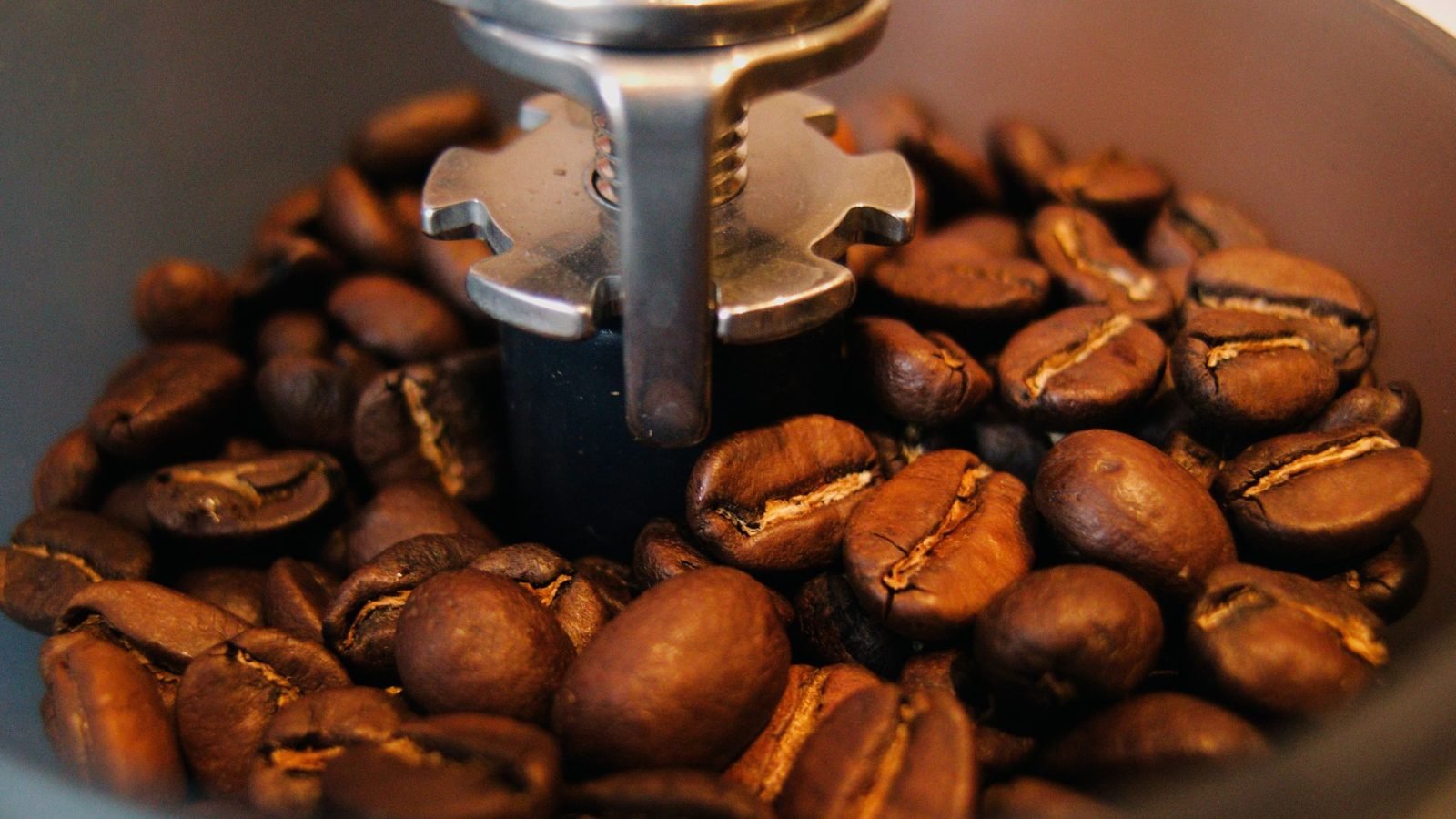
How to grind coffee beans at home is very pleasant for coffee lovers. Because by grinding your coffee beans at home, you will no longer worry about losing the aroma and taste of each type of coffee beans. In addition, by grinding coffee beans at home, you can also try various manual brewing methods using Indonesian Arabica coffee.
On this occasion, we will give tips on grinding coffee properly. Here are the tips you need to know:
1. Never Pre-Grind
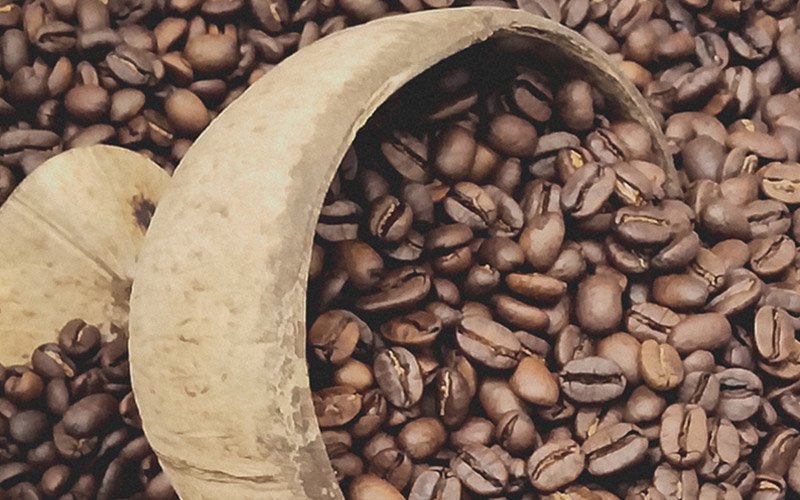
Ground coffee has a longer shelf life than whole coffee beans. We recommend purchasing roasted beans rather than ground coffee so you can grind them yourself at home before brewing the coffee. How to grind coffee beans needs to start with your coffee beans kept away from sunlight and stored in an airtight container to maintain the quality of the coffee.
2. Maintaining Consistency
Consistency is vital when it comes to grinding coffee beans. The Consistency you need for your coffee grounds depends on how you brew it. Sure grinding Consistency works best with specific coffee brewing methods to give you the best cup.
How to Grind Coffee Beans To Produce Peak Flavour
You must have felt the taste of coffee that does not disappear from your memory, right? It could be the coffee that has the ideal extraction. The ideal extraction can occur due to several things, such as the Consistency of the grind size, the water used, the water temperature, and the water ratio to coffee.
There are several levels of grind that you should know about, including:
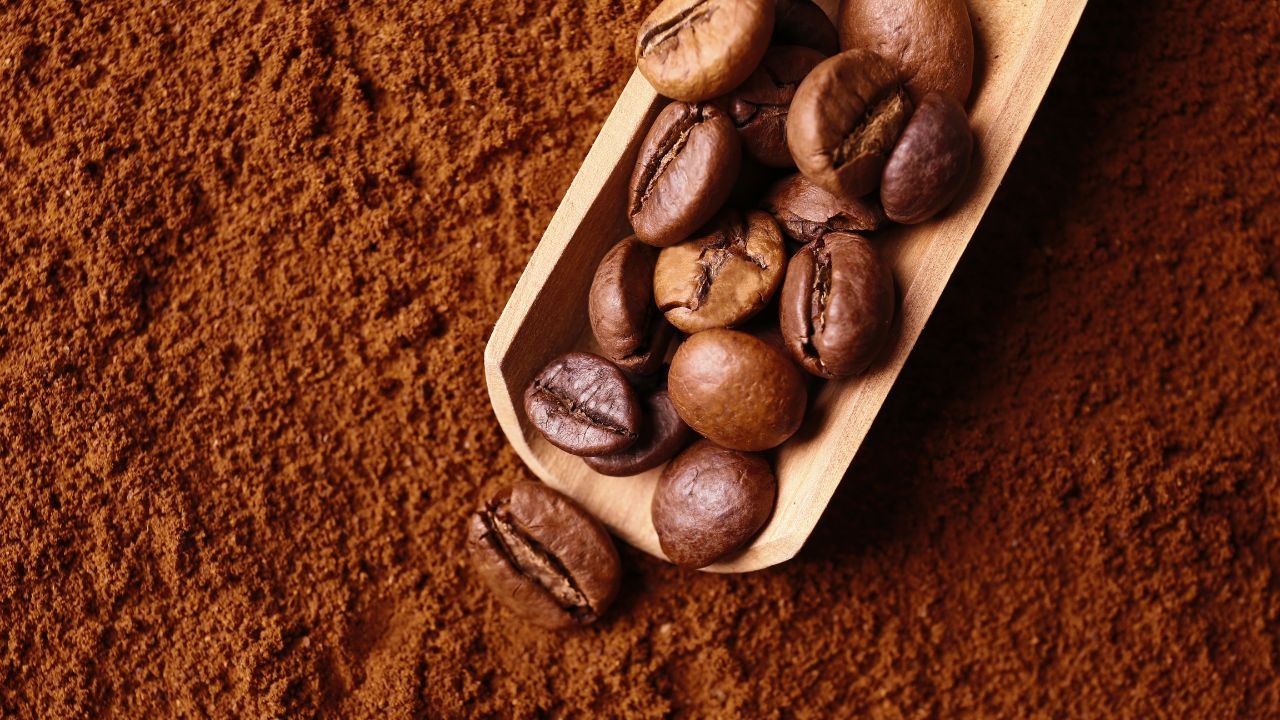
Coarse / Coarse: The grind size is similar to the size of sea salt and is usually used for brewing using a French Press and cupping.
Medium: Similar to sand is this medium mill size. Pour-over brewing may be done with a medium grind size.
Fine: This grind resembles table salt in size. For brewing espresso, Moka pot, and Aeropress, utilize fine grind size.
Very Fine: The size of this mill is as fine as flour. The fine grind size suits the Ibrik brewing method or Turkish coffee.
Also, only some grinders can produce the same coffee grind. That’s why we have to adjust the grinder to produce the level of fineness we want. Coffee brewing experiments, like gaining new concepts, are required to achieve the best outcomes.
How FnB Tech Indonesia Grind Coffee Beans?
You don’t have to worry about how to grind coffee beans perfectly because our Robusta beans, Arabica beans, and even our Green beans are perfect. A home grinding can slay it all! With the expertise of coffee farmers throughout Indonesia, FnB Tech Indonesia successfully produces, distributes, and delivers to you all coffee connoisseurs the best quality beans.
The caffeine content in coffee is considered effective for overcoming sleepiness. Did you know, though, that certain coffee brands have the highest caffeine level in the world?
Tasting coffee with a high caffeine content is the most exciting challenge for coffee lovers. Although ordinary coffee is known to have high caffeine content, it turns out that there are many coffees with much higher caffeine content.
Caffeine consumption has been stated to have normal limits to be considered so as not to interfere with health. According to records recommended by health experts, at least caffeine consumption should not be more than 400 milligrams a day (FDA). So, what is the strongest coffee?
What Kind of Coffee Can Make Your Eyes Wide Open?
According to research, higher caffeine content than Arabica provides a higher “alert” effect. Therefore, the rule is that sleepiness increases as caffeine intake does.
There are various ways to acquire this caffeine dosage.
The first is the type of coffee between Arabica and Robusta. Robusta, the latter has higher caffeine content. The caffeine content in Robusta is about 2.5%, compared to Arabica, which is only 1.5%.
The second, of course, is from the volume. If you brew 10 grams of Arabica, of course, you will consume more caffeine than 5 grams of Robusta.
Third, there are some foods or drinks that can neutralize caffeine. One of them is milk. So, if you consume milk coffee, it is certain that the milk will neutralize the caffeine content of the coffee. The other ingredient is water. So, the more “watery” the coffee is, the less caffeine it will have.
So, from the three conclusions above, what is the strongest coffee? Yes, the most literate coffee (type and brew) is the one that collects the most caffeine. Robusta coffee is brewed with the least water ratio (so far, an espresso with a composition of 1/8 can be an option).
What is the strongest coffee?
1. Black Label Brewed Coffee
Consumption of coffee on this one is recommended to be drunk at a dose of 354 milliliters or 2.5 tablespoons for one cup. Black Label Brewed Coffee contains up to 1,555 milligrams of caffeine at this dose.
The caffeine content in this type of coffee is mentioned as one that enters very dangerous levels. This coffee can only be accepted by those with a high caffeine tolerance and will be very dangerous for people with low caffeine tolerance.
2. Very Strong Coffee
Coffee derived from robusta coffee beans occupies the second position for coffee brands with the highest caffeine content. This coffee is produced and sold by a company based in the United Kingdom.
A cup of Very Strong coffee is recommended to use only five tablespoons for 340 milliliters of water. This coffee has caffeine levels equivalent to 1,350 milligrams and is in the very dangerous category.
3. Taft Coffee
Originating from Turkey, this coffee uses 50 different coffee beans in a bag of coffee grounds. The concoction makes the taste of this coffee tend to be richer in flavour without a bitter stinging taste.
It is advised to use just 50 grams of this coffee to brew up to 340 militaries in one serving. Despite having 1,182 mg of caffeine, this coffee is still harmful.
4. High Voltage Coffee
Australia is where this coffee is made. This coffee brand is well-known for being deadly and well-liked on the global market. It is only advised to use 50 grams of coffee grounds for a dosage of 355 milliliters.
Caffeine is 1,150 milligrams, which is still considered dangerous coffee. Even for healthy adults, this coffee is recommended to be consumed with extreme caution.
5. Black Insomnia Coffee
Do you still need to find what the strongest coffee is? This coffee comes from South Africa and uses a mixture of robusta and Arabica. The comparison is 80% robusta coffee beans and 20% arabica coffee beans.
To enjoy this 355 military coffee, you only need 50 grams of coffee grounds. The amount of caffeine in this particular coffee is 1,105 mg, which is quite harmful.
6. Cannonball Coffee Maximum Charge
Although known as one of the strongest coffees with the highest caffeine content, this type of coffee is very popular in the UK. According to a certified laboratory that examines this coffee, it only takes 56 grams of coffee to be sufficiently brewed with 355 millilitres of warm water.
Most of the blends use robusta coffee beans harvested from Rwanda. Caffeine levels reach 1,101 and are still classified as caffeine, which is very dangerous.
We Sell The Strongest Coffee Bean in Town!
Since your question on what is the strongest coffee lay on Robusta coffee beans, our best Robusta coffee is harvested from the best coffee farm in Indonesia. It is grown through the hands of Indonesian coffee farmers through various stages of checking and a series of quality controls. Bali Kintamani, Sidikalang, and Lampung robusta are the best-selling products among robusta coffee. They are the preferred coffee beans among distributors for FnB Tech Indonesia due to their enticing aroma and greatest quality. FnB Tech Indonesia always delivers the strongest coffee beans for Indonesian coffee enthusiasts.
Coffee has been less in demand by people all this time, especially specialty coffee drinks. Many people prefer packaged coffee to specialty coffee because they think that specialty coffee cannot be enjoyed because of its bitter taste. However, over the past few years, specialty coffee has begun to get attention and is in great demand by everyone, as seen from many coffee shops and their visitors, which are dominated by young people.
Before going any further, we must know what specialty coffee drinks are? Specialty Coffee is coffee that has good quality, taste, and aroma with standard cupping test and is processed with special provisions (Otten).
YOLO! 4 Tips The Best Way to Enjoy Coffee
Brewing coffee not only can be done by an expert; anyone can brew coffee. But how we make it more enjoyable? Here are tips to improve your morning cup in just a few easy ways.
The best time to drink coffee – Some people drink coffee in the morning. But there is a certain time to drink coffee. The stress hormone cortisol is one crucial hormone to increase focus and alertness. It can also regulate metabolism, the immune system, and blood pressure.
According to research by Steven Miller of the University of Health Sciences in Bethesda, cortisol production reaches its highest peak between 8am and 9am. But it also depends on your sleep and wake cycle. Usually, the hormone cortisol peaks about 30-45 minutes after you wake up.
So, the best time to drink coffee is when your cortisol production decreases, usually between 9:30-11:30 (hellosehat).
Choose fresh coffee beans – Make sure your roasted coffee beans are always fresh. So, it has its full flavor and aroma. You can buy fresh coffee from a trusted supplier or local roasters.
You should also know how to store the coffee beans correctly to retain their freshness. Here are the tips to store your coffee beans correctly:
A. Keep away from direct sunlight B. Store in an air-tight container C. Keep it in a cool, dry area
Add sugar, milk, or cream – If you do not like bitter coffee, you can enhance its taste. You can add milk, cream, or sugar. Be sure you have fun with your drink and never have to endure a boring cup anymore.
Combines with foods that go with coffee – We recommend you the best food and coffee combination. Sweet or savory, there are plenty of ways to create such a delicious pairing, like cheesecake, coffee cake, full English, and pastries
You can check our specialty coffee product here to get a sense of fresh, flavorful, and good coffee beans.
Before drinking coffee, it’s a good idea to check it first. Do coffee beans expire? Has your coffee still drinkable? It is important so that unwanted things don’t happen in the future.
Do Coffee Beans Expire?
Whole seeds can keep for three to nine years in the freezer if they are carefully kept without opening and put in containers with a degassing valve and many layers. But even so, if you store it wrong, the coffee beans will lose their quality in about six months.
Characteristics of Expired Coffee
1. The Smell of Coffee
Do coffee beans expire? Yes, coffee is still drinkable, has the usual coffee scent’s aromatic aroma, and does not smell musty. Before drinking coffee, it’s a good idea first to sip the coffee to ensure it is in a drinkable condition.
2. Krema
When brewing coffee, you will find a layer resembling foam on a golden brown colour surface. The crema is the name of this stratum. Usually, the cream colour is slightly faded, and the thickness is somewhat reduced. Using krema, you can determine whether the coffee is fresh. If the coffee used is not fresh.
3. Sluggish
If storing coffee in the form of beans that have been roasted or commonly called roast beans, make sure the coffee beans are in decent condition. The way to find out “do coffee beans expire” or not is simply by taking a sample of one of the coffee beans and then biting or pressing it with your fingernails. Good coffee beans that are still worth using will look crispy and not tough.
4. Expiration Date
Before brewing coffee, ensure it is within the expiration date listed on the packaging.
To get delicious and suitable coffee for consumption, visit our website at Official FnB Tech; produced by Indonesian coffee brewers, we provide various coffee products, arabica, robusta, and green coffee.
Coffee Expiration
Undoubtedly, coffee is the most delicious drink in the world. The taste and aroma combine perfectly to create incomparable natural pleasure. There are various kinds of coffee in the market, ranging from raw coffee beans (green beans) and roasted coffee beans (roasted beans) to coffee grounds ready to be brewed. You can buy it as needed.
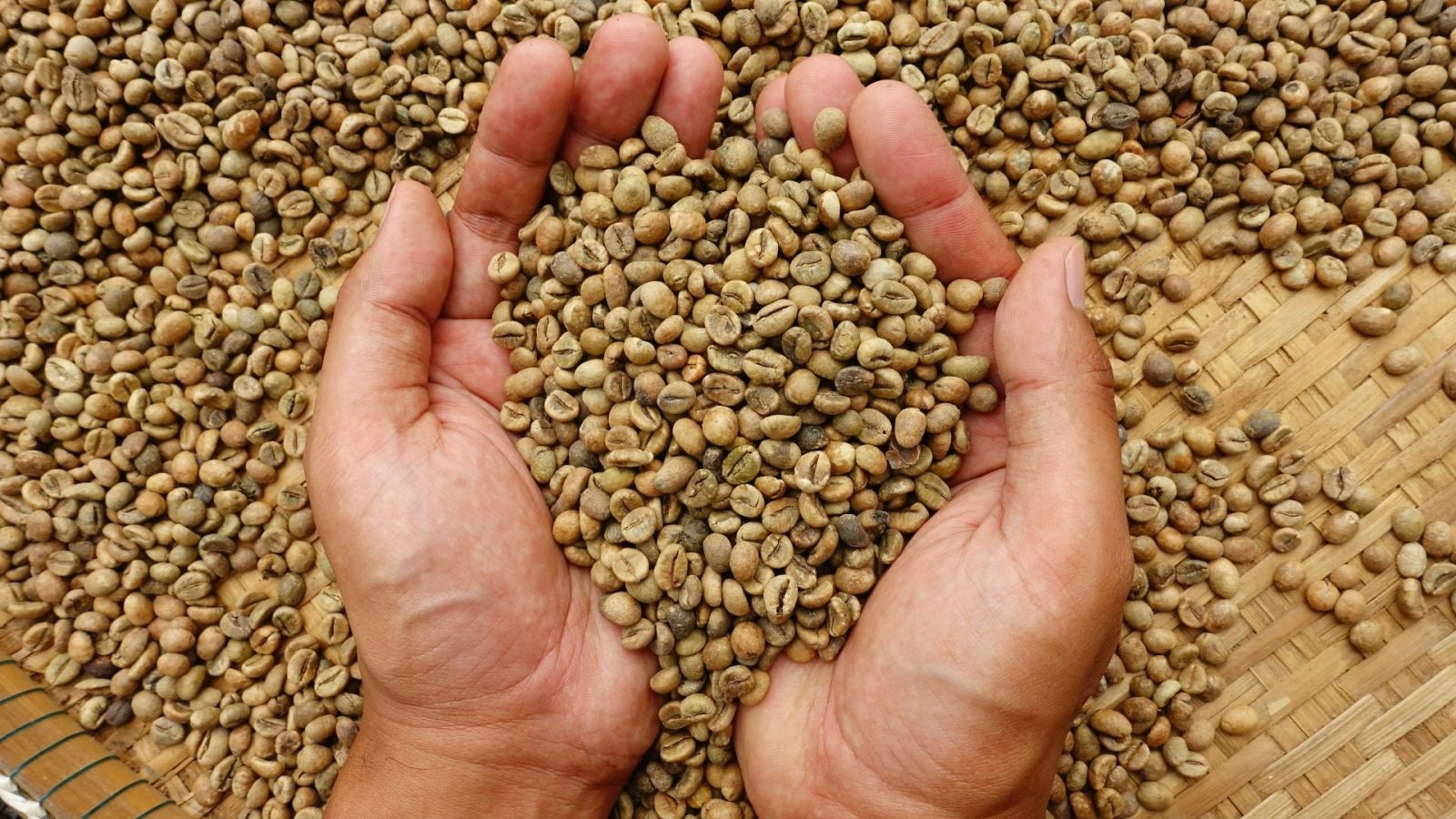
Do coffee beans expire? The expiration date of coffee varies according to its form. The longest-lasting food is green beans, which may be kept in storage for up to a year. Meanwhile, roasted coffee (roasted beans) has a shelf life of up to 5-6 months from the roasting date. It’s different from ground coffee. Ground coffee in cans can be stored for more than two years. But once the lid is opened, the expiration date of this coffee powder only reaches one month.
Where Do You Get A Good Quality Coffee Bean?
Want to buy authentic Indonesian coffee? FnB Tech is the place! Established in 1999 in Medan, North Sumatra, we are proud to provide the sensation of premium coffee beans from all over Indonesia. Original Indonesian Arabica coffee, Aceh Gayo Arabica Specialty, Kalosi of all grades, Bali Kintamani Arabica Specialty, Flores Specialty Arabica, Java Specialty Arabica, Mandheling Sumatran Arabica, and Toraja Arabica Specialty.
To get more content about coffee, check our Instagram.
Indonesia is known as a country that has abundant natural wealth. There are many natural products that we can enjoy because the soil in Indonesia is very fertile. It is one of the explanations for Indonesia’s large number of coffee plantations, many of which are on the island of Sumatra. Now, the question might start with where Sumatra coffee beans come from? Find out more about Sumatra coffee and more here.
Getting to Know the Taste of Sumatra Coffee
Sumatra coffee is indeed very famous, not only in Indonesia but also abroad. Some of the most well-known varieties of Sumatran coffee, such as Sidikalang coffee from North Sumatra, Gayo coffee from Aceh, Mandailing Natal coffee from North Sumatra, Lahat coffee, Lampung coffee, and many more.
Where do Sumatra coffee beans come from? Talking about coffee originating from Sumatra, although there are many variants, there are similarities in taste and characteristics. Only a few people know that most of Indonesia’s coffee shops and coffees come from the island of Sumatra. It is not without reason that coffee shop owners prefer to use Sumatra coffee. Sumatra coffee has a unique taste that makes many people fall in love and become addicted.
Where Do Sumatra Coffee Beans Come From?
Why is North Sumatra declared the best coffee producer? Because it is dominated by mountainous areas suitable for planting coffee beans. One of them, Arabica coffee which thrives at an altitude of 600-2000 meters above sea level, is cold and requires moisture, good soil texture, and sufficient sunlight.
Types Of Sumatra Coffee Beans
1. Gayo Coffee
Gayo coffee is an arabica coffee variety that is one of the leading commodities from the Gayo highlands, Central Aceh. This coffee received Fair Trade Certified™ from the Fair Trade International Organization on May 27, 2010. Gayo coffee received an IG (Geographical Indication) certificate submitted by the Ministry of Law and Human Rights of the Republic of Indonesia. Then at the Indonesian Coffee Special Auction Event on October 10, 2010, in Bali, again Gayo Arabica coffee got the highest rank during the cupping score. These certifications and achievements have further strengthened Gayo Coffee’s position as the world’s best organic coffee.
1. Lintong Coffee
The Dutch colonials brought Lintong coffee seeds for the first time around 1888. The Bukit Barisan mountains, which are close to Lake Toba and have the perfect height for growing coffee trees, are where most coffee was produced at that time. Typically, coffee-growing regions are found in the Lintong Nihuta District in the Humbang Hasundutan Regency. Therefore, the term Lintong coffee was taken from the word Lintong Nihuta. Since the first, Lintong coffee has been a favorite among European coffee drinkers because of its strong taste and distinctive aroma.
2. Mandheling Coffee
Arabica coffee with a distinctive aroma and taste. This coffee is usually served differently from the others, using coconut shells, and is commonly referred to as takar coffee. This coffee was first grown in the Mandheling Natal (Madina) area, near the border of North Sumatra and West Sumatra, precisely in the Pekantan area. Quality Mandheling coffee is also produced in the interior of Sumatra, such as Tapanuli and Pakpak.
3. Lampung Coffee
Coffee is a leading commodity in Lampung, and it is no secret that one of Indonesia’s most well-known instant coffee companies has a plantation here. Lampung is also famous as a producer of robusta coffees because the area is considered ideal for growing robusta varieties. However, in recent years arabica varieties have also received increasing attention, even though the number is still less than robusta. Since the beginning of 2016, coffee production and sales of Lampung coffees have increased significantly compared to previous years.
The Best Sumatra Coffee Beans You Could Find
In addition to the delicious aroma and taste, coffee has many benefits for the body if consumed properly. For example, it can improve brain function and mood, relieve headaches, prevent Parkinson’s disease, reduce the risk of diabetes, and much more.
Where do Sumatra coffee beans come from? If you are interested in buying quality selected coffee products, you can visit the Official Website of FnB Tech Indonesia. Guaranteed unique items developed by North Sumatra’s creative economy contributors, available in various tastes. Never be hesitant to purchase the best coffee beans produced by the country’s youth since Indonesia is proud to be the country of premium coffee beans.
One of the leading plantation commodities cultivated by farmers is coffee. Coffee plants require special attention in their cultivation practices, including the problem of pest and coffee plant disease attacks. The main problem in smallholder coffee plantations is the low productivity and quality that does not meet the standards caused by pests and diseases.
Pest and disease attacks on coffee plants can cause adverse effects, ranging from economic losses in quality and quantity to causing crop failure. The pest attacks often found on coffee plants are the decay and fall of young fruit and the presence of infectious diseases that cause damage to coffee plants.
Coffee Plant Diseases
1. Seedling Wilt
Disease This disease occurs in young coffee seedlings in the nursery. Usually occurs after the seedlings have germinated but have not reached the transplant age. The fungus Pythium spp causes this disease.
This fungus is transmitted through the soil and usually occurs when the soil is too wet, and the nursery is not well-lit. Symptoms of the attack are young coffee seedlings die quickly. The stems of the seedlings are soft and rotting.
Control:
Do not use planting media from the previous nursery because it may contain Phytium spp.
Avoid overwatering.
Keep the seedlings close enough (2.5 x 10 cm).
Chemical control can be done by spraying the soil or using fungicides with the active ingredient mankozeb, such as Benlate, Benomyl, Dithane, etc.
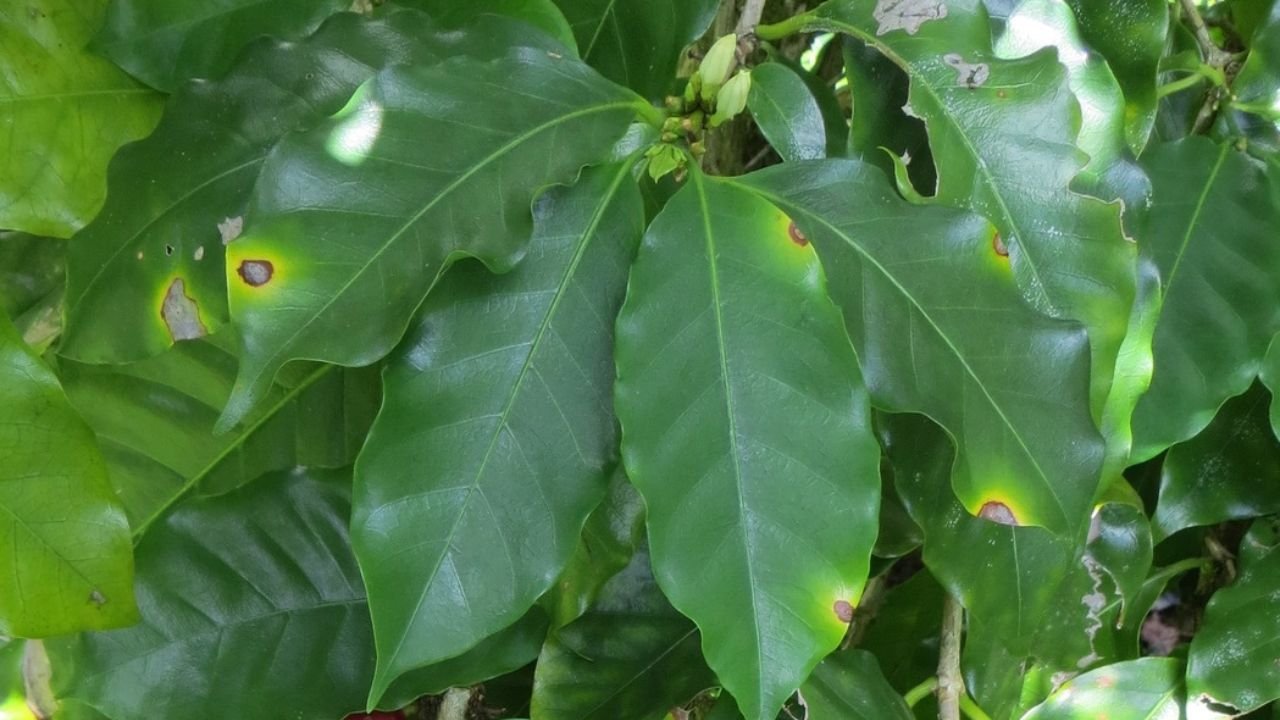
2. Cercospora Leaf Brown Spot Disease
Leaf spot disease is caused by a fungus when the plant is under stress. The fungus can attack coffee plants in nurseries and planting fields. When attacking the nursery, this indicates poor nursery management.
Symptoms of this disease are the appearance of brown spots with reddish-brown edges. These spots are visible on both sides of the leaf surface. As the spots increase, the leaves will look like they are charred.
This disease usually appears when the nursery or land conditions are too wet, too shady, or too light, with poor air circulation and a lack of nitrogen and potassium.
Control:
Avoid excessive watering.
The shade level is maintained at around 50%.
The spacing of seeds and plants must be appropriate to facilitate air circulation.
Acceptable use of fertilizers. The use of chemical fungicides based on copper.
For example, copper cupravit 85WP and copper oxychloride with a concentration of 80 g/20 l of water. Or use copper hydroxide with a concentration of 40 g/20 l of water.
3. Cercospora Fruit Spot Disease
Cercospora fungus attacks coffee leaves but sometimes also affects coffee cherries, known as fruit spot disease. Symptoms of this disease attack include spots on the leaves that are getting wider and wider, with reddish brown spots on the edges. The spots will appear on both sides of the leaf surface. At the same time, the fruit will appear in dark brown spots surrounded by a bright red ring.
The causes of this coffee plant disease are lack of nitrogen and potassium nutrients in the leaves, insufficient sunlight, stress due to lack of water, too much sun, insufficient fertilizer application, and too many weeds in the field.
Control: To prevent the emergence of this disease, make sure the coffee plant gets enough nutrients and sunlight at about 50%—using chemical fungicides based on copper. For example, copper cupravit 85WP and copper oxychloride with a concentration of 80 g/20 l of water. Or use copper hydroxide with a concentration of 40 g/20 l of water.
4. Sooty Mold Fungus
The fungus Capnodium spp causes mould disease. Aphids, shield lice, whiteflies, or other sucking insects can infest the coffee plant and cause this fungus to develop.
Symptoms of attack are leaves covered by black soot and powdery. The fungus grows on honeydew secreted by shield lice and other sucking insects. Ants usually keep shield ticks and spread sooty mould.
Control: this coffee plant disease is carried out by controlling shield lice, aphids, and whitefly using the recommended procedures.
5. Anthracnose disease
Coffee plants contract the disease anthracnose from the fungus Colletotrichum gloeosporioides. This fungus targets fruit, twigs, and flowers. Three different plant diseases, including fruit splitting, leaf necrosis, and twig-deathly, can be brought on by this fungus.
Symptoms of attack on twigs. The leaves on the twigs will turn yellow, and spots will appear. The twigs will curl, lose their leaves, and die at the tips.
Symptoms of anthracnose are somewhat tricky to distinguish from symptoms of Cercospora disease. Symptoms of attack on fruit. On the coffee cherries, dark brown spots appear, which will later turn black and hard.
Symptoms of attack on the leaves. The development of brown, circular, and up to 25 mm in diameter necrotic patches on the leaves. The worst attacks will cause the leaves to look burnt or damaged.
Maintaining the health of coffee plants helps to control this illness. Other forms of control have received little attention. However, the use of several types of fungicides is quite effective in preventing this disease.
Premium Quality Coffee Beans Determine The Plantation’s Performance
At FnB Tech Indonesia, we proudly examine and thoroughly check through the high-quality control process. We plant and take care of each tree so that we can prevent coffee plant diseases from happening. FnB Tech Indonesia provides coffee beans from around Indonesia, Toraja, Gayo, Kintamani, and you name it.
From Arabica, Robusta and green beans have been our top premium beans. Since 1999, in North Sumatra, FnB Tech has successfully walked with the hands of coffee farmers to maintain the excellent quality of coffee beans until you sip every drop of it.
People enjoy drinking coffee as one of their favourite beverages. Coffee is famous because it has a distinctive taste and aroma (Ramalakshmiet al., 2008). The coffee bean plant belongs to the Kingdom Plantae, Sub kingdom Tracheobionta, Super Division Spermatophyta, Division Magnoliophyta, Class Magnoliopsida/Dicotyledons, Subclass Asteridae, Order Rubiales, Family Rubiaceae, Genus Coffea, Species Coffea arabica L (USDA, 2002).
Coffee (Coffea spp.) is a species of tree-shaped plant and belongs to the family Rubiaceae and genus Coffea.
Coffee plant – FnB Tech Indonesia
Types of Coffee Bean Plants
1. Arabica Coffee Beans
In the 9th century, coffee became a popular drink among Arabs. Europeans began to know about coffee in the 16th century through Arab traders in the port of Mocha, Yemen. The Dutch brought the coffee arabica plant to the Netherlands in 1616 and cultivated it.
2. Robusta Coffee
Robustacomes from the word ‘robust,’ which means strong, according to the posture (body) description or the level of its strong viscosity. Because this variety is derived from the Coffea canephora species, Robusta is not a species.
Although Robusta can grow in the lowlands, it is best grown at elevations between 400 and 800 meters above sea level. The optimal temperature for robusta coffee growth ranges from 24-30oC with rainfall of 2000-3000 mm per year.
Robusta Coffee Clone Type
Robustacoffee is derived from several species, especially Canephora. For that reason, the source of plant seeds for robusta is not called a variety but a clone.
Like Arabica varieties, the Koka Research Center developed superior robusta clones in Indonesia. The following are several types of robusta clones recommended by the institution:
● BP308 clone. This coffee robusta plant clone is a superior plant resistant to nematode attacks. Another feature of this robusta clone is it is tolerant of infertile soils. The rootstock should be BP308, while the upper stem should be connected to other clones suited to the agroclimatic conditions in the region.
● BP42 clone. This clone’s productivity is 800-1200 kg/ha/year—medium stature with many branches and short internodes. The resulting fruit is large and densely packed.
● SA436 clone. It has relatively high productivity, reaching 1600-2800 kg/ha/year. The shape of the seeds of this clone is small, and the size is not uniform.
● BP234 clone. Its productivity is 800-1200 kg/ha/year. Slender build with long, flexible branches. The fruit grains are relatively small, and the size is not uniform.
3. Liberica Coffee
Libericacoffee came from Angola and entered Indonesia in 1965. Although it has been around for a long time, the number of trees remains limited due to low yields and poor fruit quality (Prastowo et al., 2010).
The Liberica coffee bean plant (Coffea liberica) can grow well in the lowlands where robusta and arabica coffee cannot grow. This coffee type is more resistant to HV disease than other types.
This may be the advantage of Liberica coffee. Liberica coffee is rated lower than Robusta and Arabica. The fruit size is uneven. Some are large; some are small, mixed in one tree. In addition, the yield of Liberica coffee is also meagre, around 12%.
Coffee Plantation in Indonesia
1. Aceh
You must be familiar with this fantastic city. Acehnese specialty coffee has gone global, and the tradition of drinking coffee is robust here. The famous coffee is Gayo coffee which comes from the Gayo area. This coffee belongs to the Arabica coffee type with a sour taste, body or light thickness, and a unique aroma profile. Not surprisingly, Gayo coffee has been named the world’s no.1 Arabica coffee.
2. Lampung
Besides Aceh, Lampung, precisely in West Lampung, is also one of the best coffee-producing areas in Indonesia. The coffee bean plant grows at 800 meters above sea level. The most popular type of coffee is robusta, with fine coffee grounds and a distinctive aroma.
Due to dry processing, coffee beans have robust characteristics. This coffee has the aroma of chocolate and spices. After drinking, you will have a nutty aftertaste, slightly sweet like caramel and slightly bitter like cocoa.
3. Bengkulu
A year before the pandemic, Bengkulu was the largest coffee producer. It has contributed 70% of export commodities. Bengkulu has a large coffee plantation, around 95 hectares, mainly Robusta coffee; the rest is Arabica.
4. Mandailing
Mandheling Coffee Beans – FnB Tech Indonesia
Still from the island of Sumatra, one of Indonesia’s best coffee-producing areas is Mandailing. Coffee plantations in Mandailing have existed since the Dutch colonial era and still exist today. In contrast to Gayo coffee, which tends to taste sour, Mandailing coffee has a distinctive sweet taste with low acidity. The aroma is also unique, such as fruity and floral scents. Coffee shops usually use Mandailing coffee for house blends.
5. Toraja
Talking about the best coffee-producing areas in Indonesia, we can’t miss Toraja. This coffee bean plant comes from the highlands of about 1400 masl in South Sulawesi and has a fruity taste. In addition, this coffee is a bitter sensation on the tip of the tongue when slurped, is not too sour, has a heavy body, and has an earthy aroma. The character of this coffee can be said to resemble spices. Even so, the aftertaste is soft and smooth.
Coffee Fruits – FnB Tech Indonesia
Coffee Harvest Season Indonesia
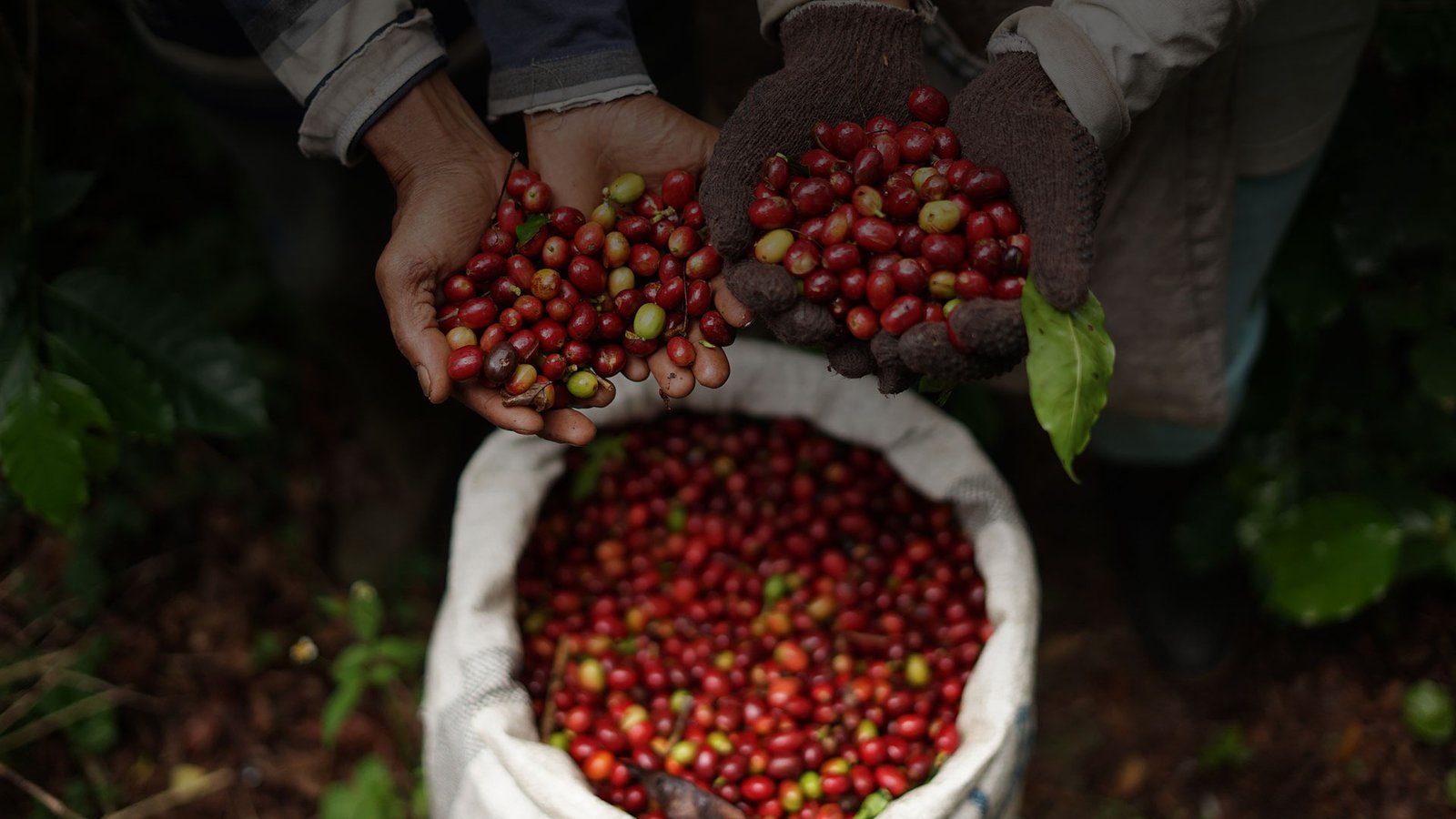
March is a month full of hard work when farmers start harvesting coffee cherries from their gardens. Indonesian coffee plantations pick cherries ready for harvest in the morning and afternoon. Then, they separate the cherries and coffee beans at night and wash them.
In this stage, the process for washing, naturalizing, or semi-washing the coffee cherry is also decided.
Some farmers do this washing process themselves. Some directly send their coffee cherries to the coffee factory. The disadvantage is that they will get lower wages, even though this is only the case in some regions of the world.
The harvest period begins to end in mid-April gradually. Unharvested coffee cherries will rot on the tree and attract pests, so it’s imperative to harvest them as soon as possible. These pests will affect the quality of the harvest in the following year.
In which month is coffee grown? Depending on the area, it produces coffee all year long, although the primary harvest is mainly from October to March, with a Mitaca fly crop from April to June.
FANDB Tech Coffee Plantation Pakpak Bharat
As a successful exporter, we developed a 3,412 Ha coffee plantation in Pakpak Bharat, Dairi, North Sumatra. Today, this plantation is the largest privately owned plantation in Medan.
Beyond our state-of-the-art processing facilities, we also use cutting-edge transportation and logistics systems to excel in handling and shipping coffee bean plants. We must strive to maintain great stakeholder connections as we grow our company.
As we expand our company over the whole coffee value chain, from plantation to retail and from coffee machines to coffee cafes, we now operate upstream and downstream in the sector. We are working hard to become the best source of coffee in Indonesia.
Additionally, PT. FANDB Tech Indonesia received several honours. We received 2010 Best Exported from Indonesia award that year. Our chairman received the honours of ASEAN Business Man of the Year in 2012 and Asia Pacific’s Most Outstanding Entrepreneur in 2011 consecutively. For our 23 years of expertise in advancing the coffee business in Indonesia, we were recently honoured to earn the Primaniyarta Award as a Superior Potential Exporter in 2013.
Coffee is one of the lucrative plantation commodities, not only at the national level but also at the international level. At the national level, coffee shops are easy to find in every region of Indonesia. Most of them use local farmers’/cultivators’ products, which makes young people interested in growing a coffee plant because it impacts the local culture.
Factors That You Must Consider in Growing a Coffee Plant
Gayo Coffee Plantation – FnB Tech Indonesia
1. The Selection of Types and Varieties
Coffee plants have many types and can reach thousands. Each type has different characteristics:
Arabica Coffee: The most preferred because the taste is considered the best. The ripe fruit is bright red. Yield (percentage of final product and yield) is around 18-20%.
Robusta coffee: Faster to harvest than Arabica. Fruit is round in shape. There is a tendency for the red colour to be dark. The yield is high (22%). It is cheaper than Arabica in terms of price.
Coffee Liberica: Its prestige is still inferior to Arabica and Robusta. The fruit size is uneven, and the yield is meagre (12%). But can grow well in the lowlands.
Coffee Excelsa: Can thrive in the lowlands and even on peatlands. Resistant to drought. The fruit’s skin is soft, so it is easy to peel. In 2006, Excelsa was considered a part of Liberika.
Apart from the technical side of the cultivation of coffee, another thing to consider is the selling price of the final product. Arabica coffee tends to be priced higher than other types. However, robusta has the highest productivity, and the yield is also high.
2. Preparation of Growing a Coffee Plant
Depending on the type, you can plant coffee plants in the high and lowlands. In general, coffee requires loose soil that is rich in organic matter. To increase fertility, give organic fertilizer and soil fertilizer around the plant area. Arabica will grow well at a soil acidity of 5-6.5 pH, while robusta will grow at an acidity level of 4-5.
The thing that you must prepare before starting coffee cultivation is to plant shade trees. Use shade trees to adjust the intensity of incoming sunlight. Coffee plants, including plants that require sun intensity, are not full.
The shade trees often used in growing a coffee plant are dadap, lamtoro, and sengon. Choose shade trees that don’t require much maintenance and whose leaves can be a great source of green manure.
It is recommended to plant Sengon protection trees four years before coffee cultivation begins. At the same time, the type of lamtoro can be faster, about two years earlier. Actions required to care for shade trees are leaf pruning and thinning.
When the land, shade trees, and seedlings are ready, the next step is to transfer the seeds from polybags to planting holes in the garden area. The recommended spacing for coffee cultivation is 2.75×2.75 meters for robusta and 2.5×2.5 meters for Arabica. This spacing varies with the height of the land. The higher the land, the rarer it is, and the lower it is, the closer the spacing is.
Make a planting hole with a size of 60x60x60 cm, making this hole 3-6 months before planting. When digging the planting hole, separate the top and bottom excavated soil. Leave the planting hole open.
Mix 200 grams of sulfur and 200 grams of lime two months before planting with the bottom-dug soil. Then insert it into the planting hole. About one month before the seeds are planted, mix 20 kg of compost with the top-dug soil, then put it in the planting hole.
4. Harvesting Coffee
If all the processes are carried out intensively, the next step of growing a coffee plant will produce results in less than five years. It depends on the type of coffee you grow. For robusta coffee, the fruit will begin to appear at the age of 2.5 – 3 years. In comparison, Arabica is aged three years – 4 years.
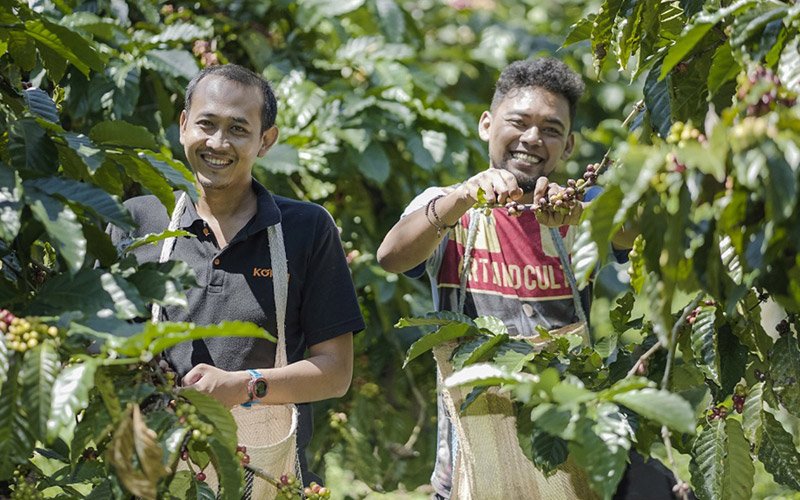
After the fruit is ripe, you can start the manual harvesting process, directly picking the fruit from the tree. Unfortunately, it usually can not produce in large quantities when the first harvest. But the coffee plant will continue to bear fruit until it reaches peak production at 7 – 9 years old.
One harvest period generally lasts between 4-5 months. During this period, you should pick about every 10-14 days until the plants do not bear fruit anymore.
3 Steps Of Coffee Plant Care
1. Balanced Fertilization
The purpose of fertilization is to meet the nutrient needs of coffee plants and improve the structure of the growing media conditions. If these nutrient needs are unmet, they will stunt plant growth, make it thin, wilted, and unproductive.
Fertilization of coffee plants must be done correctly, both at the right time, in the right type, in the correct dose, and in the proper administration. Usually, frequency of fertilization is done two times a year, namely at the beginning and end of the rainy season.
2. Pruning
Pruning removes some parts of the coffee plant that are considered diseased, disabled, and unproductive. It aims to increase the productivity of the coffee tree and clean up weeds that grow around it. The pruning process can be done two times a year and simultaneously with loosening the soil.
3. Wiwilan
For coffee to produce a large capacity of fruit, the wiwilan stage is also necessary. There are two types of wiwil for coffee plants: coarsewiwil done every month and fine wiwil every 3-4 months.
The wiwilan method removes branches with poor growth, such as water shoots and fan branches, in the hope of doing wiwilan so that growing a coffee plant are not generatively disturbed so that they can bear fruit, healthy and pithy.
Guarantee Your Best Coffee Beans in Town!
FnB Tech Indonesia is here to satisfy every coffee connoisseur with the best coffee beans. Our single-origin coffee beans are only sourced from an area of Indonesia with a long history of cultivating coffee, and we sustain enduring connections with reliable producers. A few hundred workers help FnB Tech Indonesia process coffee beans for shipment worldwide.