Tag: coffee

  • Known by Young People to Old People: History of Cold Brew Coffee

    Known by Young People to Old People: History of Cold Brew Coffee

    history of cold brew coffee

    If we look closely at the history of cold brew coffee, this coffee crafting is not new in concept. Even more, it has been deeply rooted for generations, starting from its origin in Japan. It was until two big coffee shop chains – Starbucks and Dunkin Donuts – adopted and introduced it to the U.S. market, the so-called cold brew coffee experienced soaring popularity. 

    Becoming a favorite choice among young and old people to date, cold brew offers three essential differences, particularly in the discourse of cold brew vs hot brew. It is brewed in cold water, requiring a minimum brewing time of 12 to 14 hours, and less bitter. 

    Apart from cold brew’s past to recent times, this article will also explore more about the reasons for its popularity and its future.  

    Starting From Kyoto, Japan

    Kyoto Style Cold Brew Coffee
    Kyoto Style Cold Brew Coffee

    Despite the debate on who initially developed cold brew, the Japanese or the Dutch, the first documented evidence of true cold-brewed coffee indeed comes from Japan. 

    1. Pre-1600 – Japan established cold brewing tea by soaking it in cool river water, saturating the tea leaves, and letting them brew. 

    2. 1600s – Kyoto-style coffee was the first record ever for cold-brewed coffee, derived its name due to its popularity in the city of Kyoto, Japan. There was an assumption that the Japanese learned the technique of cold brew coffee from Dutch traders and sailors. Dutch coffee was a boiled-down concentrate that needed no hazardous fire and could be bottled, easily carried on ships, and sold at ports. 

    3. Ca. 1640 – The Japanese developed their distinct brewing techniques, using their deep-rooted cold tea brewing to invent the machine for coffee brewing in public spaces. It was a hands-off method of a tall, elegant tower and gravity-based tubes.

    4. 1800s – A brand called Camp Coffee, similar to Dutch coffee, was bottled and shipped to European troops during wartime. 

    5. 1930s – Cuba gave cold-brewed coffee a makeover, resulting in the popularity of iced coffee all over the U.S.

    6. 1960 – The birth of The Toddy by Todd Simpson after witnessing the cold brew coffee process on his trip to Peru.

    7. 1990s – The trend of making coffee concentrate for blended drinks by coffee shops in America. 

    8. 2000s – Two innovative coffee houses adopted cold brew – New Orleans-style iced coffee by Blue Bottle and nitro cold brew by Stumptown Coffee Roaster.

    9. 2010 – More people can easily get and experience cold brew in the U.S., ranging from the availability at third-wave coffee shops to even corner stores. 

    The Rising Popularity of Cold Brew Coffee

    Popularity of Cold Brew Coffee
    Popularity of Cold Brew Coffee

    A decade after the 2000s, the history of cold brew coffee witnessed staggering popularity ever, especially after the adoption of this coffee crafting by two major coffee shop chains – Starbucks and Dunkin Donuts. 

    Some reasons make cold brew so popular among coffee aficionados around the globe:

    1. Sweet and smooth taste

    Cold brew offers smoothness and sweetness in taste. If hot water generates acidity, cold water tends to be void of acids. That’s why cold brew makes a great pair with milk as milk complements a smooth and sweet taste. 

    2. Stable 

    Much more stable compared to hot coffee, cold brew is widely chosen for packaged beverages. 

    3. Longer shelf life

    For example, a keg (a small barrel or less than 30 gallons) of cold brew coffee may have about a 90-day shelf life. 

    4. Cost-effectiveness and ease

    In small or large batches, cold brew is relatively easy and cost-effective, even at home. The ease also has led to the invention of at-home cold brew machines. 

    More advanced technologies and machines

    The latest coffee-based technologies and machines have improved and reinvented cold brew, bringing it out to a larger market. 

    The Future of Cold Brew Coffee

    Future of Cold Brew Coffee
    Future of Cold Brew Coffee

    Initially introduced as an elite drink in the industry of food service, cold brew has significantly shaken the coffee industry and history. New technologies and crafting methods have allowed the public, in general, to access and experience this once-exclusive beverage.

    As projected by Grand View Research, the popularity of cold brew does not seem to stop. Even, the global market of this unique coffee crafting can expect a growth of 25.1% in compound annual growth rate (CAGR) from 2019 to 2025. 

    A popular beverage in numerous specialty coffee shops, cold brew – the handcrafted and premium one – also has increasingly opened up profitable growth prospects for the world’s market. 

    The growing popularity of cold brew also can be attributable to the millennial those making up a sizable amount of the global coffee-drinking population. Cold brew can be a caffeinated alternative to soda or other artificially flavored or sweetened beverages. 

    Starting allegedly in Japan, the history of cold brew coffee has shown various makeovers and reinventions, peaking with its shocking popularity across the globe. Offering smoothness, sweetness, and low acidity, cold brew succeeds in appealing the old and young coffee drinkers, especially the millennials.

  • From Trees to Your Cup: 3 Types of Coffee Processing Methods

    From Trees to Your Cup: 3 Types of Coffee Processing Methods

    Types of Coffee Processing Methods

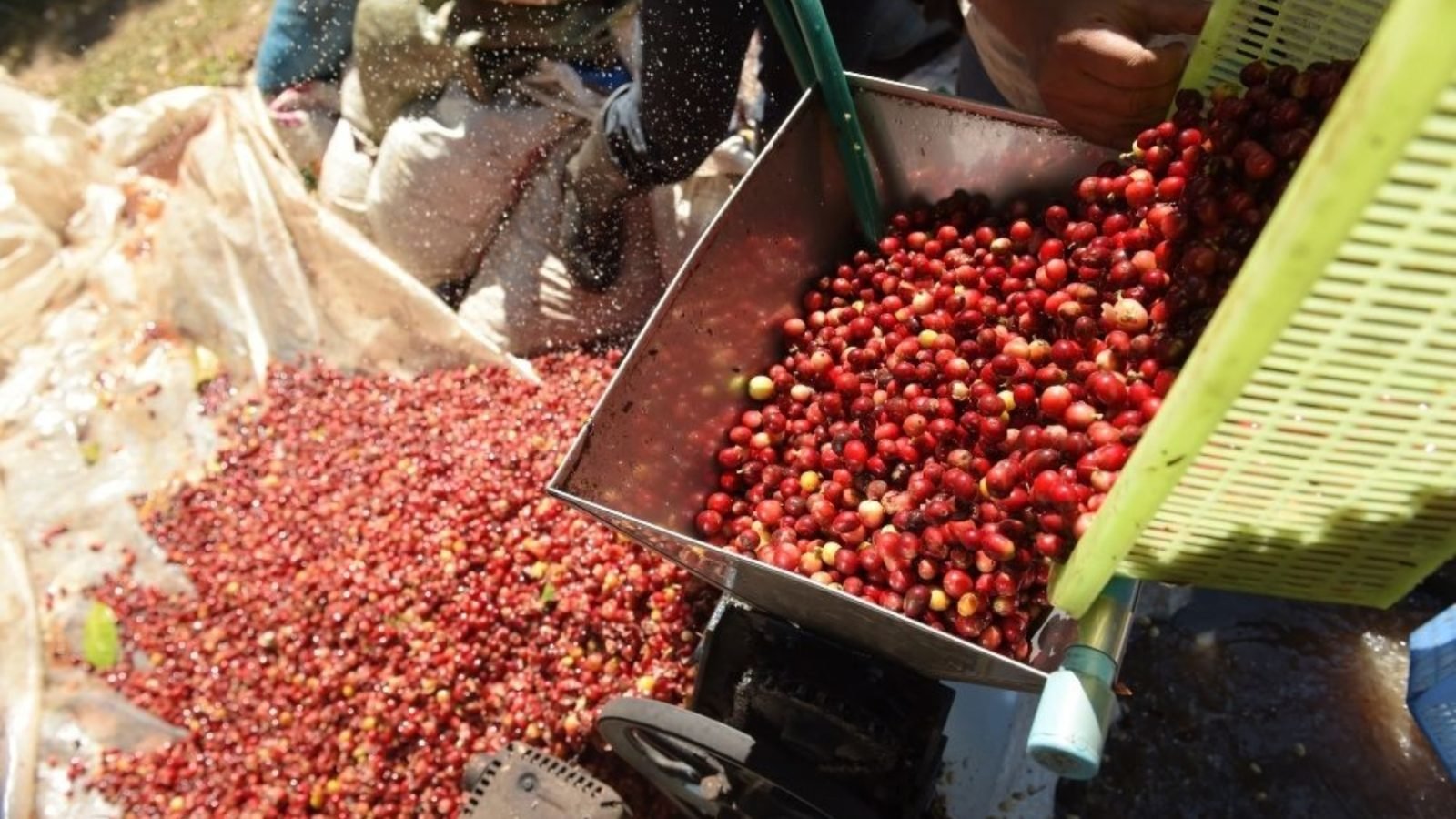
    Your cup of morning joe must go through several steps from harvest to your grinder and coffee machine. The second step is coffee processing, which transforms the cherries into dried beans, ready to be roasted. There are three types of coffee processing methods used around the world: natural (dry process), washed (wet process), and honey (pulped natural).

    Depending on where the coffee processing spot is located, there might be one more method: semi-washed (wet-hulled). All these methods have one similarity: they are used to separate the coffee beans from the cherries. Coffee farmers must apply the correct method carefully since processing affects coffee beans’ flavor profiles. 

    What are those 3 types of coffee processing methods?

    Also Read: 8 Types of Coffee Beans in Indonesia, Unique & You Must Try!

    Natural Processing Method (Dry Process)

    types of coffee processing methods - drying method

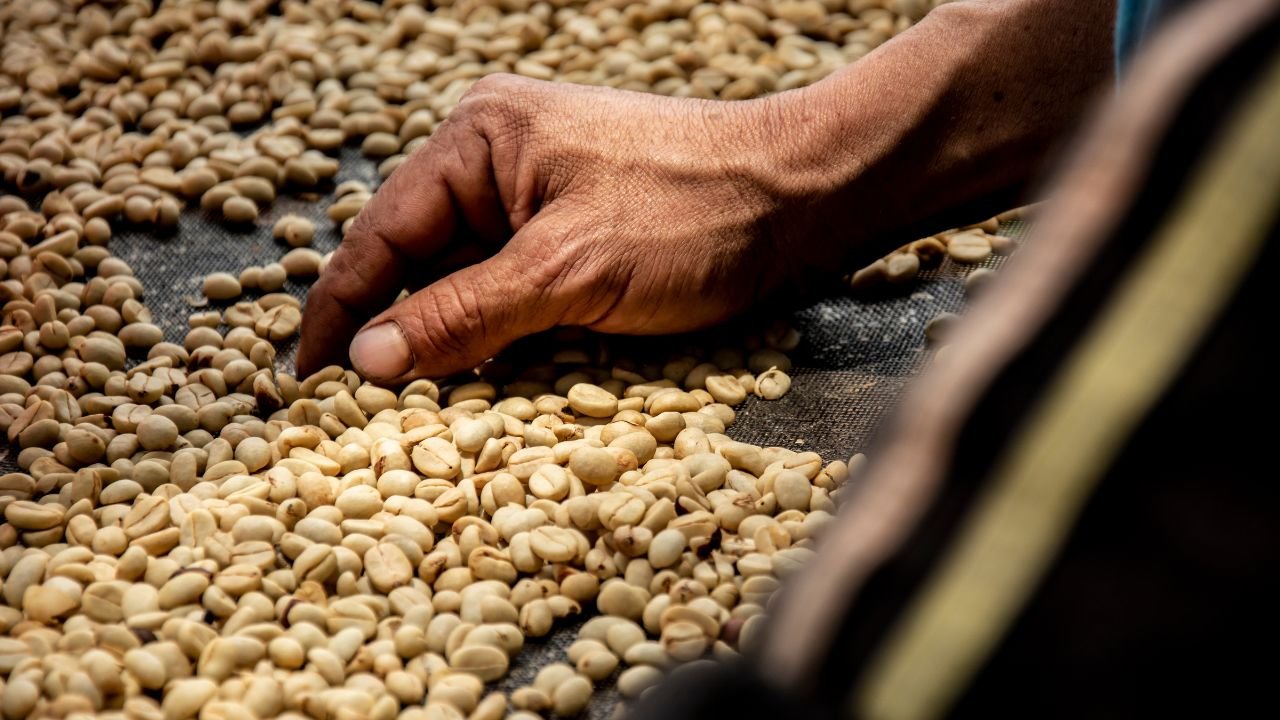
    Natural processing is a traditional method that was first practiced in Ethiopia, where coffee was first cultivated. In this method, coffee cherries are dried naturally under the sun, with their seeds still inside. While it is the oldest method of processing coffee, it is not a popular choice for producing high-quality beans.

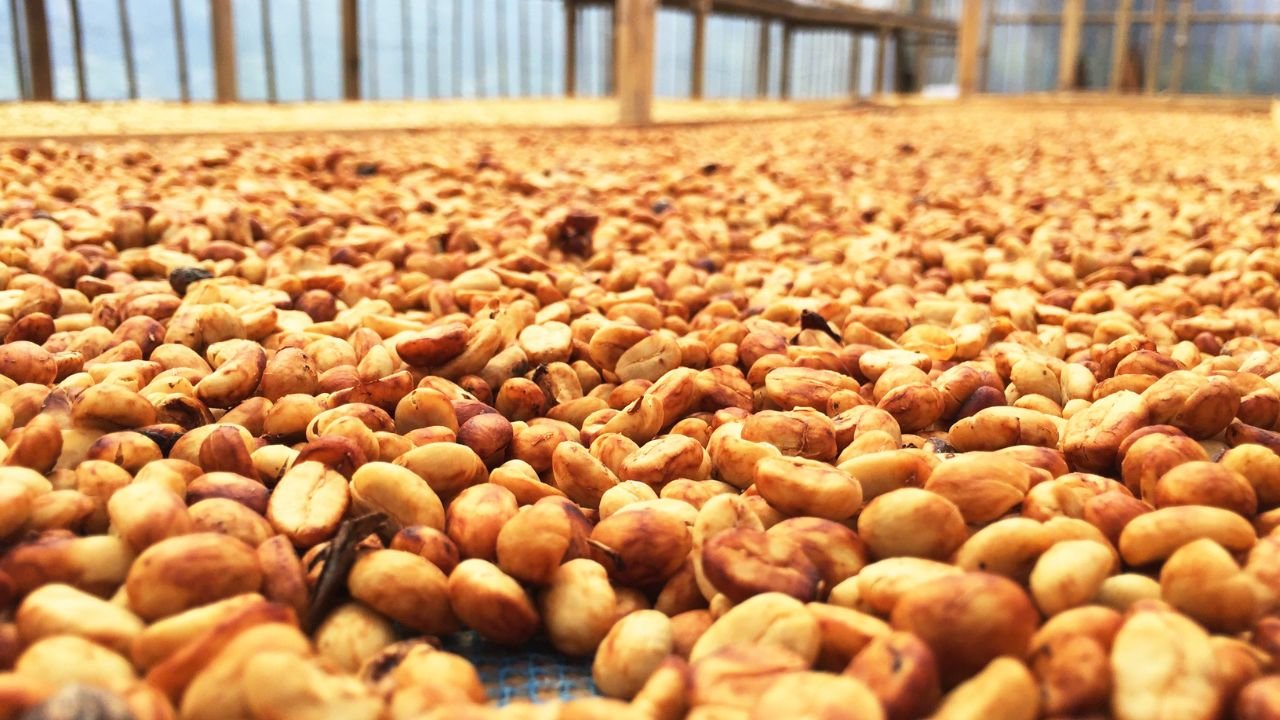
    Coffee cherries are placed on a drying platform, such as a raised bed, a table, or a patio. The process lasts around three to six months, and farmers occasionally rake the cherries to keep them from spoiling. The process makes mucilage and sugars latch on the beans, giving them a unique, sweet flavor profile.

    Advantages

    • The process is cheap and easy
    • Creates natural sweetness in the coffee beans
    • Perfect for producing coffee beans with low acidity

    Disadvantages

    • The process depends on weather and other natural elements
    • The drying process may not be uniformed
    • Different daily temperatures can affect the flavor profiles
    • Associated with low-quality or cheap coffee

    Coffee with a full body and subtle fruity flavor, such as Hawaiian Kona, usually results from a natural method.

    Washed Processing Method (Wet Process)

    Washed Processing Method (Wet Process)

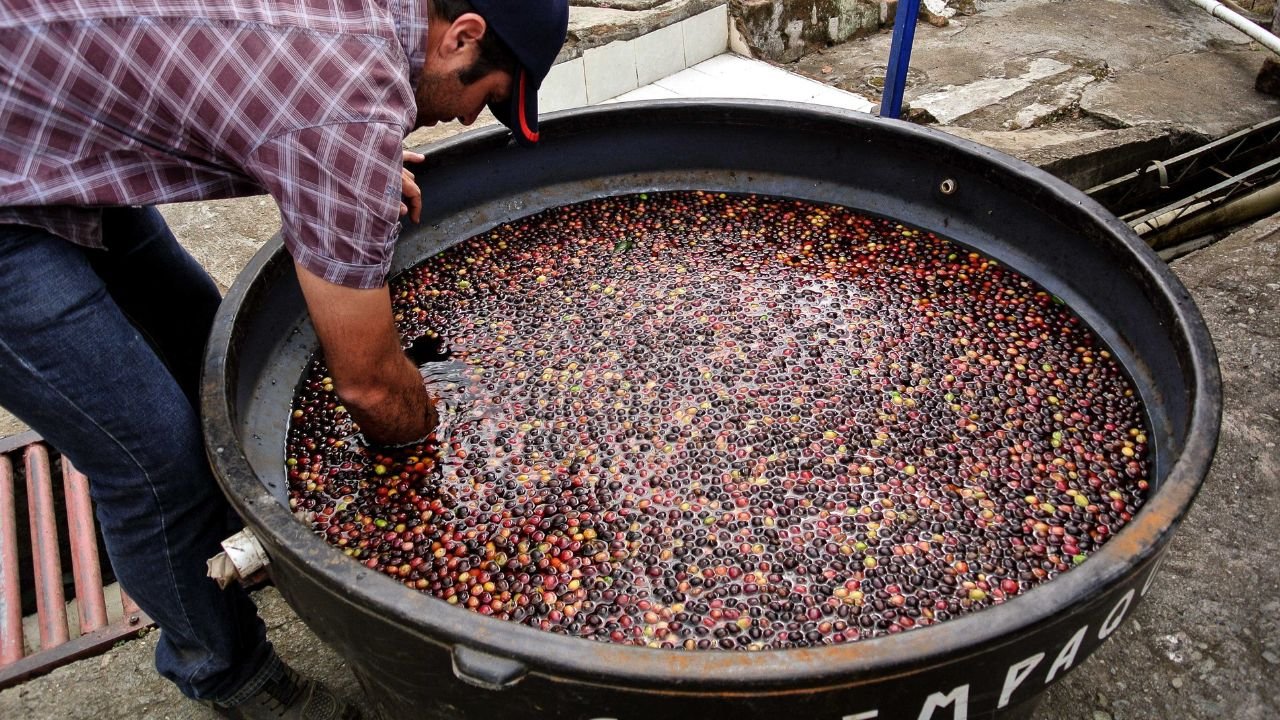
    The washed processing method is the most popular one in the world of commercial coffee. Farmers must choose coffee cherries with specific ripeness and process them within 24 hours after harvest. They separate the seeds using a process called “depulping” before putting them into a large water tank to be washed clean. Afterward, the seeds are dried under the sun.

    This process is used to produce coffee beans of higher quality. The extra steps ensure a crisper flavor profile compared to the traditional drying method. The wet process is popular for high-grade coffee beans, especially Arabica.

    Advantages

    • Better coffee beans quality as a result
    • Crisper flavor profile
    • Faster processing time
    • More homogenous results in the bean processing method

    Disadvantages

    • Requires extra costs for water, water tank, and other additional facilities (compared to traditional processing method)
    • Creates more waste
    • The improper method can cause excessive sourness in coffee beans

    This method usually produces coffee with a light, crisp, and bright flavor profile. A lot of varieties from Central America have these characteristics.

    Also Read: Wet Hulled Coffee Process: Unique Technique from Indonesia

    Honey Processing Method (Pulped Natural)

    Honey Processing Method (Pulped Natural)

    The honey processing method is more complicated, combining elements in natural and washed methods. The goal is to create coffee beans with the best characteristics from both methods. The word “honey” refers to mucilage, a sticky cellulose layer with a natural sweetness that covers coffee seeds.

    In this method, farmers harvest coffee cherries with specific ripeness before putting them in a “depulping” machine, like in washed method. However, instead of putting the beans into a water tank for washing, farmers let the honey layer stays on the beans. Afterward, they dry the beans under the sun, like in the natural method.

    When using the honey processing method, the naturally-sweet layer affects the flavor profile of the beans. The results are coffee beans with more complicated flavor profiles, with a clean body and prominent acidity, balanced with mellowness and natural sweetness.

    Advantages

    • Costs are lower than the washed processing method
    • Creating more complicated flavor profiles in beans
    • Retaining the coffee beans’ natural sweetness
    • More environmentally friendly (no water tank and minimum waste)

    Disadvantages

    • The coffee quality depends on the weather and other natural elements
    • The improper humidity level can spoil the beans
    • The harvest quality affects the final flavor profile of the coffee

    Coffee beans processed with honey may appear white, black, yellow, and red. The colors represent the amount of mucilage removed. The darker the color, the less layer removed, which means the black beans have a more complex flavor profile.

    Also Read: Be The Master! 4 Coffee Roasting Levels Chart: W/ Image & Guide

    Conclusion

    Bringing coffee beans from harvest into your cup requires several steps, and types of coffee processing methods is vital. Farmers in the past mostly used natural methods, which only required drying and manual raking. However, the washed method adds a washing process to ensure crisper, brighter, higher-quality coffee. Meanwhile, the honey processing method keeps the cellulose layer on the seeds to maintain the natural sweetness before they are dried under the sun.

    While each method has advantages and disadvantages, they offer unique characteristics of coffee flavors. The most important thing is ensuring that the harvested cherries have the best quality and the perfect level of ripeness. Such high-quality cherries will create the best coffee, regardless of the type of coffee processing methods used.

  • C Market Coffee: The Economics Behind Your Daily Cup of Joe

    C Market Coffee: The Economics Behind Your Daily Cup of Joe

    C Market Coffee

    Your cup of coffee holds more importance than just the flavor, aroma, and kick. Coffee is an important global commodity that earns its trade market. The C Market coffee trade is the center of global coffee commerce, where commodity exchange happens under international trade regulations.

    Any discussions about the C Market should be interesting if you have a coffee business or read trade news in general. International Coffee Organization even creates monthly and annual market reports on global coffee prices, which are precious analytical tools for business owners and traders.

    What is C Market Coffee?

    The C Market refers to a global commodity exchange focusing on coffee and its prices. The exchange center operates like all commodity trade centers, such as gold, oil, wheat, and sugar. The coffee bean types that are traded in this market are Arabica.

    The “C” in the name does not refer to “coffee” but “central”. Arabica coffee used to be traded globally in a “U (Universal) Market”. It was changed into C Market around 1968 or 1969 because coffee producers from Central America looked to distinguish the prices of their commodities.

    How is Coffee Traded in the Market? 

    There are four ways to trade C Market coffee. They are:

    1. Coffee Futures

    Futures are the most standard methods to trade coffee. You and other parties exchange specific quantities of coffee using a predetermined price and date.

    2. Coffee Options

    Options are similar to futures, but buyers are not obligated to purchase at a determined date and price. It is a better trading method if you are worried about price volatility.

    3. ETF

    Coffee ETF (exchange-traded fund) is a specific investment fund that allows buyers to track market performances. The funds can be traded at the securities exchange, exposing buyers to fewer risks than coffee futures.

    4. Company Stocks

    You can invest in the stocks of the “Big Four,”; international coffee companies that buy 50 percent of all the coffee in the market. They are Kraft, Nestle, Procter & Gamble, and Sara Lee. 

    Traders must rely on specific rules when trading coffee at the C Market. For example, each coffee type must come from one of the countries in the trade list, with the best conditions and free of aged or unwashed flavors. Any contracts in futures and options must not exceed 60 months (including the current month).

    C Market Coffee Trend and Implication

    The coffee trend at the C Market is affected by various factors, such as climate, weather, and global-scale situation, such as the pandemic. The post-pandemic situation and other recent factors have affected the C Market coffee trend, with large-scale implications.

    The current trend is affected by Brazil, the leading coffee producer at the C Market. Before COVID, Brazil contributed to 40 percent of the global coffee trade. Brazil’s pandemic, extreme drought and frost, and logistic challenges have lowered Brazil’s coffee production. It, in turn, affected the prices at the C Market.

    Despite the challenges, coffee is still in high demand in the commodity market. Traders only need to be smarter and more budget-conscious when making their options. For example, traders need to have more detailed calculations in their budgeting. Traders must also have more flexible financial strategies to anticipate price volatility.

    Coffee Farmers and C Market Coffee

    Coffee farmers get benefits from C Market coffee’s policy on price. Since it creates the price benchmark, farmers can use the information to get better commodity offers.

    However, C Market countries’ conditions can affect coffee farmers’ conditions. For example, Brazil’s recent climate-remated disadvantages and global pandemic have greatly impacted coffee farmers. Farmers in Brazil received the impact of the fall in coffee prices.

    Many producers and land-owning farmers have decided to focus on specialty coffee to reduce the negative impact. It is because specialty beans often receive premium price labels compared to regular commodities.

    Also Read: Specialty vs Commercial Coffee: Which One is Right for You?

    Does C Market Coffee Affect Coffee Prices?

    C market coffee

    Coffee is one of the most popular commodities in the world. Commodity markets need to enforce specific rules and regulations to ensure smooth trading. It includes determining the right prices.

    C Market coffee has an important role in determining global coffee prices. It creates a benchmark for global traders, producers, and business owners to determine the best prices. C Market’s price and trading regulations also ensure that the global coffee market always has high liquidity.

    Are There Other Coffee Markets?

    C Market is the center of the global coffee trade, but it is not the only coffee market in the world. 

    Since it focuses on Arabica beans, traders interested in Robusta should look for other alternatives. ICE Futures Europe, for example, is an intercontinental exchange market for various commodities and products, including Robusta beans.

    Tokyo Grain Exchange also offers options, futures, and other trade products in commodities, including coffee. Meanwhile, Brazilian Mercantile and Future Exchanges is one of the largest exchange centers in the world, where coffee is one of the most popular commodities.

    C Market coffee is not the only precious commodity to support your business. You can also buy high-quality coffee beans from wholesale suppliers in coffee-producing countries like Indonesia especially products Indonesia specialty coffee . FnB is an Indonesian coffee bean supplier and wholesale green coffee bean seller, a perfect partner for your coffee business. Contact FnB to get your high-quality coffee beans supplier and participate in the successful coffee business world.

  • Decaf and Patented: Secret of Swiss Water Process Decaf Coffee

    Decaf and Patented: Secret of Swiss Water Process Decaf Coffee

    Swiss Water Process Decaf Coffee

    When you hear “decaf coffee”, you probably think “caffeine-free”, but no! According to European regulations on coffee, decaffeinated coffee should contain no more than 0.3 percent in coffee extracts and 0.1 percent in green beans. Therefore, a cup of decaf may still contain 2 to 7 mg of caffeine, compared to 70 to 140 mg in a regular one.

    Some people avoid decaf coffee because of its presumably “weird” flavor. However, a product like Swiss Water process decaf coffee proves that you can enjoy decaf without losing the goodness of regular coffee.

    What is Swiss Water Process Decaf Coffee?

    Swiss Water is a decaffeinating process that combines Green Coffee Extract (GCE) and water without any chemicals. This method differs from the common decaffeinating method, which uses chemicals like methylene chloride and ethyl acetate.

    History of Swiss Water Process Decaf Coffee

    The Swiss Water method was born the world’s only non-chemical decaffeinating method in 1933 Switzerland. The goal was to create decaf coffee that did not leave a strange aftertaste in the mouth, a big no in Switzerland’s coffee culture. This method is so specific it is now patented.

    One major risk of a chemical-free process is inconsistencies in each processed coffee batch. Therefore, decaf coffee companies that use this method, such as Swiss Water, ensure they provide certifications, such as the Certificate of Analysis, FSSC22000, and certificates from the CFIA and FDA.

    Baca juga: Rainforest Alliance Certified Coffee, What Is It and Why Important?

    The Swiss Water Decaf Process

    Making Swiss Water decaf coffee involves long, multiple stages that mostly use water, GCE, and carbon filtration in the facility. The GCE combines water-soluble solids in green coffee (except caffeine) and filtered water. 

    How Swiss Water Process Decaf Works

    swiss water process decaf coffee

    Here are the main stages in the Swiss Water method:

    1. Soaking the Beans

    During the preparation, all the green beans are soaked in filtered water. It removes all the unwanted chaff and dust and increases moisture levels.

    2. Adding the GCE

    The soaked beans are introduced to the GCE and left for about eight to ten hours. The caffeine imbalance will slowly make the caffeine in the green beans move into GCE by diffusion.
    3. Drying and Bagging

    Once the caffeine is removed, the green beans are removed to be dried. They are then bagged and shipped to buyers and roasters worldwide.

    What about the trapped caffeine in the GCE? Once the beans are removed, the GCE will pass the carbon filtration system. It will trap the caffeine, which will later be burned in the furnace.

    Advantages over Other Decaffeination Methods

    Decaf coffee is important for people with low caffeine tolerance. Consuming “decaf coffee” that still has more caffeine than they can tolerate can result in symptoms like palpitation, jitters, headache, restlessness, and insomnia. The Swiss Water process is perfect because it removes most caffeine, even more than the other decaffeination methods. 

    Swiss Water beans also lose most of their cellulose because of the long process compared to other decaf beans. When you roast Swiss Water coffee beans, you may notice that their oil rises more quickly. They also tend to crack faster but with a softer sound.

    Impact on Flavor and Taste of Decaf Coffee

    Do Swiss Water process decafs taste just like non-decaf coffee? The answer is: yes; it’s pretty close. The lack of chemicals greatly reduces the “weird flavor” that some people taste when drinking other decaf coffee caused by chemicals. The flavor is the closest you can get to regular coffee.

    Also Read: Can We Drink Coffee During Pregnancy? Check Out These Facts!

    Benefits of Swiss Water Process Decaf Coffee

    What makes the Swiss Water method more beneficial than other similar methods? First, there is the obvious health benefit. Less caffeine means lower risks of caffeine sensitivity symptoms. You are also likely to drink more coffee and get health benefits from antioxidants, potassium, and magnesium, without the caffeine effects.

    Decaf coffee is also a great “transition beverage” for people who want to cut back on coffee entirely. Instead of going cold turkey, you can switch to regular coffee with the Swiss Water one. You can still get the flavor and aroma without the caffeine kick.

    The lack of chemicals makes the Swiss Water method more sustainable because the waste does not contain typical chemicals used in common decaffeination methods. The method produces more efficient carbon usage because it mainly involves water and green bean extract.

    How Much Caffeine is in Decaf Swiss Water?

    Let’s compare the amount of caffeine in Swiss Water coffee and regular decaf one. A standard cup of coffee (around 354 ml) contains around 70 to 180 mg of caffeine. If manufacturers follow caffeine regulations, a standard cup of their decaf coffee may contain around 2 to 7 mg of caffeine.

    Since Swiss Water removes 99.9 percent of caffeine, the caffeine amount is close to zero. Finding delicious decaf coffee can be difficult due to the chemicals that affect the flavor. Swiss Water process decaf coffee is the perfect option for a delicious beverage without weird chemical notes and caffeine effects.

  • Pruning VS Stumping: Why Coffee Farmers Use Different Methods

    Pruning VS Stumping: Why Coffee Farmers Use Different Methods

    Pruning and Stumping

    Coffee trees require regular maintenance, such as pruning and stumping. Regular maintenance is important for tall plants to keep the trees healthy and the yields abundant. Do you know the differences between pruning and stumping and why farmers adopt one or another?

    The Importance of Pruning and Stumping for Coffee Trees

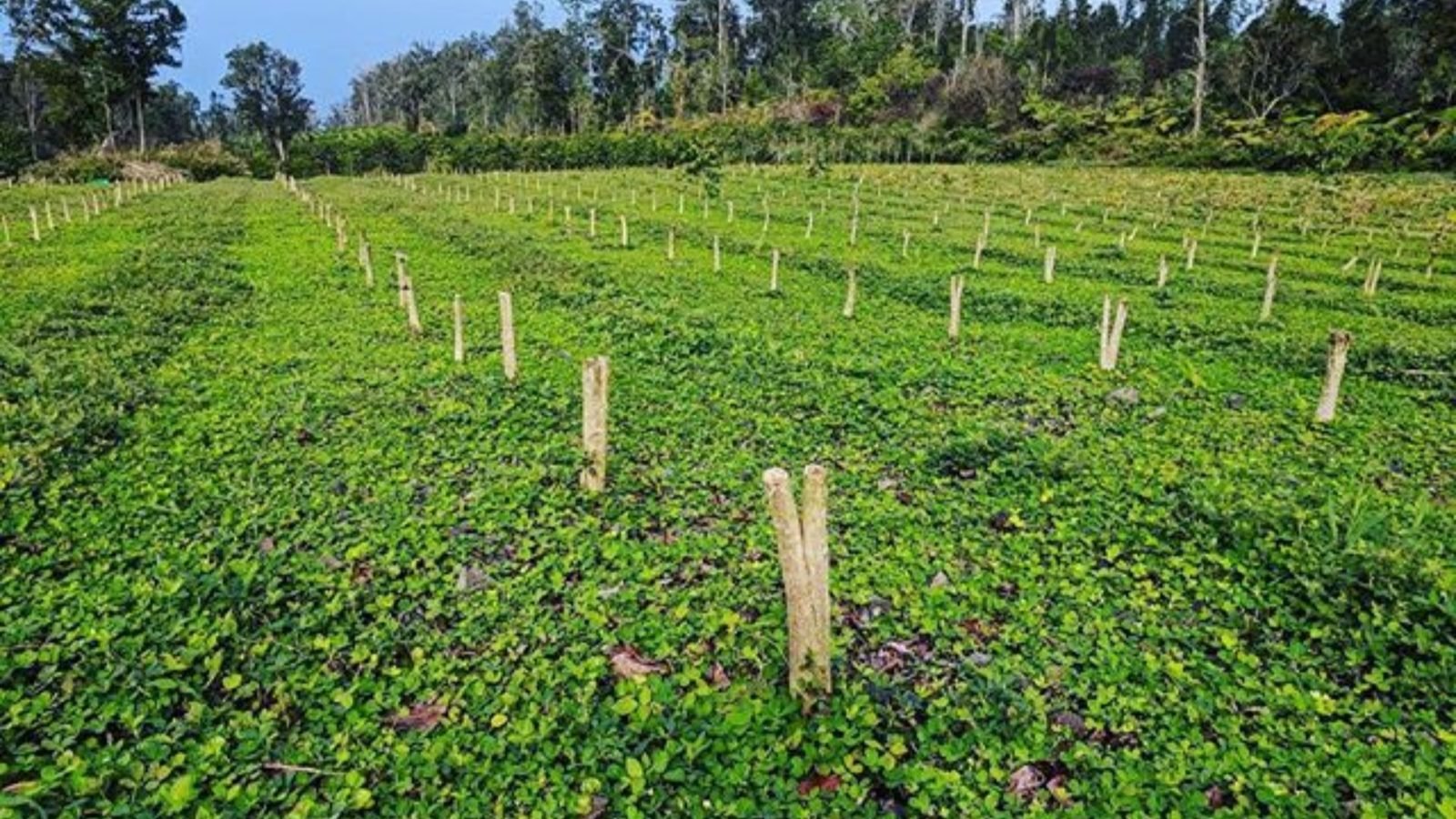
    Pruning and Stumping Coffee Plantation

    Coffee trees are pruned to increase productivity and make harvesting fruits easier. When coffee trees grow tall and bushy, the air and light cannot reach all parts of the plants. It will prevent all the branches and leaves from getting enough energy to produce fruits and flowers. The problem gets exacerbated when coffee trees grow older and bushier.

    Diseases, molds, and pests are major risks for coffee trees that are not pruned or stumped. Without maintenance, parts of the trees will become moist and deprived of light, a perfect breeding ground for pests.

    Finally, pruning and stumping help extend coffee plants’ production as they age. The combination of natural depletion, aging, and phytosanitary problems may affect the yield, but pruning and stumping keep your coffee plants productive a little longer.

    Also Read: From Trees to Your Cup: 3 Types of Coffee Processing Methods

    Techniques of Pruning and Stumping

    Before learning about the differences between pruning and stumping, remember that coffee-producing regions worldwide may use different techniques. Various factors determine the decision to pick a technique, such as the production age, varieties, plantation density, environmental conditions, and risk factors of diseases and pests.

    Pruning

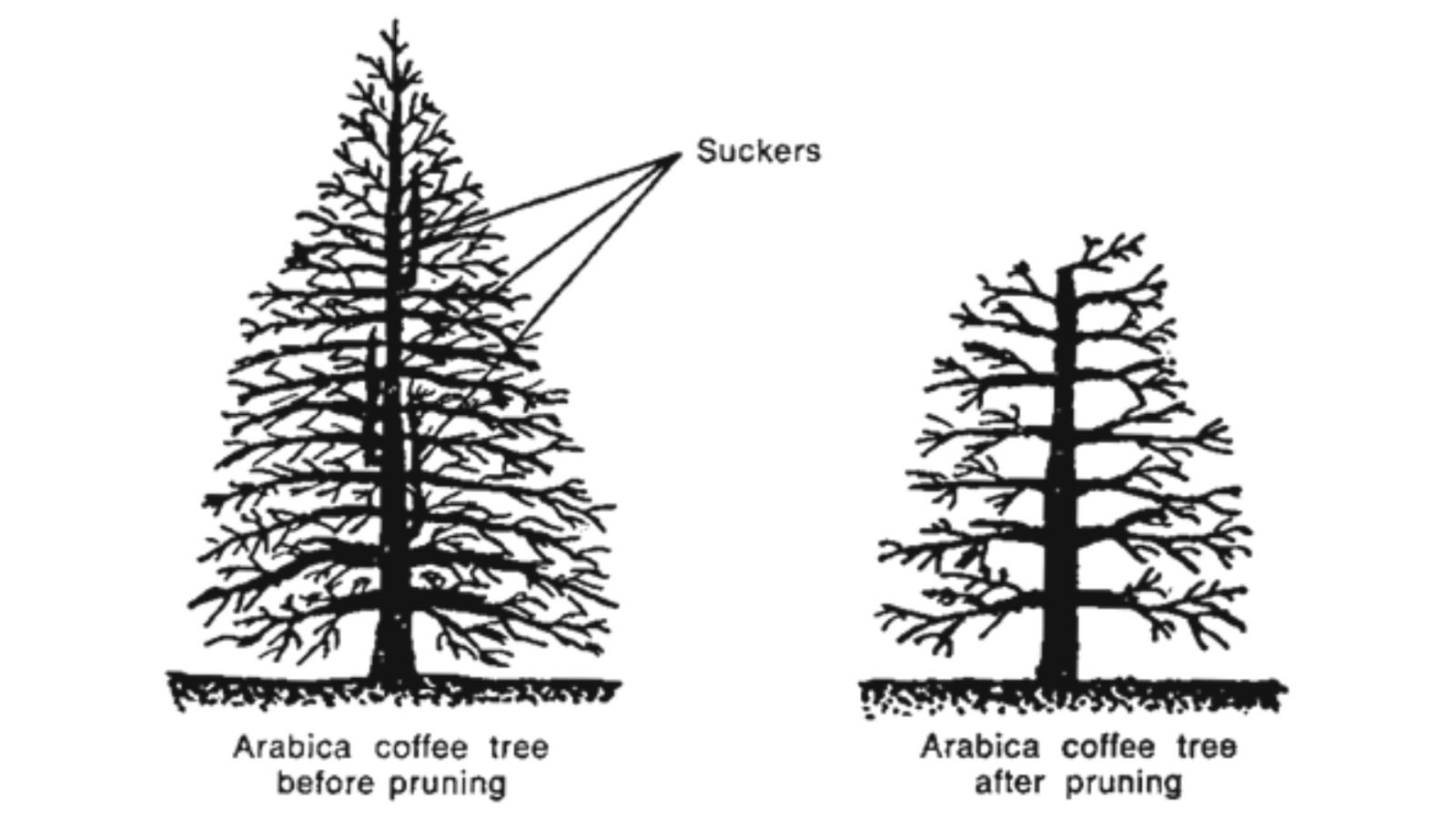
    Coffee Tree After Pruning
    Coffee Tree After Pruning

    Pruning means cutting some of the unnecessary branches until the coffee plants reach the desired size and shape. This method reduces the plant’s thickness, allowing air and light to reach all parts and removing the diseased or damaged branches.

    There are three types of pruning performed on coffee plants. They are:

    1. Topping 

    Topping occurs when the coffee plants are about two years old or younger and continues as regular maintenance. The goal is to keep them from getting too tall or growing overly thick stems. 

    2. Bending Pruning

    Bending pruning is done on plants younger than four years old but experiencing diseases. The plant is bent at a 45-degree angle and tied to a stake before being pruned close to the ground. This method encourages the growth of new, healthy sprouts.

    3. High Pruning

    High pruning is a method applied to coffee trees that already experience a decline in their yields (compared to the previous years). However, this is only performed on coffee trees still in productive years.

    Another pruning method is pinching, which is usually done after stumping. When you see new sprouts growing from the cleared stems, check to pick the ones that grow most vigorously. Pick four or five best sprouts, and remove the others. A month afterward, pick the best two or three sprouts and repeat the removal process. This way, the main sprouts will be supported by the remnants of the secondary ones, which you had removed.

    Also Read: Exploring the Regions Where Coffee Beans Grow Best

    Stumping

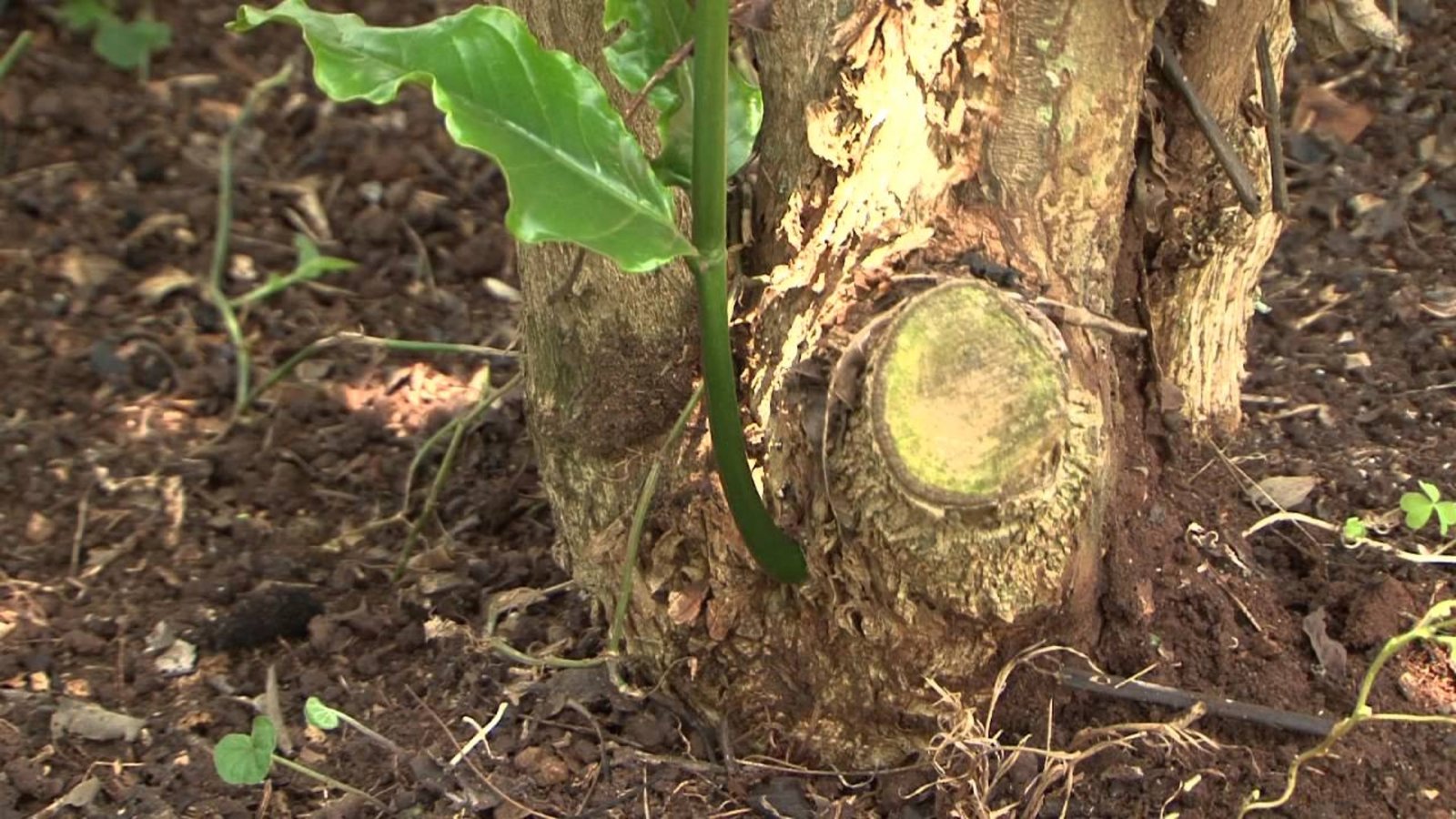
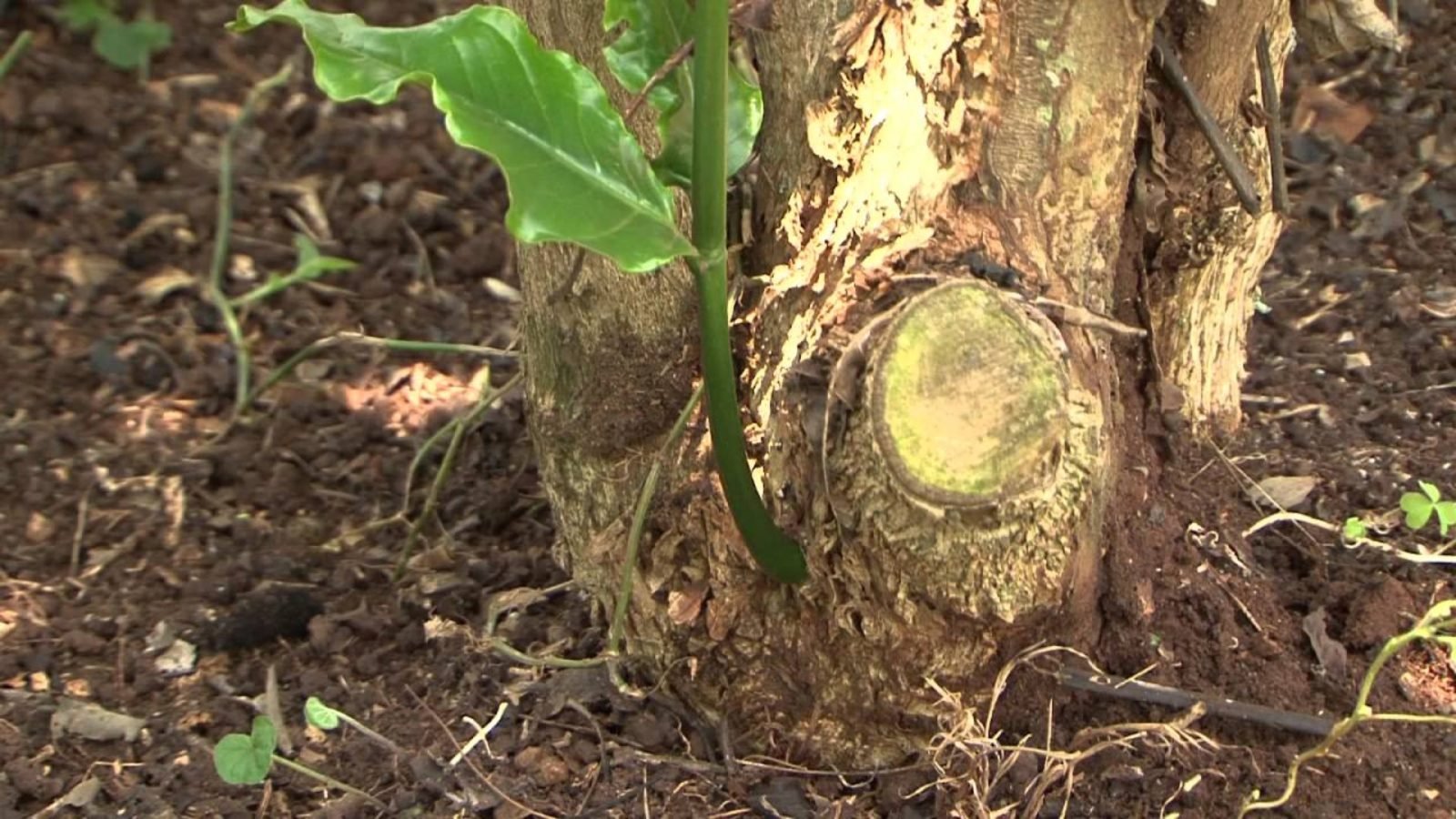
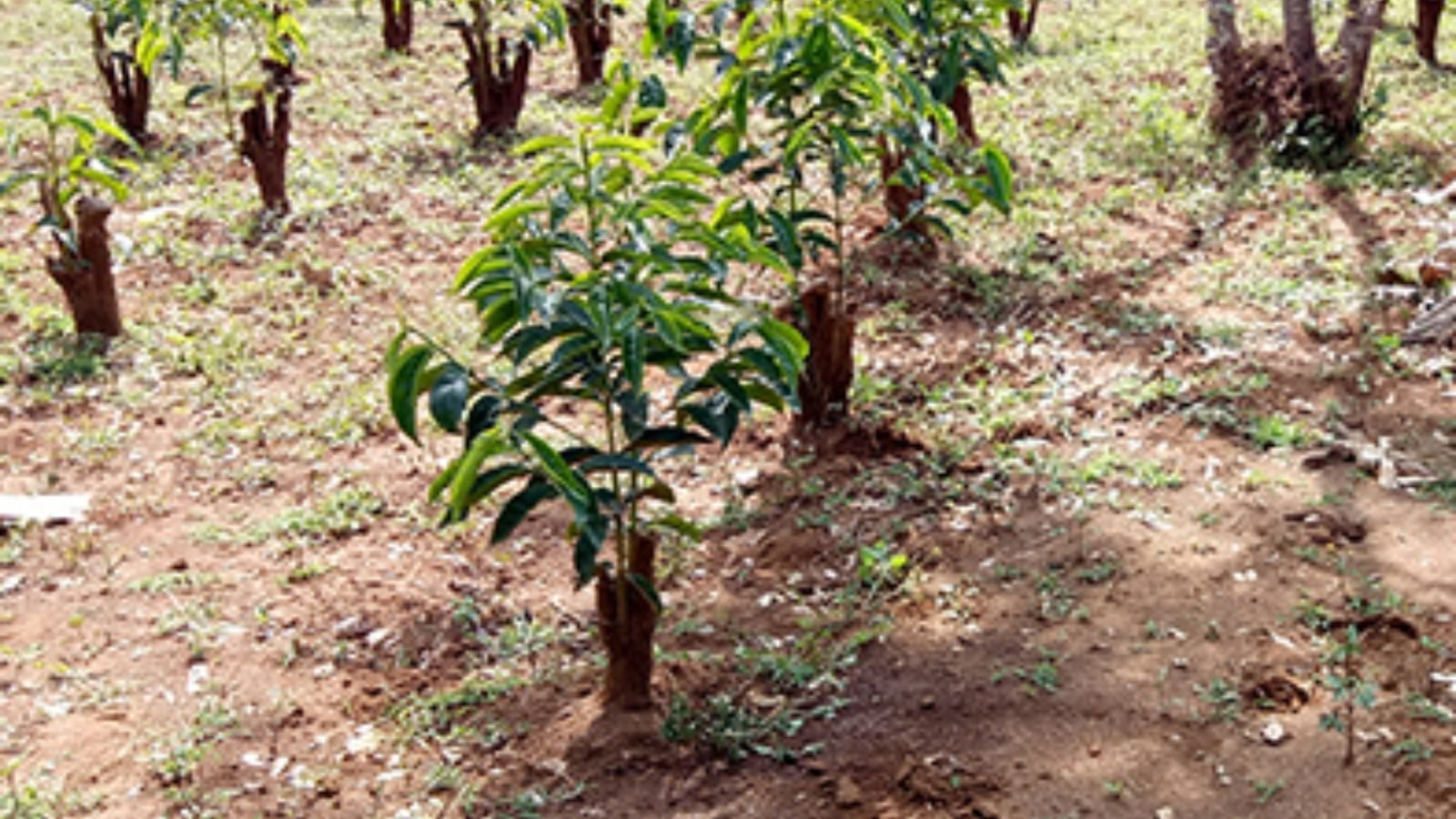
    Coffee Tree After Stumping
    Coffee Tree After Stumping

    If pruning is a form of regular maintenance, stumping is an aggressive method performed on old or heavily infested trees.

    With stumping, farmers cut the stems around 20 to 30 cm above the ground, stripping the stems off the branches. This method is used to encourage the regenerative period. If the stumping is done correctly, farmers can wait for two years before the stumped trees start producing flowers and fruits again.

    Depending on the tree’s condition and height, farmers sometimes leave a few stems. However, any stumping method must include careful cutting, ensuring that the remaining trees still have the nutrients they need to grow.

    To achieve the best stumping method without depleting the trees of nutrients, farmers must make a clean, oblique cut without leaving any cavity. Ensure all the stumping tools are sharp so each cut will be clean. If the trees are infected, burn all the diseased branches after stumping them and disinfect them carefully.

    When is the Right Time for Pruning and Stumping?

    Farmers must schedule pruning and stumping at different times depending on when they planted the trees. However, the ideal time for the actual pruning and stumping is after harvest, during cold weather.

    The trees will not grow sprout by pruning/stumping during this time. Since farmers will not harvest anything that grows from the trees during this time, there will be no risks of diseases or fungal infections.

    Conclusion

    In the end, there are no identical methods when scheduling pruning and stumping methods. Different plantations and coffee plants may require specific schedules based on their cultivations, plant types and ages, and the producers’ goals. Coffee producers must create long-term maintenance plans tailored to their plants. This way, the plants are healthy, and the yields are abundant.

    High-quality coffee producers understand the differences between pruning and stumping and work to create long-term plans for these maintenance plans. You can see the result by ordering coffee beans from FnB.co.id, a coffee exporter based in Indonesia. Working with the best coffee producers, FnB offers only the most prestigious beans, the results of excellent cultivation and maintenance.

  • 8 Best Coffee Plantation to Visit in Bali, Don’t Miss It!

    8 Best Coffee Plantation to Visit in Bali, Don’t Miss It!

    Best coffee plantation to visit in bali

    As a coffee snob who’s deeply into coffee details, you must be curious about which place is famous for coffee plantation in Indonesia. The answer is Bali, an island internationally renowned for its culture and maritime tourism. Bali is also a paradise for every coffee snob who likes to explore various coffee plantations and enjoy brewing local coffee. 

    Then check the following review to find out the best coffee plantation to visit in Bali.

    1. Alas Harum Bali 

    Alas Harum Bali

    “Good place for rest, coffee, nature, and friendly staff.”

    Google Review

    Alas Harum is a famous agritourism serving civet coffee in Bali. Visitors can directly see the processing of the world’s most expensive coffee, which still uses traditional methods. Civet coffee, or Kopi Luwak, comes from digested coffee cherries eaten and defecated by the Asian palm civet. 

    Aside from seeing a panoramic Arabica plantation and doing a coffee tasting, this place will offer you other fun activities like zip line, swing, etc.

    • Address: Jalan Raya Tegallalang, Tegallalang, Kec. Tegallalang, Kabupaten Gianyar
    • Operating hours: Every day from 9am to 6pm
    • Entry fee: Rp50,000 per person

    2. Bali Pulina 

    Bali Pulina Plantation

    “Super friendly staff and amazing place for enjoying coffee and spices.”

    Google Review

    For those seeking the best coffee plantation to visit in Bali, this place will be a great alternative. By visiting this plantation, you can see how local coffee plants grow as well as its making process. Luwak Coffee is also the best-selling coffee in Bali Pulina. Undoubtedly, it would be a fantastic experience to sip a cup of coffee in the middle of a serene green nature.

    • Address: Jalan Raya Pujung Kelod, Desa Sebatu, Tegallalang, Gianyar
    • Operating hours: Every day from 9am to 5pm
    • Entry fee: Rp250,000 per person

    3. Uma Pakel Agro Tourism & Swing 

    Uma Pakel Agro Tourism & Swing

    “Great service, pricing, and offer a broad variety of coffee and tea drinks.”

    Google Review

    Tourists will get the opportunity to taste 7 types of coffee drinks for free. Luwak coffee is also available here, becoming a flagship product of this agrotourism. More importantly, the coffee is harvested from Uma Pakel’s own plantation. They have a large Arabica plantation covering a 40 x 40 meters area.

    • Address: Jalan Raya Tegallalang, Tegallalang, Kec. Tegallalang, Kabupaten Gianyar 
    • Operating hours: Every day from 8am to 6pm 
    • Entry fee:  no entry ticket. But if you want to use the swing facility in the plantation area, you have to pay Rp200,000 per person

    4. OKA Agriculture Bali 

    OKA Agriculture Bali

    “Awesome place, great tasting experience of different coffees, teas, and the gift shop offers reasonable pricing.”

    Google Review

    OKA Agriculture Bali offers its guests the chance to explore their renowned Arabica plantation. Located on the slopes of Mount Batur, you can learn how Luwak coffee is harvested, sun-dried, and even processed into freshly brewed coffee.

    • Address: Manukaya, Tampaksiring, Gianyar Regency
    • Operating hours: –
    • Entry fee: No entry fee, but you have to pay about Rp60,000 for a coffee and tea testing set

    5. Segara Windhu Coffee Plantation 

    Segara Windhu Coffee Plantation

    “Excellent tour through the coffee garden and great knowledge about local coffee.”

    Google Review

    A great place to see the Luwak coffee-making process. You can also enjoy Arabica and Robusta coffee products from this plantation. Furthermore, it has a small store selling various coffee drinks and yummy chocolates for gifting purposes.

    • Address: Banjar Temen, Jalan Raya Kintamani, Manukaya, Kec. Tampaksiring, Kabupaten Gianyar
    • Operating hours: Everyday from 8am to 5:30pm
    • Entry fee: Rp20,000 per person

    6. Cantik Agriculture Luwak Coffee 

    Cantik Agriculture Luwak Coffee

    “Got free tasting and great explanation of coffee growth and its making process, as well as knowledge about Luwak coffee beans.”

    Google Review

    Three types of coffee beans are planted in Cantik Agriculture: Arabica, Robusta, and Balinese specialty coffee. More importantly, the local farmers who managed this plantation still harvest their coffee fruits through the traditional process. Hence, you can see Luwak coffee’s manufacturing process here and do some coffee tasting.

    • Address: Jalan Raya Kintamani Br. Temen, Manukaya, Kec. Tampaksiring, Kabupaten Gianyar
    • Operating hours: Everyday from 8am to 6pm
    • Entry fee: no free entry, but you must pay around Rp50,000 for a cup of Luwak coffee

    7. Lumbung Sari House Of Luwak Coffee 

    Lumbung Sari House Of Luwak Coffee

    “Great place for sampling a wide variety of coffee.”

    Google Review

    Lumbung Sari is a great place to taste high-quality Bali Kintamani coffee. This local coffee is produced from Arabica coffee plants. Its Luwak coffee has also become the best-selling product sought-after by many tourists. In addition, this beautiful plantation serves complimentary tea and coffee tasting. 

    • Address: Jalan A.A. Gede Rai, Lodtunduh, Kecamatan Ubud, Kabupaten Gianyar
    • Operating hours: Everyday from 9am to 7pm
    • Entry fee: no entry fee and coffee testing is complimentary (except for Luwak coffee)

    8. Hidden Garden Agriculture 

    Hidden Garden Agriculture 

    “Nice place to have a short tour and coffee tasting.”

    Google Review

    As the name suggests, this place makes you feel like you are in a tranquil secret garden. Presenting a fun plantation tour where you can see the process of Tabanan coffee (Robusta) farming, there are additional attractions, such as a swing and some instagramable selfie spots.

    • Address: Jalan Baturiti – Mekarsari, Mekarsari, Kec. Baturiti, Kabupaten Tabanan
    • Operating hours: Everyday from 8am to 6pm
    • Entry fee: no entry fee, and it offers free testing of organic coffees

    Also Read: From Trees to Your Cup: 3 Types of Coffee Processing Methods

    That’s all about the best coffee plantation to visit in Bali. It would be great to fulfill your coffee plantation Bali tour by visiting one of them. Or, you can buy the best quality product from a trusted coffee bean supplier like FnB Tech Indonesia. Having been in coffee trading since 1999, their best-selling coffee also comes from Bali, such as Bali Kintamani Robusta Coffee and Bali Luwak Arabica Coffee.

  • Cold Brew vs Hot brew: Everything You Need to Know

    Cold Brew vs Hot brew: Everything You Need to Know

    Cold Brew vs Hot Brew

    Cold brew definitely owns a special place in coffee aficionados’ hearts. However, only a few know the essential differentiation between cold-brewing and hot-brewing coffee. Accordingly, we have collected this information to give you insight into the important distinctions and facts between cold brew vs hot brew.

    What Are The Definition of Cold Brew and Hot Brew 

    cold brew vs hot brew

    What is cold brew?

    Cold brew is made of ground coffee beans brewed with cold or room-temperature water for 24 hours. You can easily make this type of coffee at home and keep it in the refrigerator for up to 2 weeks. However, it should be noted that cold brew is totally different from iced coffee. That’s because iced coffee drinks are made by adding ice to freshly brewed coffee.

    What is hot brew?

    As the name suggests, hot-brewed coffee is made by brewing ground coffee beans with hot water. There are several tools commonly utilized to brew hot coffee, such as a drip machine or a French press coffee maker. The hot-brewing one is also fast to serve and the easiest to make.

    Cold Brew versus Hot Brew: Essential Distinctions to Know

    1. The Coffee Acidity Level 

    Coffee Acidity Level Cold Brew vs Hot Brew

    Brewing ground coffee beans with hot or cold water will significantly affect their acidity. So, if you ask whether cold-brewing coffee is less acidic than hot-brewing one, the answer is yes. 

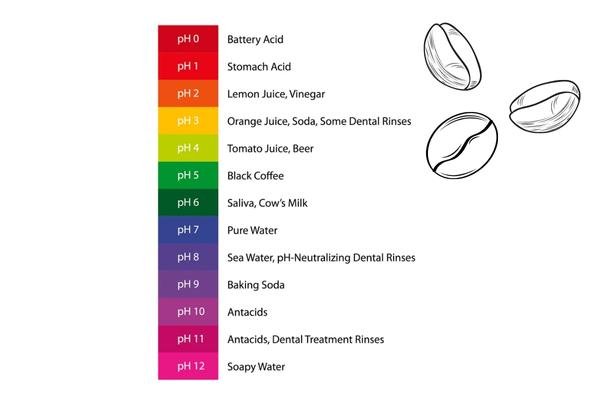
    Based on Thomas Jefferson University studies, a cold-brewing coffee has a slightly higher pH than a hot-brewing one. But still, you have to pay attention to some exceptions to this examination. That’s because the acidity of cold-brewed coffee can be a bit tricky, and the method chosen to brew your hot coffee also matters. 

    The pH of cold brew can vary from 5.10 to 6+, while espresso offers a ph of 4.9 to 6. To know the acidity level of coffee, you can use pH test strips. Meanwhile, the variety of acids in the coffee itself is eclectic, including citric acid, malic acid, phosphoric acid, acetic acid, tartaric, quinic acid, and chlorogenic acid.

    2. The Taste of Cold-Brewed and Hot-Brewed Coffee 

    Try to Taste of Hot Coffee

    Brewing techniques create a significant flavor difference in cold and hot brews. Aside from having a lower level of bitterness than hot-brewed coffee, cold-brewed one also has a smoother, rounded, and mellow taste. Meanwhile, hot brewing coffee offers a sharper, bitter, and direct flavor.

    3. The Caffeine Content in Cold-Brewing and Hot-Brewing Coffee 

    Caffeine of Coffee

    Furthermore, many questions were raised about whether cold-brewed coffee has less caffeine than hot-brewed one. Referring to research by Caffeine Informer, ready-to-drink cold and hot brew coffee can have varying caffeine content. While the average cold-brewing coffee drink has 200 mg of caffeine per 16 fluid ounces (473 ml), regular hot coffee can contain 326 mg of caffeine at the same dose.

    Also Read: Decaf and Patented: Secret of Swiss Water Process Decaf Coffee

    4. Which One Is Easier to Mix?

    Coffee Mix

    Between cold brew and hot brew, which one is more flexible? Hot coffee is, for sure, very satisfying and cozy to sip. However, this kind of coffee isn’t considered flexible or easy to mix into other drinks. On the contrary, the cold brewing method can create a coffee concentrate easily blended with many different compounds. Because of this, many people agree that cold brew coffee is easier to mix into other tasty caffeine drinks.

    Cold Brew versus Hot Brew, Which One Is Stronger?

    Regarding health benefits, is cold brew better than hot brew? Or which one is stronger? Cold-brewing coffee has a stronger taste compared to hot-brewing one, but it can depend on how you prepare your hot coffee. If you use a regular recipe with a proportion of 1 (coffee) : 5 (water), cold-brewed coffee can contain 518 mg of caffeine per 236 ml. Meanwhile, standard drip coffee can contain 175 mg of caffeine per 236 ml. Then if you use a French press machine, your hot coffee can have roughly 204 mg of caffeine per 236 ml.

    Ergo, if you ask about cold brew vs hot brew coffee health, both have some differentiations in their health advantages. This is why it’s not necessary to determine who is the most healthy. For example, cold brew is the best choice for those with acid reflux or digestive issues; because its acidity level is less than hot brew. On the other hand, hot-brewed coffee offers higher levels of antioxidants that can prevent cancer and boost the body’s immunity.

    Also Read: Green Coffee Vs Black Coffee, Different and Which One is Better?

    Cold Brew vs Hot Brew, Which One Is More Pricey? 

    cold brew vs hot brew

    The cold brewing method needs more ground coffee beans. That’s why cold-brewing coffee is more pricey than hot-brewing coffee. As mentioned before, to make a perfect concentrated coffee using the cold-brewing technique, you have to use a proportion of 1:5. Because of that, don’t be surprised if the price for a cold brew coffee in a coffee shop tends to be costly. The process of making it takes a longer time, and there is also a load of electrical costs to be paid to ensure it’s refrigerated perfectly during its steeping process. Cold brew vs hot brew, each has its own advantages. So, it is not necessary to drop one of them.

  • Best Climate For Growing Coffee, There are Interesting Facts

    Best Climate For Growing Coffee, There are Interesting Facts

    Best Climate to Grow Coffee

    Climate has a prominent role as well in cultivating coffee plantations. According to Climate Gov in their explanation about Climate and Coffee, there are several elements that make the best climate for growing coffee, making certain countries the best place to grow coffee. 

    In addition to the climate types, the land altitude where coffee beans grow also plays a pivotal role in producing good to high-quality coffee beans. It should be somewhere between  800 to 2000 masl, where the weather is ordinarily cool. 

    Overall Best Climate For Growing Coffee Beans 

    Speaking of climate, it is totally a different thing compared to weather. Weather conditions in an area could change on a daily basis, weekly, month to month, or even year to year. National Geographic defines climate as a long-term pattern of weather in a particular area. 

    Climates are influenced by many factors. There is the vegetation and topography, the soil types,  the latitude of the region, its distance from the ocean to the mainland, its elevation, location on a continent,  latitude, precipitation, and average temperature.  

    Coffee trees will grow at best and generate higher quality coffee beans in areas with tropical and equatorial climates. The soil also plays an important role. 

    The rainfall frequency is sufficient, harmonized with sun exposure throughout the year. These factors are important in terms of flowering stimulation and the ripening process of the fruit from the coffee trees. 

    Coffee Bean Climate Temperature 

    best climate for growing coffee

    Temperature holds as one of the essential elements of the best climate to grow coffee. You will need to pay attention to the temperature of each coffee bean you try to grow. According to the Climate Gov, Arabica and Robusta require a slightly different optimal temperature to grow well.

    Equipped with a high level of resilience, Robusta coffee may grow with the temperature of a surrounding between 22- 26ºC. 

    Yet, Coffee Arabica is a bit more fragile. They need a higher altitude and a cooler temperature, between 19 – 22 ºC. They still can put up with a maximum of 24 ºC.

    Locations Where Coffee Beans Can Grow 

    Locations Where Coffee Beans Grow

    The best coffee-producing countries with that perfect climate are located in the area known as The Bean Belt, which is located along the equator. 

    Not only do they have the best climate for growing coffee, frequency of rainfall, precipitation, and sunlight, but the following continents or countries also have mountain ranges within the required altitude, temperature, and fertile and nutritious soil.  

    The continents or countries that are named as the best place to grow coffee are:

    • South and Central America (American continent): Brazil, Costa Rica, Honduras, Mexico, Guatemala, El Salvador,
    •  Africa (African continent): Ethiopia, Uganda, Kenya
    •  The Middle East, and 
    • Southeast Asia (Asian continent): Indonesia, Vietnam.

    Height of Growing Coffee Beans

    Locations Where Coffee Beans Can Grow 

    Each of the coffee bean types would necessarily grow at a suitable altitude. In general, for the most-producing coffee beans in the areas, the altitude standards are mentioned here below:

    • Arabica variant requires higher altitude: 900 – 2000 masl or 2900 – 6500 feet
    • Robusta variant bears lower altitude: 200 – 800 masl or 600 to 2500 feet.

    Soil and Coffee Bean Depth 

    Soil Coffee Bean Depth in Land

    Research has found that certain types and soil characteristics have a better impact on coffee plant growth. Coffee trees are not best friends with heavy clay, which may be poorly drained, and also types of high silt, and yellow-brown soil types. 

    They can not grow well when the amount of water is less. Still, too much water won’t either do good for them. 

    The well-drained soil is a suitable condition for a coffee tree to grow. Therefore, it is better to plant coffee in nutritious, acidic, and fertilized soil, which can absorb water better. 

    Diverse references mentioned that the volcanic red soil type is the most appropriate home for coffee, like soils in the Bolovens Plateau region.

    Coffee seeds should then be planted with a minimum depth of one meter in the suitable type of soil. 

    Rainfall and Coffee Bean Season

    Rain in Coffee Beans Plantation

    The timing and frequency or intensity of rainfall and dry seasons have a major impact on the coffee growing and maturation seasons. Besides, they also affect the size of the coffee bean body size. 

    Larger coffee beans result from coffee cultivation which has higher water availability. Hence, almost every coffee-producing region sets a different standard for coffee bean size accordingly. 

    The coffee beans’ growth happens faster during 2 up to 5 months after flowering. 

    At that stage, nutrition is essential, but rainfall plays a big role in determining both the size and growth rate of the coffee beans. Having consistent rainfall frequency will result in a more consistent period of coffee bean ripening and harvest season and a bigger coffee bean size. 

    Thus, it is relatively fair to say that getting bigger coffee beans means better for the business. 

    Conclusion 

    As one of the most beloved beverages in the world, the presence of coffee is necessary to be maintained. It requires exhaustive and thorough dedication and labor and the best climate for growing coffee. 

    It will always be in tight conjunction with soil type, altitude, exposure to sunlight, and weather, including temperature, precipitation, windiness, and rainfall.