Author: CORIATE

  • Sipping in Style: How to Select Best Material for Your Coffee Mug

    Sipping in Style: How to Select Best Material for Your Coffee Mug

    Best Material for Coffee Mug

    Most coffee enthusiasts simply settle for any mug to enjoy their cup of joe. If one is willing to pay a little attention, the mug’s material can affect the coffee’s flavor. Simply put, different material offers a different taste of coffee. Then, what is the best material for coffee mug? 

    What Are the Safe Mug Materials for Coffee?

    First of all, take note of the abundance of coffee cups on the market right now. Most are composed of ceramic, glass, paper, hard plastic, melamine, stainless steel, and stoneware. All those materials are considered safe for coffee.

    However, ceramic and glass are often considered to be the safest options. Both are made of natural minerals that won’t impart or absorb flavors, giving the coffee its intended taste. Yet still, in terms of health, glass is easily the winner. According to Ecoroots, glass doesn’t leach any cancer-causing agents or chemicals into your coffee, no matter how hot they are.

    These Are Materials for Coffee Mug

    As briefly mentioned, at least seven materials are widely used for coffee cups and mugs. Here are why they are massively utilized.

    1. Glass Material

    Glass Coffee Material
    Glass Coffee Material Mug

    Coffee mugs made of borosilicate glass won’t break when exposed to high temperatures like regular glass cups. The material’s 15% boron trioxide content has a relatively low thermal expansion coefficient. It will remain intact when transferred from a freezer to a microwave or oven.

    Simply put, borosilicate glass mugs are safe for hot and cold brew coffee. As mentioned above, this material is also safe for your health because it can resist harmful chemical degradation that may seep into your coffee.

    2. Ceramic Material

    Ceramic Material Coffee Mug
    Ceramic Material Coffee Mug

    Ceramics is easily the most popular material for coffee mugs. This material is good to use for hot and cold brew coffee. Also, it won’t alter the authentic flavor of the beverage. However, ceramic mugs may not be the right option for health concerns. As mentioned in an NPR article, if the mugs are not baked properly, the lead may seep into your coffee and result in lead poisoning.

    3. Paper Material

    Example Sturbucks Paper Mug
    Example Sturbucks Paper Mug

    Paper is used explicitly for travel coffee cups rather than mugs. It’s considered the worst material for coffee because paper alters the flavors. This fragile material won’t retain your coffee’s temperature, whether hot or cold.

    4. Hard Plastic Material

    Hard Plastic Material Mug
    Hard Plastic Material Mug

    Hard plastic is a suitable material if you are looking for recyclable mugs. Not only do they renewable, but they are also durable, for it takes years for them to decompose. Plastic mugs will only be the right option if you aren’t keen on flavor since they significantly alter the taste.

    5. Stoneware Material
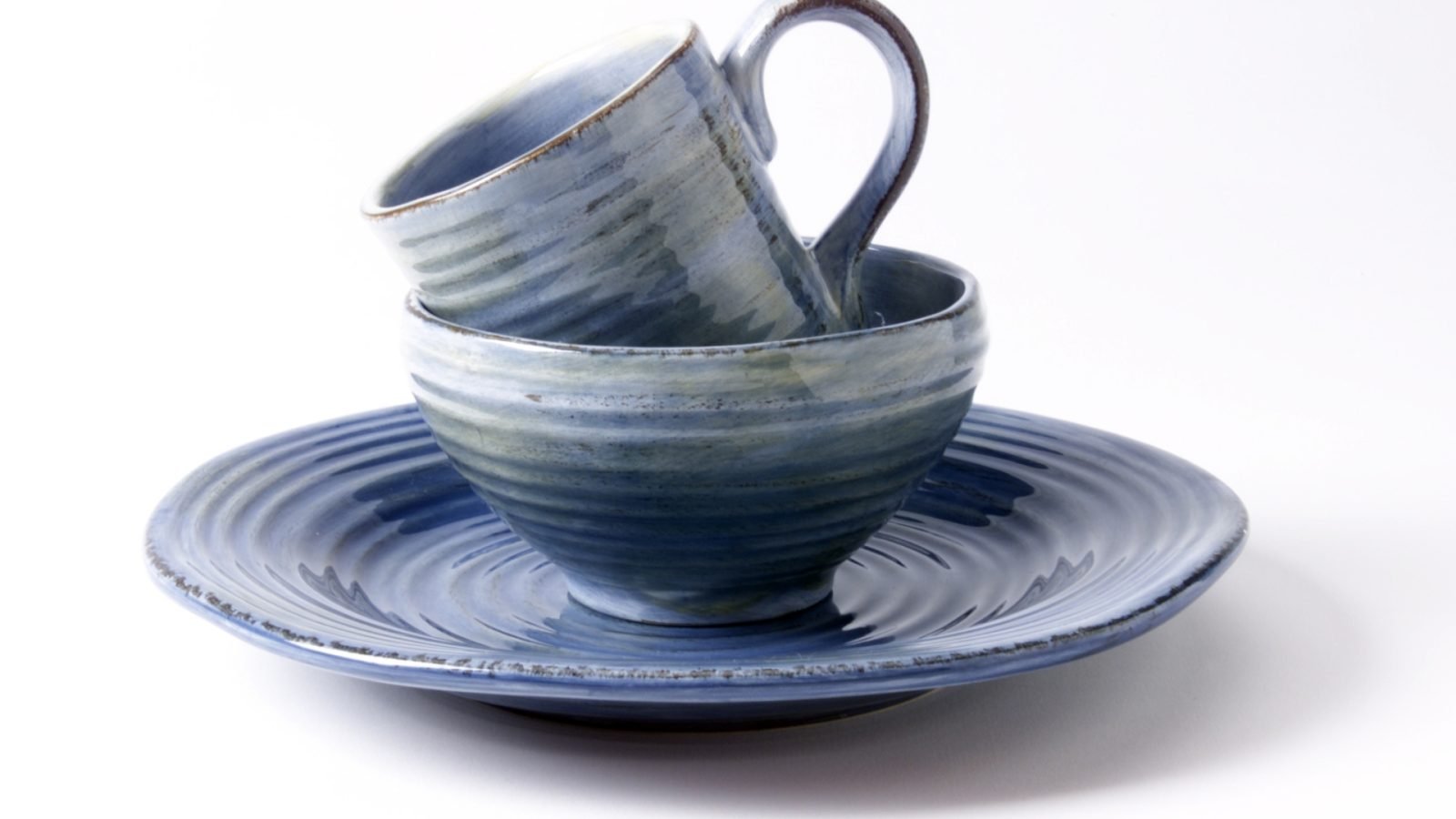
    Stoneware Material Mug
    Stoneware Material Mug

    The following best material for coffee mug is stoneware. It’s often made by hand from natural materials like stone, flint, and clay. Like ceramic, stoneware mugs can withstand high temperatures well enough and maintain your drinks’ temperatures.

    6. Melamine
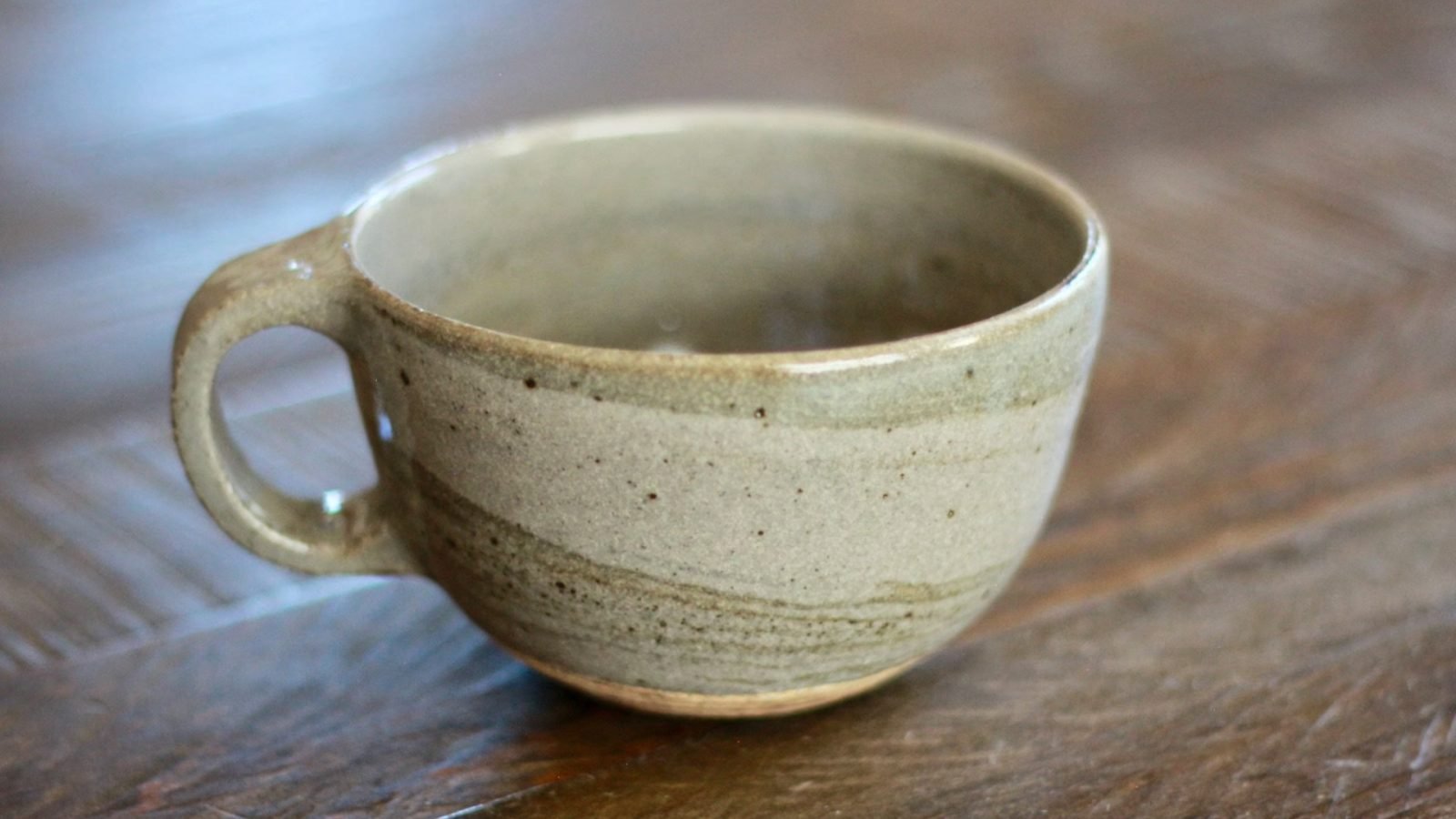
    Melamine Material Mug
    Melamine Material Mug

    Melamine mugs are one of the most affordable options in the market. It can keep your coffee’s temperature sufficiently good since it is an insulation material. Cups made of melamine are also durable, but they will still break when you use them to microwave your drink.

    7. Stainless Steel Material 
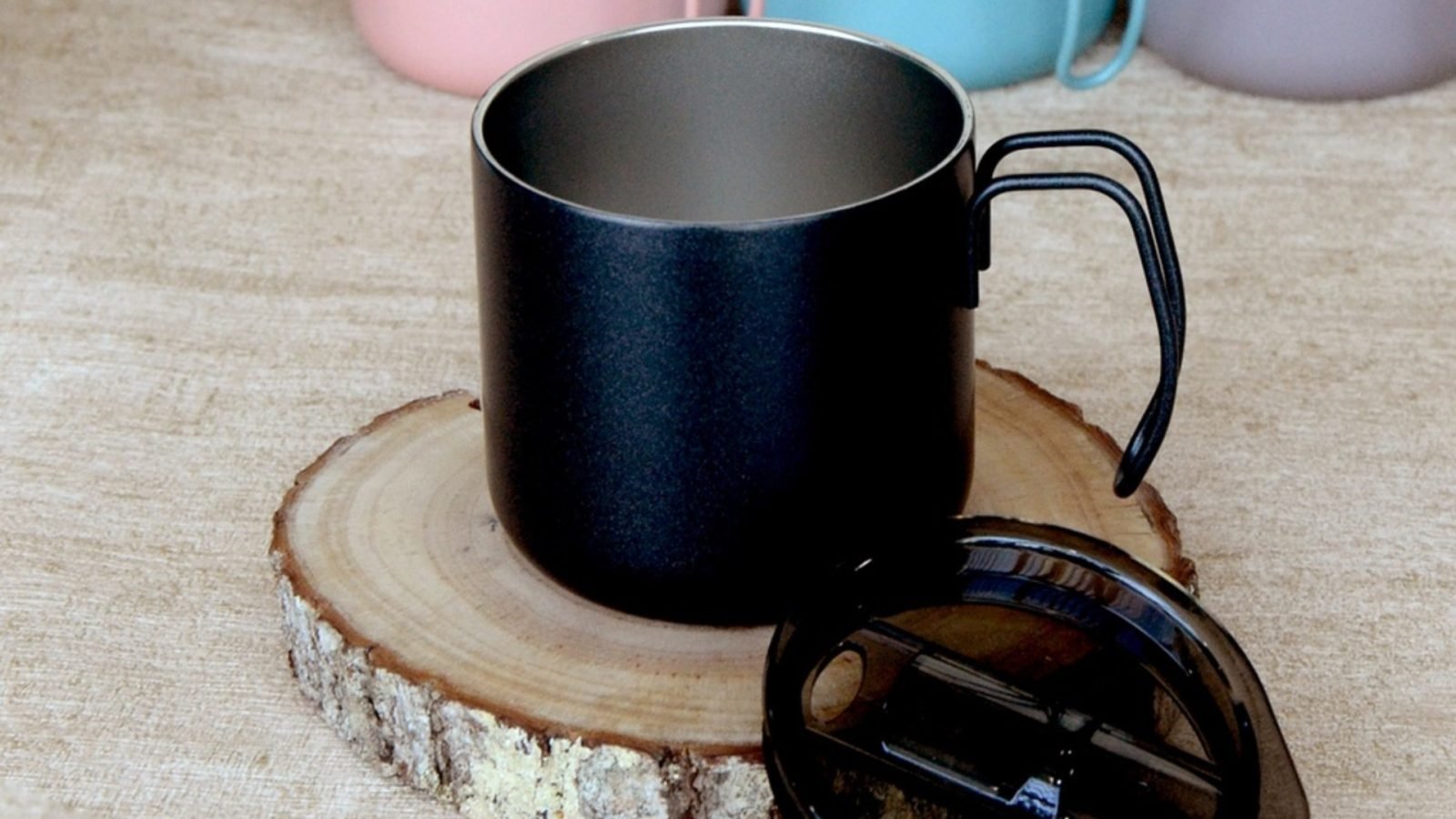
    Stainless Steel Material Coffee Mug
    Stainless Steel Material Coffee Mug

    Stainless steel is mainly used for travel thermos or coffee mugs. While the material is perfect for retaining temperature for a considerable amount of time, there may be better options if you are keen on the subtle taste of your drink.

    What Should be Considered in Choosing a Coffee Mug?

    Material is one of many aspects to putting into mind when selecting a mug to enjoy your favorite coffee. The other aspects include size, shape, color, intended use, and special functions.

    Coffee mug sizes vary from large to medium to small. Most mugs typically can hold between 12 and 30 ounces. Different mug sizes also come with different shapes. If you want to get the most flavor of the coffee, consider getting a wide-mouthed mug. It allows the aroma of the coffee to escape, increasing the experience of enjoying a cup of joe.

    Put the color selection into mind as well when buying a coffee mug. After all, it’s going to be your favorite cup. If you buy one made of glass, be sure to choose the clear one without any adornment on its surface.

    Remember to consider your intended use. A mug made explicitly for espresso obviously differs from one for regular coffee. In addition, check the mug’s unique functions as well. For instance, a pour-over cup can be used to brew coffee and use it to enjoy the end product all at once.

    Also Read: Known by Young People to Old People: History of Cold Brew Coffee

    So, What is the Best Material for Coffee Mug?

    As already elaborated, the best material for coffee cups or mugs is glass, especially borosilicate. Not only does this material can retain the flavor of the coffee, but it is also great for both hot and cold brew coffee. It won’t break or chip when exposed to extreme temperatures. Now that you know the best material for coffee mug, it’s time to get the best coffee beans. If you run a coffee shop and wonder where to get high-quality beans, consider contacting us, FnB Tech Indonesia. We have years of experience selling high-quality single-origin Indonesian coffee beans to over 33 countries. So, don’t hesitate to reach out to us!

  • Are Coffee Halal vs. Haram : Sorting Fact from Fiction

    Are Coffee Halal vs. Haram : Sorting Fact from Fiction

    Coffee Halal or Haram

    Is coffee halal or haram? As you may already know, coffee is one of the world’s most popular drinks. However, whether coffee and caffeine are halal or haram is a significant issue for Muslims. Halal is an Arabic term for something permissible for Muslims to perform, use or consume. Meanwhile, the opposite of it is called haram in Arabic.

    The concept of halal and haram has been mentioned in Quran.

    “Eat of the good, lawful things provided to you by Allah; and be mindful of Allah in Whom you believe.”

    Surah Al-Ma’idah (88)

    Halal in this verse not only refers to how the food is obtained but is also related to the content and benefits for the body.

    Then, are all coffees halal? That is one of the questions we will explore in the discussion below. So whether you are a coffee shop owner or simply learning more about the halal status of coffee, keep reading!

    Is Coffee and Caffeine Halal?

    Halal Logo
    Halal Logo in FnB

    The Quran is not explicit in discussing the halal status of coffee and caffeine. However, suppose we refer to Surah Al-Ma’idah (88). In that case, coffee is definitely halal because the process of coffee production doesn’t involve any fermentation step that can produce alcohol.

    While coffee is rich in caffeine and is considered intoxicant, this beverage doesn’t result in drunkenness, drowsiness, or any other inebriating effects, as stated by a Fatwa by Imam Shihab al-Din.

    Shaykh Farza A. Khan also mentioned that “intoxicant” in the Quran refers to substances like weed or wine that have inebriating effects. Dar al-Ifta Al Misriyyah’s Fatwa further supported the halal status of coffee and caffeine by addressing that small amounts of anything are prohibited if excessive intake causes drunkenness.

    As a result, practically all Muslim scholars concur that coffee is halal. Such matters must always have a firm foundation and supporting scientific data.

    Are Luwak Coffee Halal?

    Facts About Asian Palm Civet
    Luwak Coffee/ Asian Palm Civet

    All coffees are practically halal to consume, even the well-known Luwak coffee. Luwak is the Indonesian word for civet, an animal from which Luwak coffee is obtained.

    The droppings 

    of the civet are properly cleansed and processed to produce quality coffee. Therefore, Luwak coffee is considered halal by Irsyad Al-Fatwa. Indonesian Ulema Council also issued the halal status of Luwak coffee. 

    While the coffee comes from the civet’s anus, it’s considered safe and halal since coffee beans are correctly processed. So, is this coffee halal or haram? If you are still asking this question, there is no wrong with choosing brands with halal certification to clear your doubts.

    Related Article: Do You Know? Fun Facts About Asian Palm Civet for You!

    Are All Coffees Halal?

    In general, all coffees are halal, yet there is one that cannot be considered halal, namely wine coffee. It is due to the product’s name, which contains the word “wine .”According to Dr. Ir. Muslich, M.Si., there are specific criteria regarding the halal certificates for food products in Indonesia.

    One of the criteria is related to the product’s name. Coffee wine, for instance, is not considered halal because it has “wine” in it, and the name is considered haram. While the product doesn’t have any haram ingredients, they remain haram.

    Fatwa About Coffee and Caffeine Considered Halal

    Islamic Jurist
    Islamic Jurist

    Fatwas regarding the halal status of coffee and caffeine have been stated above. But there is one additional Fatwa by Imam Shihab al-Din which addressed that it is lawful to consume everything permissible, excluding what Allah has made to be forbidden.

    So, coffee is lawful to drink since it’s free of anything that leads to drunkenness and doesn’t harm the body. In fact, this bitter beverage makes your body feels energized to tackle all your daily chores. Still, it’s important to note that all lawful things to be consumed can harm the body if consumed excessively.

    Islamic Attitudes Toward Coffee and Caffeine Consumption

    While coffee is now halal-friendly, it was once considered ‘sinful’ by Kha’ir Beg, a governor of Mecca, in 1511 CE. It was once again banned in Cairo and Constantinople during the reign of the Ottoman Empire. Seyhulislam Ebussuud, the Ottoman’s official religious scholar, issued a fatwa against the consumption of coffee. 

    During those eras, governors and purist Muslims deemed coffee a stimulant with the same harmful effects as alcoholic beverages. Due to the increase in people gathering in coffee shops, thoughts considered radical by those rulers were on the rise. 

    There was a possibility of riot since people might have plans to overthrow the ruler; thus, the ban. They even issued death threats to anybody who disobeyed the order. All these were because the government was worried about their collapse.

    It was not until 1524 the ban on coffee consumption was lifted. Mufti Mehmet Ebussuud el-Imadi, the grand scholar of Sulat Selim I’s reign in the Ottoman Empire, issued a fatwa declaring coffee acceptable. To this day, coffee remains halal and is consumed by all Muslims worldwide.

    Conclusion

    So, is coffee halal or haram? As already elaborated above, coffee is considered halal because it has no ingredients that can lead to drunkenness or inebriating effects. Also, all coffees are practically halal, including the well-known Luwak coffee, which comes from civet droppings. However, wine coffee cannot be considered halal because of the word “wine” in its name.

  • Pour Over Coffee vs Drip: Which Brewing Method is Right for You?

    Pour Over Coffee vs Drip: Which Brewing Method is Right for You?

    Pour Coffee Coffee vs Drip Comparasion

    Some say coffee is the world’s second most consumed drink after water; others say it is tea. Either way, coffee remains one of the world’s most popular drinks. Its invention has resulted in various trends, including brewing methods. Two of the most well-known methods are pour over coffee vs drip. Then, which is the right one to produce a delectable cup of joe?

    Explanation of Pour Over Coffee

    Of all coffee processing methods, pour over could be considered the oldest. It was first introduced by Melitta Bentz in the early 1900s. It has become popular again because of third-wave coffee.

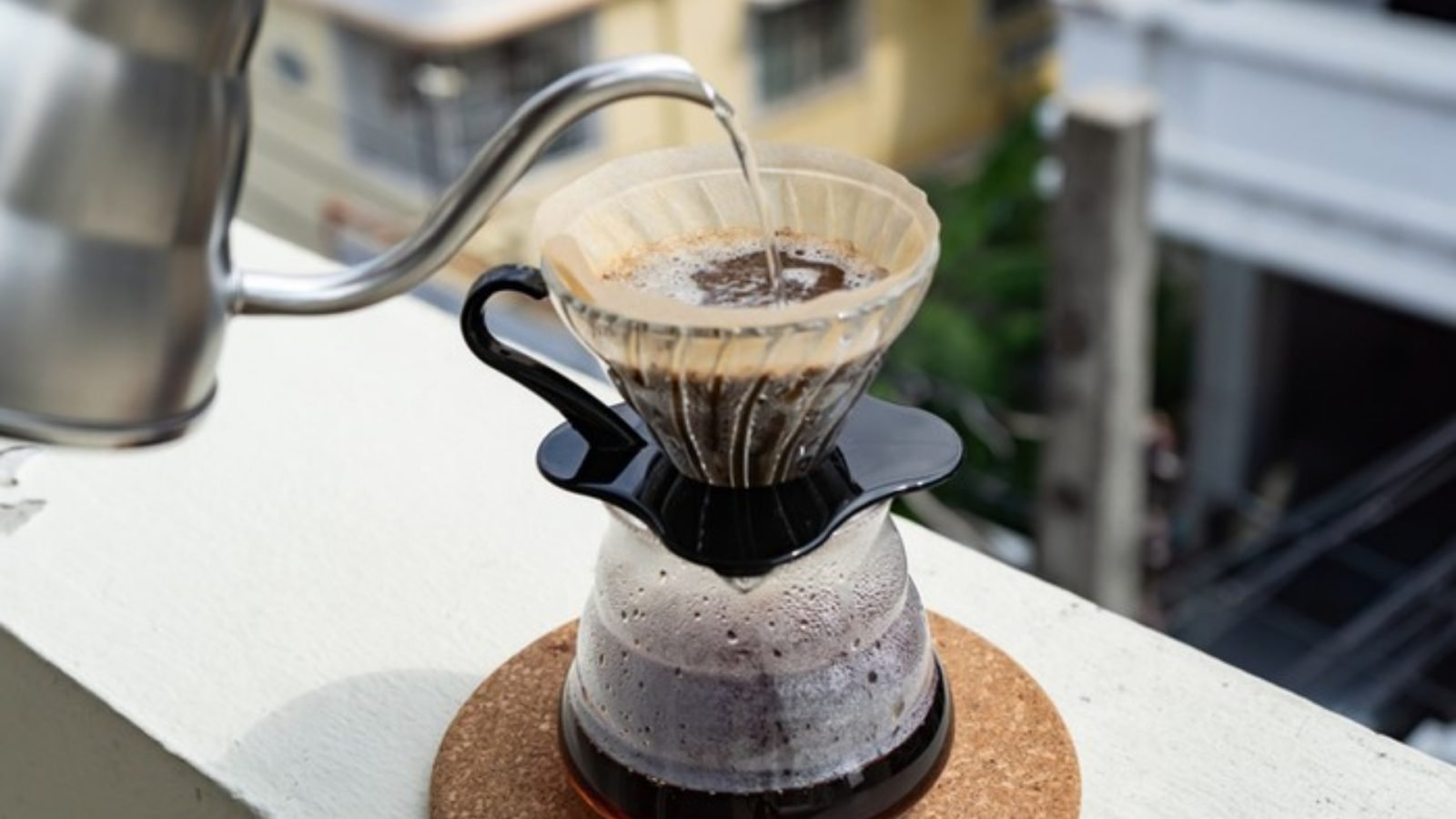
    Pour over is a brewing method using a paper filter. The coffee drains through the filter while the hot water is slowly poured over the grounds. This method allows you to control the brewing process and the coffee flavor. While it’s a simple concept, it may be laborious since it takes a lot of time, and there may be one or two adjustments.

    How Pour Over Coffee Works?

    Pour over doesn’t involve any automation process. This is how this method works: first, you heat the water in a kettle to 205 degrees to enjoy a hot cup of joe. If you want it to be slightly cooler, boil the water to 195 degrees or adjust it to your preference.

    Next up is the water pouring; you have complete control over it. Meaning you can ensure you pour the water over the coffee grounds evenly. Also, you can adjust the speed of your water pouring as necessary. 

    Why Do People Prefer Pour Over Coffee?

    There is one fundamental reason many coffee enthusiasts prefer the pour over method: it’s about control. This method grants you total control over the entire brewing process. As previously mentioned, you can control the water temperature, the pouring speed, and the placement of the water pouring.

    Aside from that, this method allows you to control the texture and final taste of the coffee. In addition, you can also control the strength and temperature of your brew. So, everything is about control with this pour over method.

    Explanation of Drip Coffee

    Both methods might be similar in theory when discussing pour over coffee vs drip. Still, both are different. Drip is more of a drip coffee maker, a machine created to automate the pour over the brewing process. It was first introduced in 1954 and popularized by Mr Coffee in the 1970s.

    The drip coffee machine is designed with convenience and simplicity in mind. However, for coffee connoisseurs, the device will give you less control than the pour over method, so the extraction may be uneven.

    Comparison of Pour Over and Drip Coffee

    Pour over and drip coffee methods share a similar concept. The two are also great for hot and cold brew. Yet, the finer details of the entire process and end product are where the two methods vary.

    Flavor and Taste

    The hotplate within the drip coffee maker, which keeps your coffee warm, accelerates the brewed coffee’s chemical oxidation. This makes the coffee has hints of astringent and bitter flavors. The pour over coffee can be the option to get most of the unique taste of quality coffee beans. It often offers a clean, crisp flavor because the paper filter captures most of the grounds’ oils.

    Control

    Drip coffee maker only allows you to control the coffee grounds and water ratio. Meanwhile, you have complete control with the pour over method. You can manage the ratio, quantity, water temperature, pour placement, speed, and brew time.

    Time and Quality

    The brewing process of both methods requires an equal amount of time. However, the pour over method requires more time for preparation and close attention. While practically the pour over takes a lenghty of time, it offers the potential for the most delicious fresh brewed coffee. Still, it’s all up to your skills.

    Versatility and Ease of Use

    This point is like the battle of ground coffee vs instant coffee. The former wins for the versatility category because you have control over it, much like the pour over method. Meanwhile, the latter wins for ease of use, much like a drip coffee maker in which its use doesn’t require any particular skills, and relatively easy to have a quick cup of joe.

    Durability

    Pour over coffee devices made of ceramic, glass, or stainless steel can last a last time as long as you attentively take care of them. Drip coffee makers, however, have a terrible reputation for being fickle. They can only last a few years if you get a lower-quality one.

    The Winner of Method is Right for You Is?

    Between pour over coffee vs drip, the former is typically preferred by many coffee connoisseurs. Yet ultimately, the ideal methods entirely depend on one’s own preferences. To find out which is fits your needs, try both ways and consider all factors, such as time and convenience.  

  • Wet Hulled Coffee Process: Unique Technique from Indonesia

    Wet Hulled Coffee Process: Unique Technique from Indonesia

    Wet Hulled Process

    Ever heard of the wet hulled coffee process? It may be less common than other coffee processes, yet it’s popular in Indonesia, particularly in Sumatra and Sulawesi. However, it needs to be clarified when it was first introduced; some believe it was way before the Dutch introduced coffee in the country. Then, what makes it unique, and why do Indonesian coffee farmers prefer this method? 

    So, What is Wet Hulled Coffee Process?

    Wet Hulled Process Explanation
    Coffee Grinding

    The wet hull process, also called giling basah in the Indonesian language, is a method of drying coffee cherries in an area with high humidity, like in Indonesia. This process begins with harvesting the fruits before putting them in a hand-cranked coffee de-pulper. This machine removes the fruits’ skin rather than the pulpy. 

    The skinned coffee fruits are then set aside to undergo overnight fermentation. This results in the breakdown of the mucilage or layer beneath the coffee cherries’ skin. The following day, the coating is thoroughly rinsed away, leaving only the thin layer of parchment. The fruits are then sun-dried for a total of 2-3 days, faster than the other processes.

    Characteristics of Wet Hulled Coffee

    Characteristic of Wet Hulled Process
    Coffee Color After Through Wet Hulled

    Of all types of coffee processing methods, the wet hulled is hands down the fastest. This method provides a reasonably distinct flavor that will increase one’s experience sipping a cup of coffee. It’s rich and earthy, with a hint of herbal flavor here and there.

    The unique flavor profile of wet hulled coffees results from air-drying after coffee fruits are hulled. Therefore, specific batches may offer stronger earthy tones than others, depending on the likelihood of irregularities. However, the anomalies will result in a rich flavor if the beans you use are top quality.

    The wet hull method is widely used to process various types of coffee beans in Indonesia. The following are some of the popular ones:

    • Sumatra coffee: The island of Sumatra provides quality coffee beans processed with the wet hulled method. The most popular ones include Gayo (Aceh), Sidikalang (North Sumatra), and Lampung coffee (Lampung).
    • Sulawesi: Sulawesi or Toraja coffee is known as one of the highest quality coffee beans in the world that also uses the wet hulled method.
    • Java:  Wet hull is also implemented to produce Java arabica coffees cultivated on the Ijen plateau.

    Why Indonesian Farmers Wet Hull Their Coffee?

    Indonesia farmers
    Indonesian farmers are doing Wet Hulled Process

    Average quality coffee requires between 2 and 3 weeks to thoroughly dry in a warm climate area. This would take much longer in Indonesia, where most parts of the country have high rainfall. Based on Statista data from 1991-2020, the average monthly rainfall in Indonesia ranged from 166.9 millimeters (August) to 299.19 millimeters (December).

    The rainy season occurs from October to April, although there is a regional variation. All in all, the wet season runs in Indonesia almost throughout the year. Thus, coffee farmers prefer the wet hulled coffee process, which takes much less time than other methods. If farmers used the dry method, the coffee would defect because of its high moisture content.

    The Benefits of Wet Hulled Coffee Process?

    Most benefits of the wet hulled process are not for coffee connoisseurs keen on even the subtle flavor of their drinks but for the farmers. How so? In general, the wet hull is a time-efficient method for producing coffee. 

    That means coffee farmers can make a profit much more quickly. Especially for small-scale coffee farmers who rely heavily on earning a fast income, this method truly helps them a lot in living off their land. 

    However, most farmers only earn a small economic reward if the quality of wet hulled coffee is run-of-the-mill. Also, the beans are mainly used for blends in businesses that serve coffee, where average joes would do.

    Wet Hulled Process for Roaster and Barista

    Wet Hulled Process Roaster
    Wet Hulled Process Roaster

    Wet hulled coffee beans can be challenging to roast. Yet a small amount of these beans can increase a blend’s body, thus, affecting the flavor of the end product. But use a low percentage of it since high use of it make the blend taste muddy. The rule of thumb is finding the correct ratio.

    For baristas, wet hulled coffees only have minimal sweetness and acidity but have a hefty body. Therefore, pay attention to your temperature to avoid burning the already hefty blend’s body. Also, keep your shot runs short to maintain a balance in your flavor combinations to bring out the most unique profiles of the coffee. 

    When done properly, the wet hulled coffee process can produce coffee beans with a distinct flavor. It may not be for everyone, but if you get quality wet hulled coffee, you will find the taste unique. Wonder where to get quality wet hulled coffee beans? You can always reach out to FnB Tech Indonesia. We have years of experience selling Indonesian quality coffee beans to over 17,000 buyers in local and international markets. So, don’t hesitate to contact us to experience Indonesia’s most authentic coffee beans.

  • Environmental Impact and Taste: Organic vs Non Organic Coffee

    Environmental Impact and Taste: Organic vs Non Organic Coffee

    Organic Coffee Plants

    Organic food has been increasingly popular during the last ten years. Yet, in terms of coffee, do coffee enthusiasts really need to put it into mind? What’s the difference with regular coffee, and which is better? We are going to find out the thorough answers to the battle of organic vs non organic coffee in the discussion below.

    Definition of Organic Coffee

    Organic Coffee
    Ilustration of Organic Coffee

    Organic coffee refers to coffee that is cultivated without the use of pesticides, synthetic fertilizers, and GMOs (genetically modified organisms). Simply put, farmers use all-natural methods to grow coffee. 

    Even if farmers use pest control methods and fertilizers, it’s all-natural, such as using leftover coffee grounds and cattle manure. In the US, farmers must adhere to the existing organic standards and practices to obtain organic certification from the USDA.

    Benefits of Organic Coffee

    Since it is devoid of potentially dangerous chemicals, organic coffee is believed to benefit health and the environment. For consumers, this coffee is rich in nutrients. It is the simplest option to protect the body from toxic substances used in regular coffee. This also benefits the farmers’ health since they no longer be exposed to harmful chemicals to cultivate coffee.

    Indeed, organic coffee is also a better choice for the environment. Coffee plants are typically grown under shades to provide habitat for surrounding species. Because no harmful chemicals are involved, soil health and biodiversity can also be promoted. 

    Organic Coffee Healthier than Regular Coffee? 

    The safest answer is that organic coffee is a better option than regular coffee if we merely talk about the use of toxic substances in cultivation. Why better? Just because coffee is organically grown, it doesn’t mean it is free of harmful stuff. When poorly processed and stored, coffee beans can grow mold that produces mycotoxins, leading to health concerns.

    According to Healthline, various studies show that these toxins are found in a significant amount of beans and even end up in the end product. Fortunately, molds can be eliminated by employing the correct wet processing method. 

    Employing a correct roast method can also kill molds. According to a study published in Pubmed, ochratoxin A content on coffee beans can be decreased by 69% to 96% with proper roasting.

    So, comparing organic vs non organic coffee, the former is the healthiest option if the brand you purchase has a certificate that it has been tested by a third party to make sure it’s free of health concerning mold.

    Definition of Non-Organic Coffee

    Ilustration of Non Organic Coffee
    Ilustration of Non-Organic Coffee

    Non-organic coffee, also called regular coffee, is grown with many substances from fertilization to pest removal treatments. Regular coffee plants are typically cultivated as monoculture and in controlled rows.

    In this setting, regular coffee shrubs have no additional shade from other trees, making them uncovered from the sunlight and a variety of pests. These make the birds that typically feed on coffee pests unable to thrive.

    Difference Between Organic and Non-Organic Coffee

    From the elaboration above, you can see that organic coffee is a much better option for consumers, farmers, and the environment. But let’s delve more into the other comparison aspects of organic and regular coffee.

    Nutritional value comparison

    As reported by Mayoclinic, various studies have reported that organic products have a small to moderate nutrient boost. Some antioxidants may also be present in higher concentrations in organic products. So, it can be said that organic coffee is packed with more nutrients than its counterpart. 

    Environmental impact comparison

    Regular coffee plants use the monoculture farming method, which requires various substances. In contrast, the organic one uses the shade trees farming method. In short, the latter is better for the environment because shade trees eliminate the need to use chemicals. It also protects the surrounding ecosystem by promoting water and soil quality, which can help reduce carbon footprints.

    Taste and quality comparison

    There has yet to be research studying the taste and quality of organic coffee beans. They could be on par with regular coffee beans. Yet, some sources also mentioned that particular coffee drinkers could taste the difference between the two. 

    Either way, the taste and quality types of coffee beans are influenced by four factors: where and when the coffee is cultivated, how the fruits are processed and roasted, the variety, and how the beans are brewed.

    Price comparison

    In terms of price, organic coffee is more costly than regular. The reasons are that organic coffee requires cost for certification, labor cost, and all expenses for the additional work involved in maintaining the crops.

    So, What Makes Organic Coffee Better?

    Comparing organic vs non organic coffee, the former could be a better option if it’s already third-party tested to ensure it’s devoid of toxins. Also, opt for the specialty one because the differences between specialty vs commercial coffee that is organically cultivated are so noticeable, especially in the taste and quality. Don’t know where to buy such coffee for your coffee shop needs? FnB Tech Indonesia can supply quality organic coffee beans for you. We have years of experience providing over 17,000 customers with quality Indonesian coffee beans.

  • Knowing the Differences between Americano and Long Black Coffee

    Knowing the Differences between Americano and Long Black Coffee

    Americano vs Long Black Coffee

    How to enjoy espresso in different ways? You can try Americano or Long Black. At first, you may find both beverages look and taste alike, to the point that you can’t even distinguish them. Indeed, they are both espresso-based and use hot water in the making. However, there are interestingly some subtle differences between Americano and Long Black. 

    Let’s see what makes these two popular variations of black coffee different.

    What Is Americano Coffee

    Americano Coffee
    Americano Coffee

    A staple in most coffee shops, Americano is a black coffee made by combining a shot(s) of espresso with hot water. What will make it different from Long Black is how to make it – the making order. Based on the general consensus, you make Americano by adding espresso to the cup and then pouring hot water over it. 

    We can trace back the history of Americano to Italy – originally Café Americano – evolving from the Italian cafe culture. The Italian baristas realized that espresso was too strong and flavorful, especially for Americans. Therefore, they watered down the espresso and served it in a larger cup. 

    The flavor profile of Americano will depend on several factors, like the type of beans used, different regions where coffee beans grow, roasting processes, and many more. Generally speaking, darker roast coffee beans – dubbed as espresso beans – are preferable for making a great Americano. 

    Also read: Be The Master! 4 Coffee Roasting Levels Chart: W/ Image & Guide

    What Is Long Black Coffee

    Long Black Coffee
    Long Black Coffee

    Long Black is another type of black coffee, pretty similar to Americano, having the same ingredients – espresso and hot water. However, you make Long Black in a different order – add a small amount of hot water to a cup and then pull one or two shots of espresso into it.

    The order surprisingly makes a difference! You will get a distinct result of a stronger, bolder flavor compared to Americano since the aromatics of crema are not disrupted. Crema is a thin, tan-brownish foam layer you will get on top of a shot of espresso. It is said that crema maintains the taste of the espresso and the tiny bubbles boost the sweetness. 

    First made in Australia and New Zealand, the story was almost similar, namely to appease American tourists with milder espresso-based coffee drinks.

    The Difference in Caffeine Content in Americano and Long Black 

    The differences between Americano and Long Black also lie in their caffeine content. For both drinks, the caffeine content will greatly depend on the number of espresso shots they use. It also can vary due to other factors, such as the coffee quality and the barista’s preciseness. 

    By and large, the common serving of a single drink uses double shots of espresso. 

    Caffeine Content in Americano:

    If 1 shot of espresso equals 77mg of caffeine (on average), hence typically:

    • A serving size of 6-8 fl oz may have 77mg caffeine content
    • A serving size of 12-16 fl oz may have 154mg caffeine content, which is very high, and 5 calories
    • A serving size of 20-24 fl oz may have 231mg caffeine content

    Caffeine Content in Long Black:

    • A serving size of Long Black per fl oz contains 25.67mg of caffeine or about 86.79 mg of caffeine per 100 ml. 
    • A serving size of 6 fl oz contains total caffeine of 154mg, which is very high, and 2 calories.   

    Which Is Stronger between Americano and Long Black Coffee

    differences between americano and long black

    Originating from Americans who longed for a lighter version of espresso, Americano is a freshly brewed espresso topped with hot water. As a result, it is milder and smoother.

    On the other hand, Long Black is usually brewed with lesser water than Americano, therefore, it is stronger in aroma and fuller in taste. Pouring espresso on top of the water will preserve the so-called crema and richness. 

    Moreover, you can usually find Long Black in a serving size of 8oz cup (about 230ml). Meanwhile, you can order Americano in 8oz, 12oz (about 350ml), or even 16oz (about 470ml) serving cups. 

    Benefits of Drinking Americano and Long Black Coffee?

    So, what is the benefit of drinking Americano and Long Black? First, both of them give you incredible caffeine boosts – kick and shot. And second, they contain low-level calories which are good choices for health-conscious coffee drinkers, especially regarding their calorie intake. 

    Also read: Can We Drink Coffee During Pregnancy? Check Out These Facts!

    So, Which is Better between Americano and Long Black Coffee

    To sum up, both Americano and Long Black are espresso-based drinks that nearly have undistinguishable features. Invented in Italy, we make Americanos by pouring hot water on top of freshly brewed shots of espresso. Meanwhile, Long Black, originating from Australia and New Zealand, is made by the polar opposite of that. 

    Also read: Cold Brew vs Hot brew: Everything You Need to Know

    The making order may appear a trivial distinction, but the differences between Americano and Long Black, particularly in their flavors, are obvious. If you like espresso in milder and mellower versions, you can try Americano. If you prefer a stronger aroma and fuller taste than Americano, you can pick Long Black. 

  • Be The Master! 4 Coffee Roasting Levels Chart: W/ Image & Guide
    Be The Master! 4 Coffee Roasting Levels Chart: W/ Image & Guide

    Coffee Roasting Level

    Want to know the secret behind the famously rich, dark liquid called coffee that has conquered the globe? Starting from the raw green seeds, the roasting process produces the well-known delicate, brown, intensely aromatic nodules. Even, there is the so-called coffee roasting levels chart to distinguish them. 

    Roasting Coffee or Toasting – Master the Craft

    Apart from the more advanced and helpful roasting machinery, there are two basic skills to master in the most common traditional roasting method, namely 

    Sight 

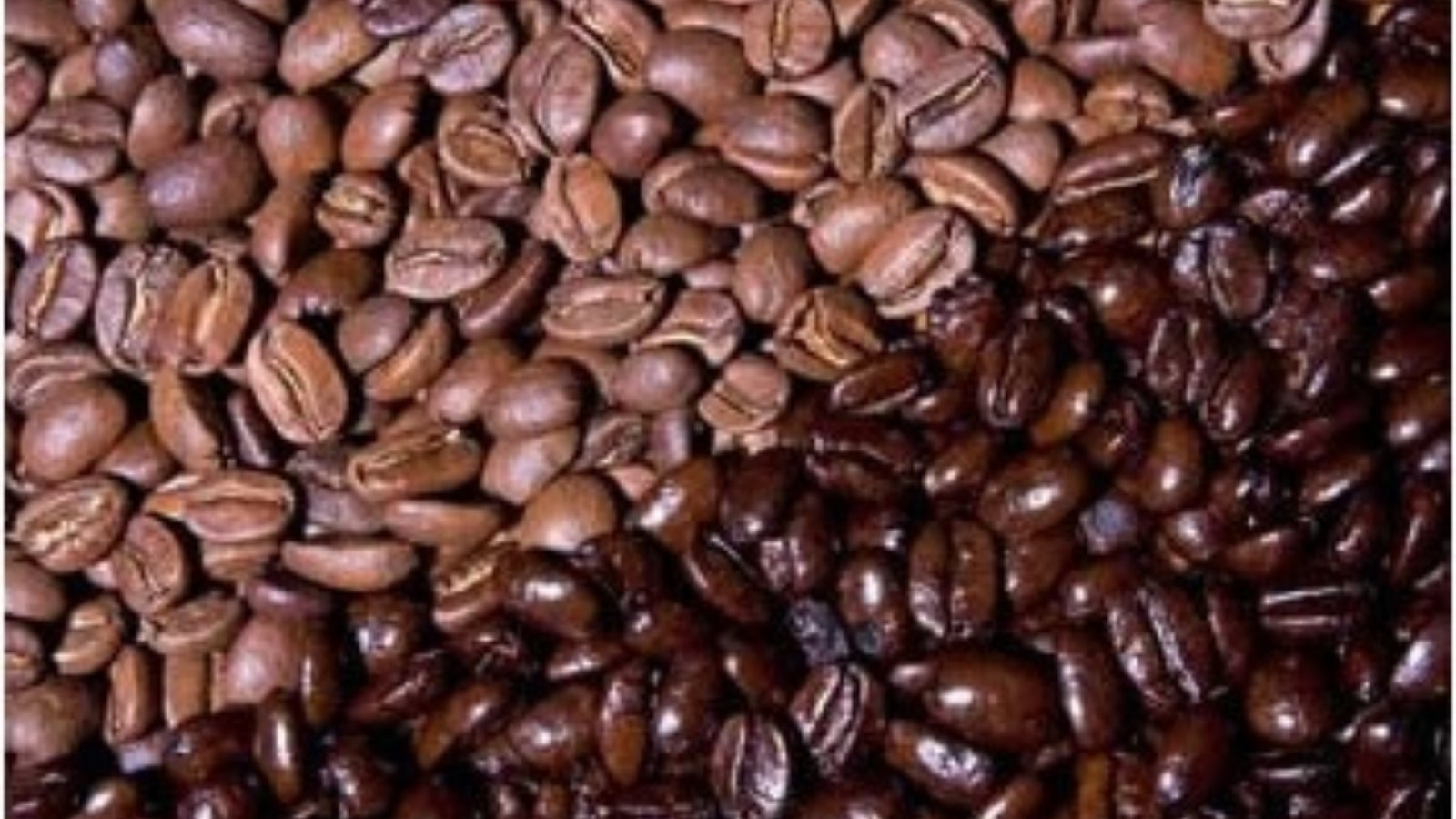
    Every coffee skilled processors know this visual sign, the changing color, and the texture of the raw coffee beans. This enables them to recognize the development process and determine the bean roasting level. For example, a light-roasted coffee will turn slightly brown without any oil trace on top, while a darker-roasted coffee will show dark brown glossier look. 

    Sound 

    Obvious cracking noises while roasting coffee beans will tell you about the different phases of the roasting process. You can hear the first crack through a popcorn-popping-like sound, it is when the moisture of the raw seed is evaporating and the bean is expanding. You can get light to medium roasts after this crack and darker roasts after the second crack. 

    Check This Out! Coffee Roasting Levels Chart

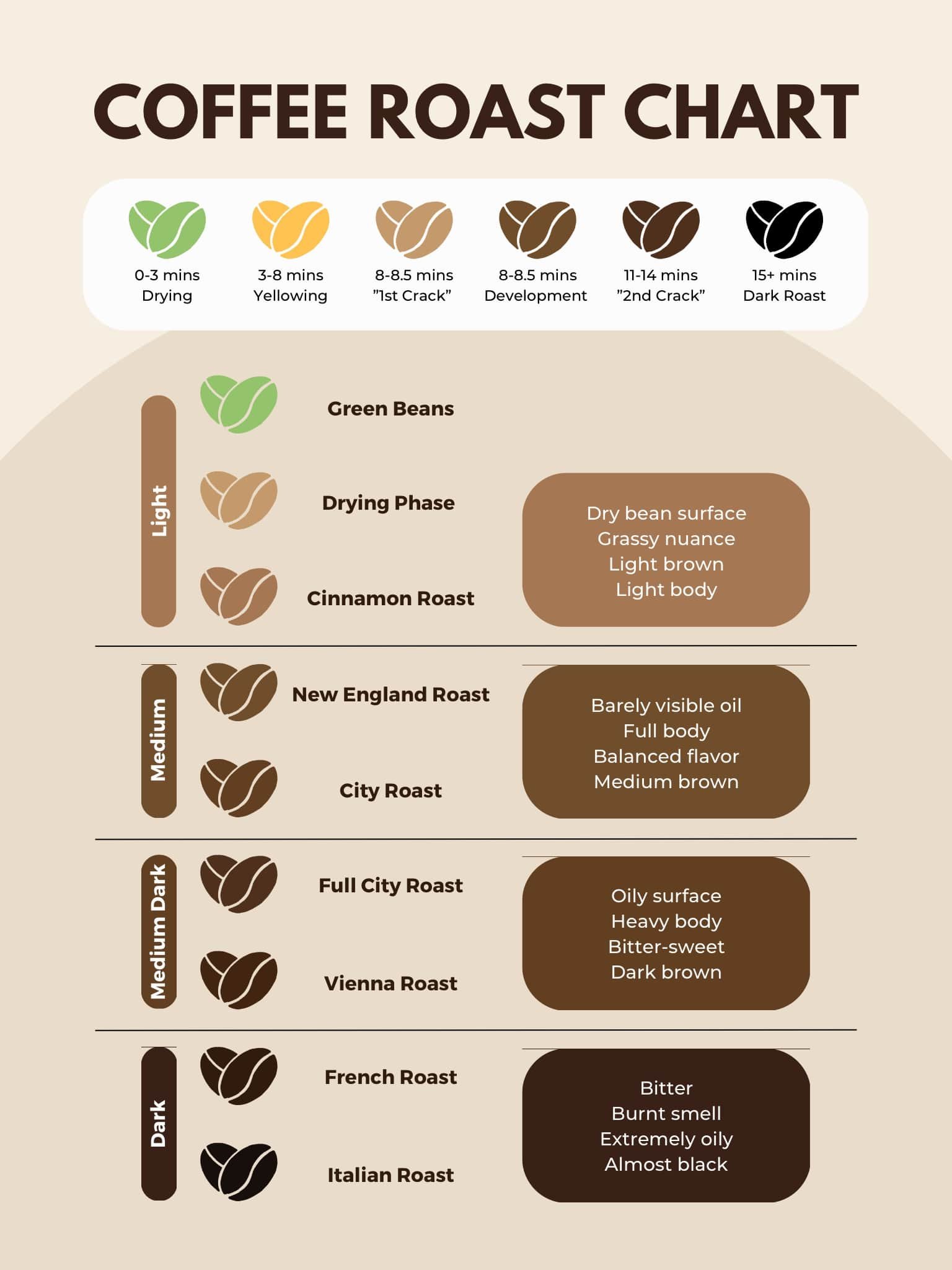
    Coffee Roasting Levels Chart
    Coffee Roasting Levels Chart

    You probably know the three typical categories of coffee roast levels in general – light, medium, and dark.  However, there is more story in the coffee roast levels chart. Let’s take a sip, I mean, a peek!

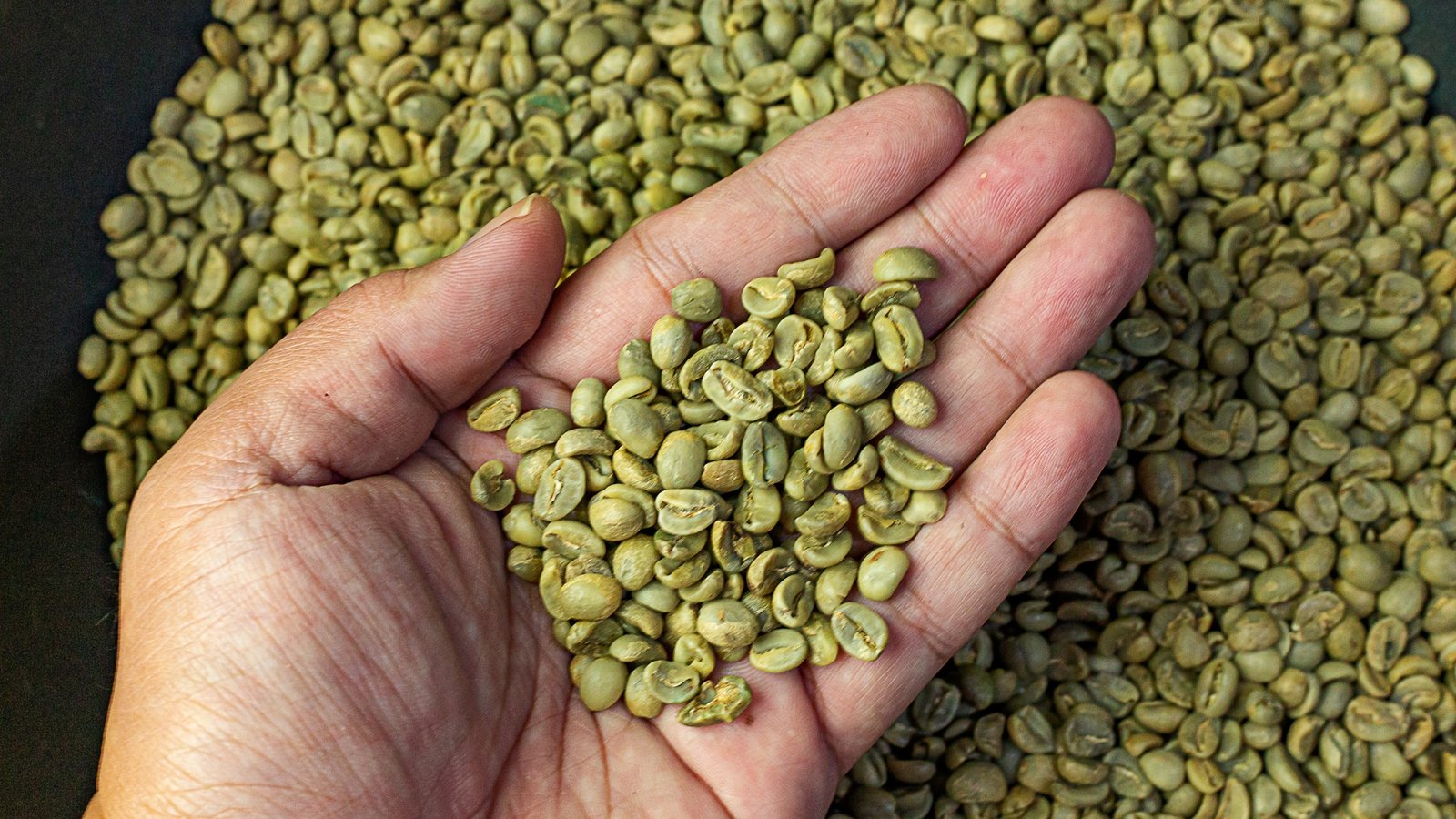
    1. Green Coffee – Unroasted Coffee Beans

    Green Coffee Beans
    Green Coffee Beans

    They are the cherry seeds of coffee plants after being dried and intermittently treated with water following the decaffeination process before sending them to the roasting facility. 

    Also read: Green Coffee Vs Black Coffee, Different and Which One is Better?

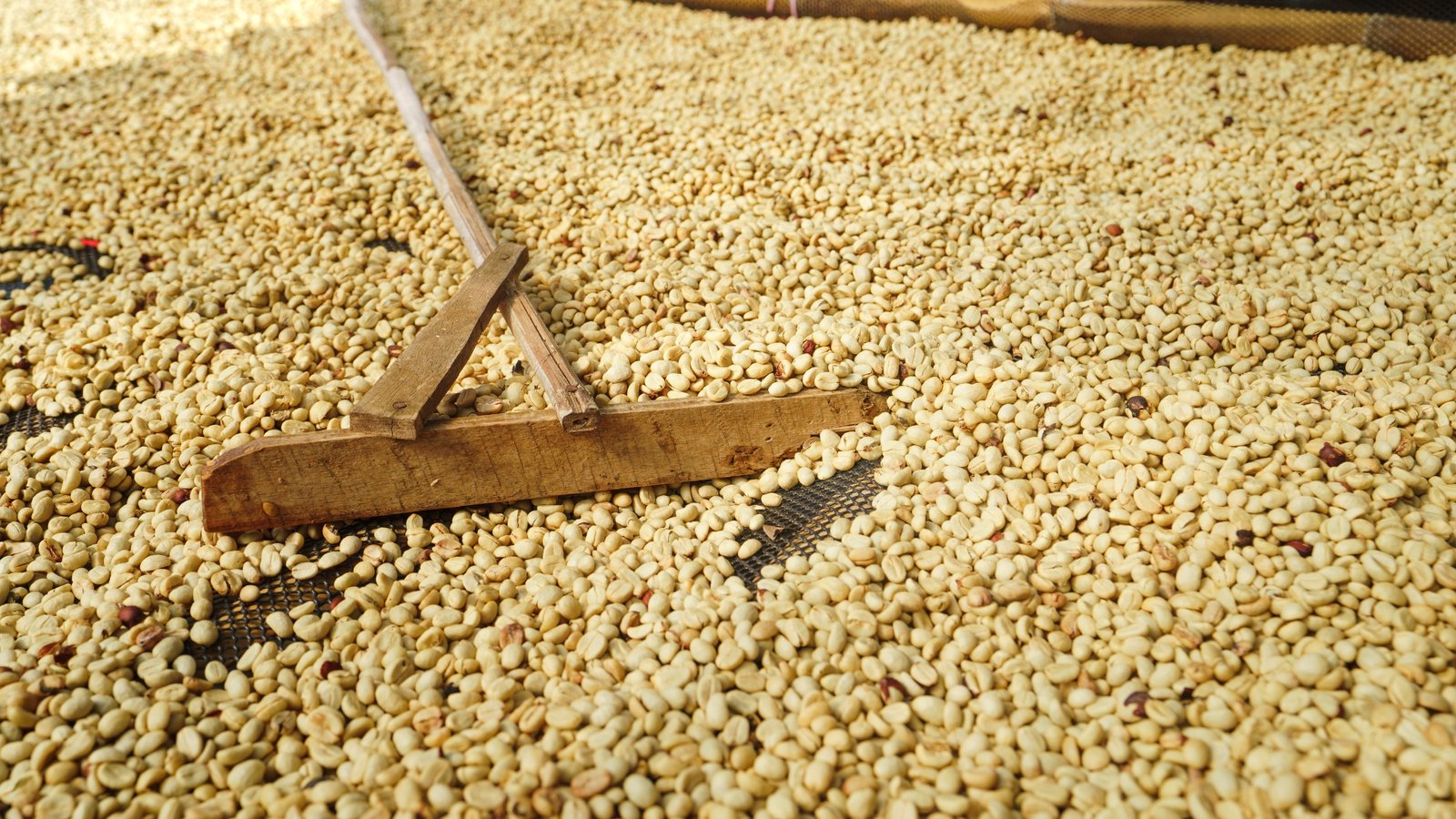
    2. Drying Coffee

    Drying Coffee Beans
    Drying Coffee Beans

    It is the phase when the coffee beans are mid-roasted as the moisture evaporation process is ongoing well. Smell them, and you can tell a sweet scent of grass and hay, yet you better not grind them since they still taste shockingly awful.   

    3. Cinnamon Roast

    Cinnamon Roast Coffee Beans
    Cinnamon Roast Coffee Beans

    At this stage, coffee beans are becoming consumable. Having a cup of them will give you a subtle green, grassy flavor. But, please remember, they aren’t ready for brewing since the beans are still underdeveloped. 

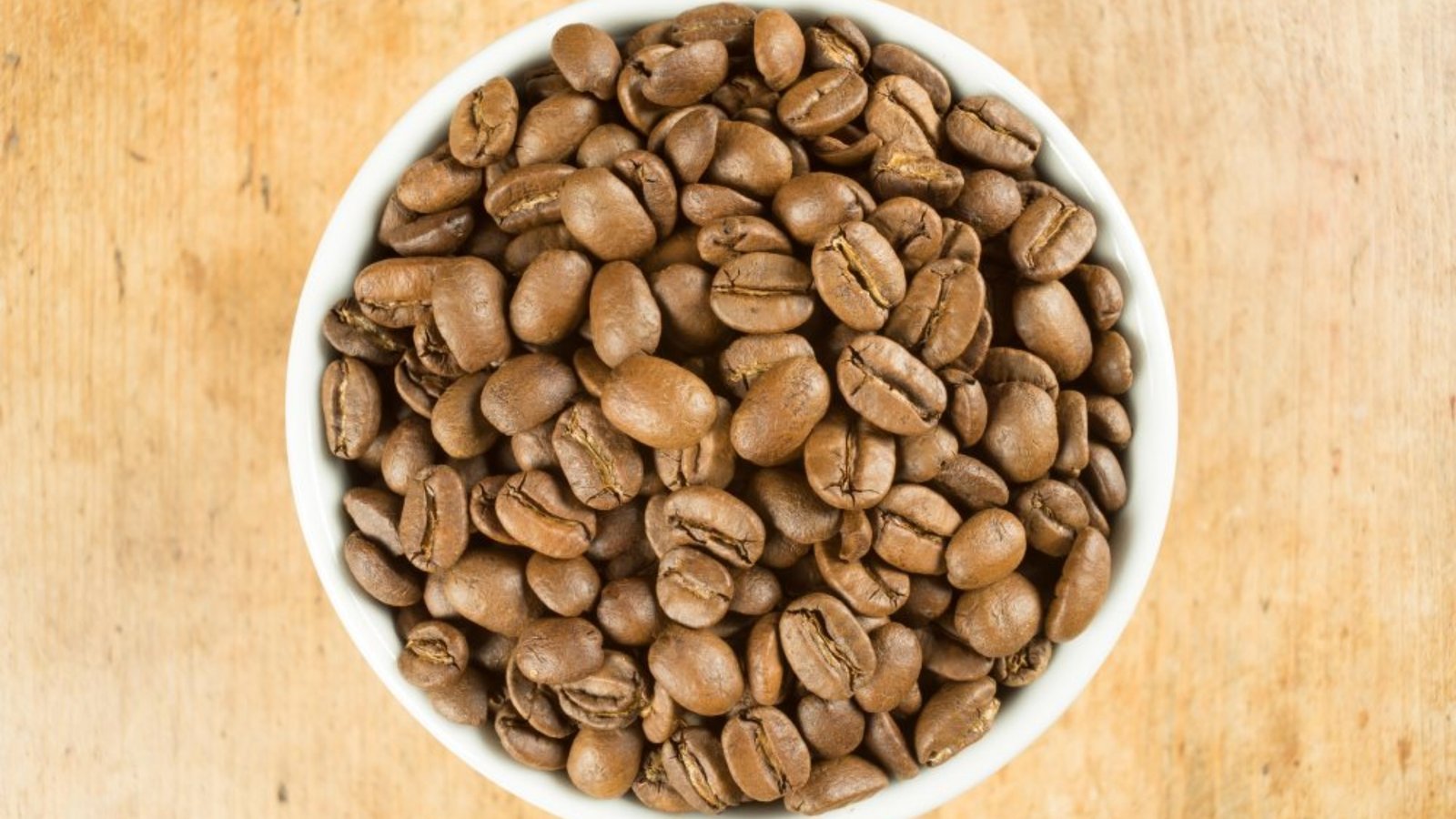
    4. Light Roast

    Light Roast Coffee Beans
    Light Roast Coffee Beans

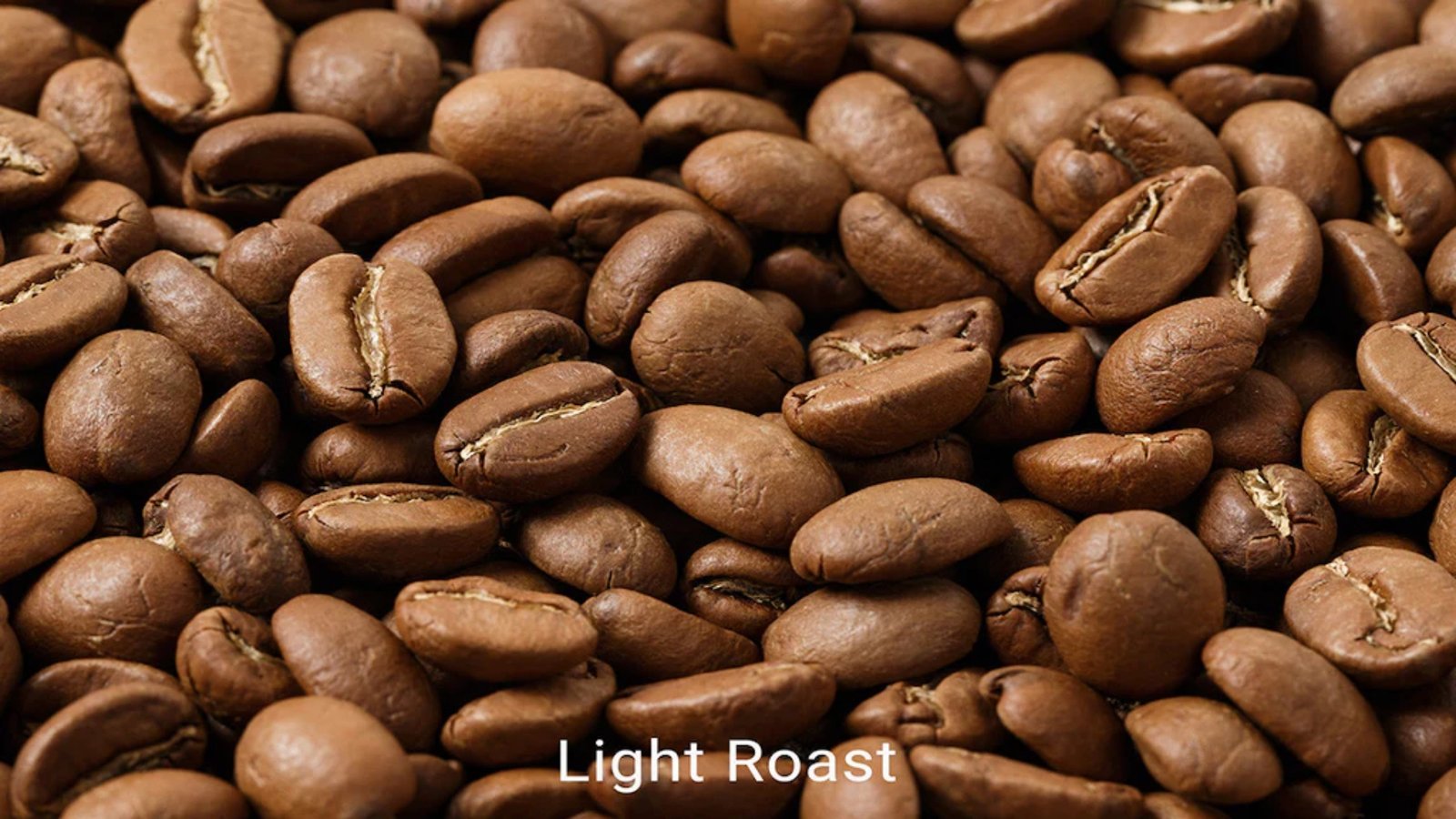
    Highly valued by a group of coffee enthusiasts worldwide, these coffee beans are also commonly referred to as city roast or New England roast. At this point, they start to have a pleasant nutty, and chocolaty smell. The pour-over brewing is the most recommended way to enjoy this coffee roasted level. 

    5. Light to Medium Roast

    Light to Medium Roast Coffee Beans
    Light to Medium Roast Coffee Beans

    In the final part of the first crack, light-medium roast coffee beans have no traces of oil. This allows you to experience the unique individual character and the flavor of the coffee. You can taste such a full-bodied and vibrant taste. 

    6. Full Medium

    Full Medium Roast Coffee Beans
    Full Medium Roast Coffee Beans

    You get this coffee level when the first crack finishes but the second crack hasn’t started yet. The beans do not have an oily characteristic, rather they generate a well-balanced flavor profile, a mixture of each bean flavor and the fresh aroma of the roasting process. 

    A cup made of this coffee has a perfect combo of balanced acidity and outstanding delectability – the best of both worlds.

    7. Medium-Dark

    Medium-Dark Roast Coffee Beans
    Medium-Dark Roast Coffee Beans

    You reach this level shortly after several shatters of the second crack, giving the beans lines of blackness. They will be somewhat oily, having a good blend of roasted and original flavors, plus less acidity. 

    The best choice for drip coffee, French Press, and cold brew methods, as well as the espresso process.  

    8. Dark Roast

    Dark Roast Coffee Beans
    Dark Roast Coffee Beans

    Also often called Vienna roast, this phase marks the entry of the beans into the dark realm. Natural coffee oil will make them shine, offering more roasted flavor compared to the original one. They are also more vibrant yet less acidic. 

    This kind of bean is the best pick for Aeropress and espresso methods. 

    9. French Roast

    French Roast Coffee Beans
    French Roast Coffee Beans

    You get French roast beans when the second crack finishes. They are usually coated with oil and lose their natural flavor.  We may say that any coffee roasted to the level of French toast will have the same taste. In addition, they may offer a burnt undertone and a thinner texture. 

    10. Spanish or Italian Roast 

    Spanish or Italian Roast Coffee Beans
    Spanish or Italian Roast Coffee Beans

    It is when you can smell like a burning tire and your beans go from brown to black. If there is only a roasting accident or simply an experiment, it is not recommendable to consume this sort of beans. 

    How to Roast Coffee

    Want to experiment by roasting your coffee beans at home? Let’s check out the following. 

    1. Buy unroasted green coffee beans (offline and online stores)
    2. Prepare or get the necessary roasting equipment (roaster)
    3. Carry out the roasting process
    • put the raw beans into the heating equipment
    • turn on the heat
    • start stirring 
    1. Cooling time 
    • whirl the beans between two metal strainers
    • lay them on a paper sheet

    Quite easy, isn’t it? Knowing the coffee roasting levels chart is a bonus skill, but the preference is subjective. You can keep on experimenting and expanding your mileage. The important thing is enjoying your personalized coffee tasting. Looking for premium-quality of green coffee beans? FnB.co.id is one of the best Indonesian suppliers you can get.

  • Special Tips from Indonesia: How to Make Tubruk Coffee

    Special Tips from Indonesia: How to Make Tubruk Coffee

    Making Tubruk Coffee in Glass

    Tubruk Coffee is one of the immensely well-known hot black coffee beverages found and served in almost parts of Indonesia, especially in Java and Bali. Also, it is one of the simplest coffee brewing variations that preserves a traditional technique. Still, regardless of its simplicity, there are things to look for in how to make tubruk coffee at its very best. 

    The name “tubruk” here is a Javanese word for ‘collision.’ The name suitably implies the style or technique of its preparation. A manual coffee making at its most basic, tubruk coffee only requires ground coffee and hot water in a mug or a glass, without filtering. 

    You’ll need to wait for a moment to let the grounds or “the mud” ultimately sink to the bottom. That’s probably why it gets another moniker – mud coffee. Some others say it is quite similar to Turkish- and Greek-style coffee, as well as Polish’s Kawa Plujka.    

    Historically, it is said that the merchants of Middle East countries brought this kind of coffee to Indonesia. Unfortunately, the year of the origin is still unclear, no records tell when and in which areas of Indonesia where this beverage was first discovered. 

    Baca juga: 8 Best Coffee Plantation to Visit in Bali, Don’t Miss It!

    Things to Look For In Making Tubruk Coffee

    Making tubruk coffee

    Everyone can make tubruk coffee, but what about the taste consistency? There are some variables like the freshness or size of your coffee ground, the temperature of hot water you use, and many more. 

    The following are some things to consider when you want to try to brew this beverage at home. 

    Pay Attention to the Ratio of Coffee and Water

    According to the Specialty Coffee Association of America (SCAA), the best golden ratio (or, the Golden Cup Standard) for making a cup of coffee is 1:18. It means that for every 1gr of coffee, you need 18gr of water. 

    As for how to make tubruk coffee, you can use this golden ratio as a reference. Although making coffee is all about personal preference, still this ratio will give the best and the most balanced combo of coffee and water during the brewing process. 

    Determine the Type of Coffee Bean Grinder

    How coarse or fine your coffee ground will affect the taste of tubruk coffee. It will closely relate to the molecular size of the ground coffee grains. The coarser ones will create more room for water, producing a unique acidic flavor character during extraction. While the finer ones have no room for water thus slowing down the extraction and tending to generate a somewhat bitter character. 

    Another noticeable difference is that coarser grains usually will stay on the cup surface, whereas the finer ones will quietly sink to the bottom when you pour hot water. 

    Optimize Hot Water into Coffee

    In general, the optimum temperature of hot water for coffee brewing is about 92 – 96 degrees Celsius. If you want to be precise, you can use a thermometer for the best result during the process. 

    Step To Make Tubruk Coffee

    Prepared in utter simplicity, the following are steps of a brewing guide to making tubruk coffee. 

    1. Grind the coffee (if you have a manual or brewing grinder)

    If you have your manual grinder, you can grind the coffee beans according to your preference of the grind size as mentioned above – coarser or finer. 

    Also Read: 8 Types of Coffee Beans in Indonesia, Unique & You Must Try!

    2. Get the coffee ground

    You can buy it at many supermarkets, coffee bean retailers, or even small kiosks. 

    3. Put the ground coffee into the bottom of a mug or a cup

    You can use the above golden ratio between the coffee and water. Sugar is optional here. 

    4. Pour hot water over the ground coffee

    For example, if you use 14gr of ground coffee, you can add about 250ml of hot or freshly boiled water (based on the optimum temperature) on top of it. 

    5. Stir the mixture

    Stir the coffee and water so they can blend well.

    6. Wait for the beverage to cool down

    Leave it for a while (3 – 5 minutes) to let the coffee ground sink and settle at the bottom.

    7. Finish

    Enjoy your tubruk coffee! 

    How to Serve Tubruk Coffee

    Most Indonesian or traditional small coffee shops enjoy tubruk coffee by using a beer mug that functioned as a tea mug. Pay attention not to put over water so your coffee would be flavorless. Once again, you can add sugar to your tubruk coffee. Some modern variations even have condensed milk in them!

    This brewing method allows you to slow down a bit. You need to wait before your tubruk coffee reaches the point where it is enjoyable to sip. Since you brew this kind of coffee without any filter, the coffee grounds usually will coagulate at the bottom of your cup or glass. 

    Also Read: Differences Between Specialty and Commercial Coffee, See It!

    That’s how to make tubruk coffee and some best tricks to enjoy it. It is also easy and simple to brew. All you need is the right ratio between coffee grounds and water, as well as the right hot water temperature. Don’t forget to pay attention to the “mud” at the bottom. Or else, you will not drink but eat the coffee!