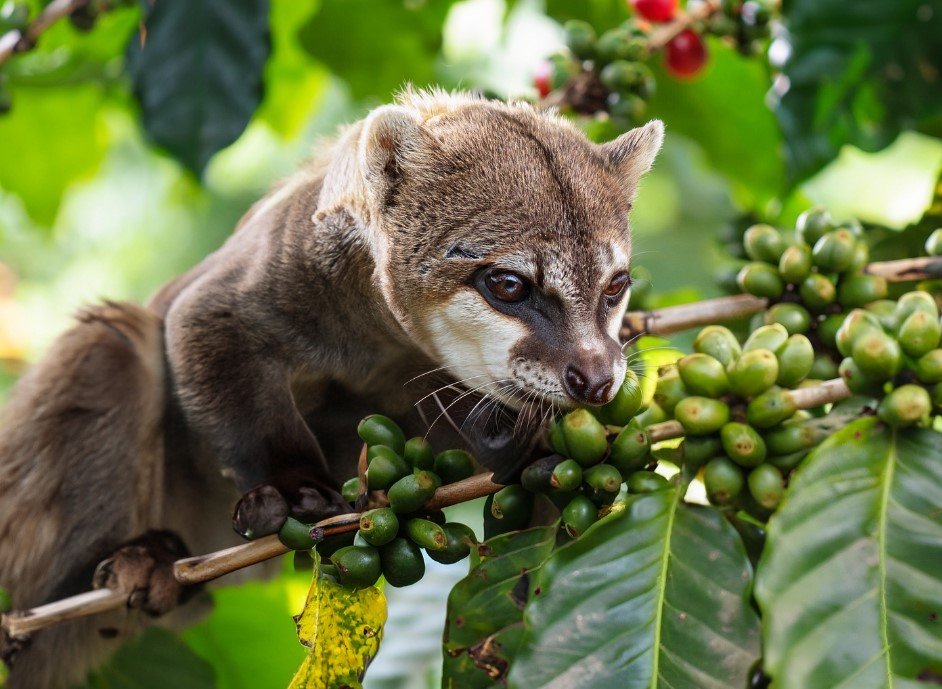
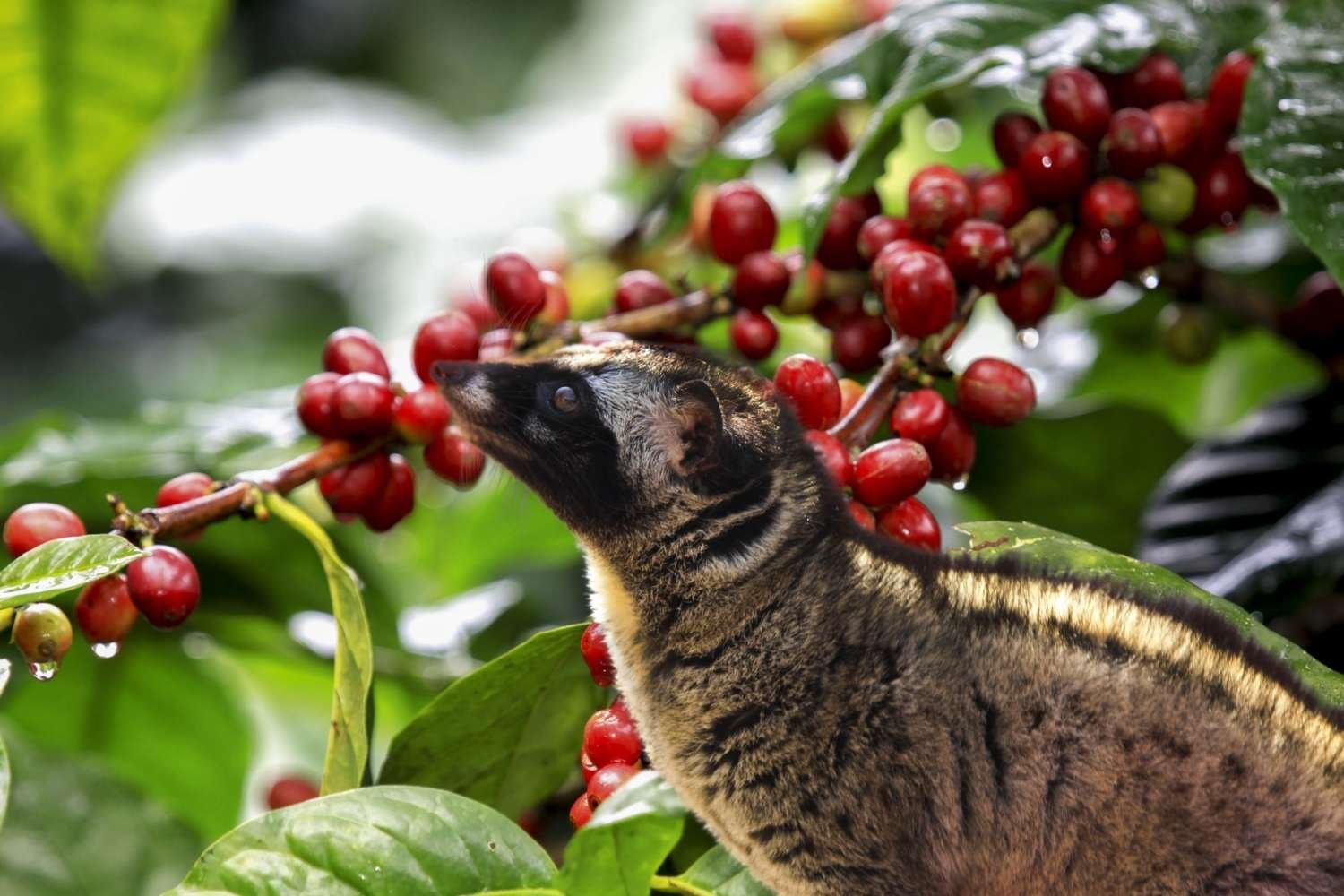
Luwak coffee, also known as civet coffee, has earned a reputation as one of the most unique and sought-after coffee varieties globally. This exotic brew traces its origins to Indonesia, where a fascinating combination of nature and craftsmanship converges to create a distinctive and luxurious coffee experience. In this comprehensive exploration, we will delve into the origins, production process, flavor profile, ethical considerations, and the sustainable future of luwak coffee.
Origins of Luwak Coffee:
Luwak coffee finds its roots in the lush coffee plantations of Indonesia, particularly in Sumatra, Java, Bali, and Sulawesi. The term “luwak” refers to the civet, a small mammal native to these regions. The unique journey of luwak coffee begins with the civet’s selection of ripe coffee cherries as a part of its diet. The civet ingests the cherries, and during the digestion process, the beans pass through the civet’s digestive tract. This distinctive method of processing imparts a distinct flavor to the coffee beans, setting luwak coffee apart from conventional varieties.
Production Process Luwak Coffee:
The production of luwak coffee is an intricate process that involves careful cultivation, meticulous harvesting, and a unique fermentation phase facilitated by the civet’s digestive system.
Cultivation and Harvesting :
is typically cultivated in coffee estates that provide the civets with access to naturally grown coffee cherries. Farmers ensure that the cherries are ripe and of the highest quality before they are consumed by the civets.
Digestive Fermentation :
After ingestion, the coffee cherries go through the civet’s digestive system, where enzymes break down proteins surrounding the coffee beans. This fermentation process is crucial in imparting distinct flavors and reducing the bitterness associated with traditional coffee.
Collection and Cleaning:
Once the civets excrete the beans, they are carefully collected, thoroughly cleaned, and then dried. The cleaning process is meticulous to ensure the removal of any impurities while preserving the unique characteristics gained through fermentation.
Flavor Profile:
Luwak coffee is renowned for its exceptional flavor profile, characterized by a harmonious blend of earthy, chocolaty, and fruity notes. The fermentation process in the civet’s digestive system contributes to the coffee’s unique aroma and smooth, less acidic taste. The resulting brew is often described as rich, full-bodied, and with a lingering aftertaste that captivates the palate.
Ethical Considerations:
While presents a distinctive and luxurious coffee experience, ethical concerns have emerged regarding the treatment of civets in some production practices. In some cases, civets are kept in captivity and force-fed coffee cherries, leading to ethical and animal welfare issues. It is crucial for consumers to be aware of the ethical practices employed by coffee producers and choose brands that prioritize the well-being of civets.
Sustainable Practices:
In response to ethical concerns, an increasing number of coffee producers are adopting sustainable and ethical practices in luwak coffee production. These practices include:
Wild Civet Coffee Production:
Some coffee producers allow civets to roam freely in their natural habitat, selecting and consuming coffee cherries at their discretion. This ensures a more ethical and sustainable approach to luwak coffee production.
Kopi luwak is a rare coffee. I drank in Bali.
Certifications and Transparency:
Ethical luwak coffee producers often obtain certifications such as Rainforest Alliance or UTZ to demonstrate their commitment to sustainability and ethical practices. Transparent supply chains that trace the journey of coffee from cultivation to cup are becoming more common.
Community Engagement: Sustainable luwak coffee production involves engaging local communities in the process. This includes fair wages for coffee farmers, community development initiatives, and environmental conservation efforts.
Conclusion:
Luwak coffee stands as a testament to the intersection of nature, craftsmanship, and luxury in the world of coffee. Its unique production process and distinct flavor profile have captured the fascination of coffee connoisseurs globally. However, the ethical considerations surrounding luwak coffee production highlight the importance of choosing brands that prioritize the well-being of civets and embrace sustainable practices. As consumers, being informed about the origins and production methods of luwak coffee allows us to make choices that align with our values and contribute to the promotion of ethical and sustainable coffee practices.
Coffee enthusiasts are accustomed to exploring a wide range of flavors and brewing techniques, but few experiences rival the uniqueness of poop coffee—beverages crafted from the excrement of various animals. This unconventional method of coffee production results in rare and highly sought-after brews renowned for their distinct flavors and aromas. Among the array of poop coffees available, several stand out for their exclusivity and intriguing production processes.
1. Poop Coffee: Kopi Luwak (Civet Coffee)
Originating from Indonesia, Kopi Luwak is one of the most famous and sought-after poop coffees globally. The coffee cherries are consumed by Asian palm civets, small cat-like mammals, whose digestive enzymes ferment the beans during the digestion process. Once excreted, the beans are meticulously cleaned, roasted, and brewed. Kopi Luwak is celebrated for its smooth, earthy flavor profile with hints of caramel and chocolate, accompanied by low bitterness.
Kopi Luwak (Civet Coffee): Taste and Aroma
Taste: Known for its smoothness, Kopi Luwak boasts an earthy profile with subtle notes of caramel and chocolate. Its low bitterness allows for a rich, mellow flavor.
Aroma: Exhibits an inviting aroma with hints of earthiness, complemented by faint nutty undertones and a slight sweetness.
Pros:
Unique Flavor Profile: Kopi Luwak offers a smooth and mellow taste with hints of caramel and chocolate, making it an attractive choice for those seeking a less bitter coffee.
Exclusivity: Its rarity and unique production process contribute to its allure among coffee aficionados.
Cons:
Ethical Concerns: There are ethical considerations regarding the treatment of civets involved in the coffee production process. Unethical practices involving caged animals have been reported.
Quality Control: With its rising popularity, there have been instances of counterfeit or low-quality Kopi Luwak flooding the market, diluting its exclusivity.
2. Black Ivory Coffee
Hailing from Thailand, Black Ivory Coffee shares a similar production process to Kopi Luwak but involves elephants. After consuming coffee cherries, elephants’ digestive systems break down the beans. The beans are then harvested from their dung, thoroughly cleaned, and meticulously roasted. This unique method produces a coffee known for its remarkably smooth and floral taste with a hint of chocolate, devoid of the bitterness often associated with traditional coffee.
Black Ivory Coffee: Taste and Aroma
Taste: Black Ivory Coffee is celebrated for its exceptionally smooth and floral taste, often accompanied by hints of chocolate. Its unique production process minimizes bitterness, offering a velvety and delicate flavor profile.
Aroma: Carries a fragrant and floral aroma, intertwined with subtle notes of cocoa and a mild sweetness, resulting in an enticing olfactory experience.
Pros:
Smooth Flavor Profile: Renowned for its exceptional smoothness and floral taste, it appeals to those seeking a refined and luxurious coffee experience.
Innovative Production: The involvement of elephants in the coffee-making process adds a unique and compelling aspect to its production, contributing to its exclusivity.
Cons:
Environmental Impact: Critics raise concerns about the environmental impact of using elephants in coffee production, questioning the sustainability and ethical implications of this method.
Cost: Its exclusivity and intricate production process result in a notably high price point, making it less accessible to many coffee enthusiasts.
3. Jacu Bird Coffee
Native to South America, Jacu birds play a crucial role in creating Jacu Bird Coffee. These birds select and consume only the ripest coffee cherries. Once digested and excreted, the beans are collected, cleaned, and processed. This poop coffee offers a distinctive flavor profile characterized by a balanced acidity, fruity undertones, and a velvety texture.
Jacu Bird Coffee: Taste and Aroma
Taste: Jacu Bird Coffee offers a well-balanced acidity alongside fruity undertones, providing a uniquely refreshing and slightly sweet flavor. Its velvety texture enhances the overall drinking experience.
Aroma: Releases a fruity aroma with hints of berries and a touch of sweetness, coupled with a subtle floral fragrance, creating an aromatic delight.
Pros:
Balanced Acidity: Jacu Bird Coffee offers a well-balanced acidity coupled with fruity undertones, appealing to those seeking a refreshing and unique flavor profile.
Natural Selection: The selective nature of Jacu birds choosing only the ripest coffee cherries contributes to a potential enhancement of the coffee’s quality.
Cons:
Availability: Its limited production and availability may restrict access to this particular coffee for consumers outside specific regions.
Price: Its exclusivity can result in a higher price point, limiting its accessibility to a wider audience.
4. Black Ivory Gold Coffee
An extravagant variation of Black Ivory Coffee, Black Ivory Gold Coffee is crafted from specially selected Thai Arabica coffee cherries. These cherries are consumed by elephants and meticulously retrieved from their dung. The beans undergo a meticulous roasting process, resulting in a luxurious coffee with a complex flavor profile—floral notes intertwine with hints of honey, creating an indulgent drinking experience.
Black Ivory Gold Coffee: Taste and Aroma
Taste: This luxurious variation often features complex floral notes interwoven with hints of honey, resulting in an indulgent and refined taste profile. The absence of bitterness accentuates its richness.
Aroma: Boasts an aromatic bouquet characterized by floral scents that intertwine seamlessly with a delicate hint of honey, inviting and enticing the senses.
Pros:
Complex Flavor: With its intricate flavor profile combining floral notes with hints of honey, it offers a sophisticated and indulgent drinking experience.
Refined Quality: The meticulous selection of Thai Arabica cherries contributes to its exceptional quality and exclusivity.
Cons:
High Cost: Similar to other exclusive poop coffees, the elaborate production process contributes to a higher price, potentially limiting accessibility.
Ethical Concerns: Like other elephant-involved coffee production, ethical concerns about animal welfare may arise.
5. Philippine Civet Coffee
In the Philippines, Civet Coffee production mirrors the process of Kopi Luwak, with civets consuming coffee cherries and their digestive enzymes enhancing the beans’ flavors. Philippine Civet Coffee stands out for its diverse taste spectrum, often featuring a blend of earthy tones, nutty flavors, and a subtle sweetness, making it a favorite among connoisseurs.
Philippine Civet Coffee: Taste and Aroma
Taste: Renowned for its diverse flavor spectrum, Philippine Civet Coffee often presents earthy tones coupled with nutty flavors and a nuanced sweetness, providing a multi-layered and enjoyable taste experience.
Aroma: Emits a comforting and inviting aroma, featuring earthy scents complemented by nutty undertones and a subtle sweetness, creating an appealing olfactory profile.
Pros:
Diverse Flavor Profile: The blend of earthy tones, nutty flavors, and subtle sweetness provides a multi-layered taste experience.
Regional Identity: It represents a distinctive coffee offering from the Philippines, showcasing unique regional flavors.
Cons:
Quality Control: Issues regarding the authenticity and quality of Philippine Civet Coffee have been raised due to counterfeits and mass-produced varieties.
Sustainability: Concerns exist about the sustainability of the production process and the impact on wild civet populations.
Similar to Black Ivory Coffee, this variant involves elephants digesting coffee cherries. The beans are then retrieved, cleaned, and roasted meticulously. Renowned for its velvety texture and distinct taste, this alternative Black Ivory Coffee often showcases a rich and nutty flavor profile, with underlying hints of caramel and spices.
Elephant Dung Coffee (Black Ivory Coffee’s Alternative): Taste and Aroma
Taste: This variant commonly showcases a rich and nutty flavor profile, often accompanied by hints of caramel and spices. Its velvety texture enhances the overall drinking experience.
Aroma: Releases a warm and comforting aroma with distinct nutty notes, underscored by hints of caramel and a subtle spiciness, offering a pleasant aromatic experience.
Pros:
Rich Flavor Profile: Known for its rich and nutty flavors with hints of caramel and spices, offering a delightful taste experience.
Alternative to Black Ivory: Provides an alternative option to experience elephant-digested coffee for those interested in a different flavor profile.
Cons:
Price: Similar to other premium poop coffees, its exclusivity and intricate production contribute to a higher price point.
Ethical Considerations: Ethical concerns regarding the use of elephants in coffee production may deter some consumers.
7. Bat Coffee
In some regions, notably Indonesia and Thailand, Bat Coffee emerges as a unique poop coffee variety. Fruit bats feed on ripe coffee cherries, and the beans are collected from their droppings. This unconventional method yields a coffee with a nuanced taste—earthy and smooth, often accompanied by fruity and floral notes.
Bat Coffee: Taste and Aroma
Taste: Bat Coffee features an earthy and smooth taste profile with subtle fruity and floral notes. Its nuanced flavor combines earthiness with a mild sweetness, providing a unique and intriguing drinking experience.
Aroma: Exhibits an earthy aroma with gentle fruity undertones and a hint of floral fragrance, creating an intriguing and complex olfactory experience.
Pros:
Complex Taste: Offers an intriguing combination of earthiness, fruitiness, and floral notes, appealing to those seeking a unique and nuanced flavor.
Unconventional Experience: Its uncommon production process adds to the novelty of trying different types of poop coffee.
Cons:
Limited Availability: Due to its rarity and limited production, Bat Coffee may be challenging to find outside specific regions or specialty markets.
Ethical Concerns: Similar to other animal-involved coffee production, concerns about ethical treatment and environmental impact may arise.
Determining the “best” poop coffee can be subjective and depends on individual preferences, ethical considerations, and availability. Each variety offers unique flavors, production processes, and potential drawbacks. However, I can provide insights based on factors like taste profile, ethical considerations, and overall popularity:
Based on Taste Profile:
For Smoothness and Mellow Flavor: Kopi Luwak and Black Ivory Coffee offer smooth, less bitter profiles with notes of caramel, chocolate, and floral hints.
For a Refreshing Experience: Jacu Bird Coffee and Bat Coffee present balanced acidity, fruity undertones, and unique flavor combinations.
Considering Ethical Concerns:
Ethical Considerations: Kopi Luwak and some elephant-involved coffees, like Black Ivory Coffee and its variants, have raised concerns regarding animal welfare due to their production methods.
Potentially Lower Impact: Jacu Bird Coffee and Bat Coffee might have fewer ethical concerns, depending on how the animals are involved in the process.
Considering Availability and Popularity:
Popularity: Historically, Kopi Luwak has been widely recognized and sought after for its rarity, leading to its widespread popularity.
Limited Availability: Jacu Bird Coffee and Bat Coffee might be less prevalent due to their limited production and regional availability.
Considering Overall Appeal:
Broad Appeal: Black Ivory Gold Coffee and Philippine Civet Coffee offer diverse flavor profiles that can cater to a broader range of tastes, combining floral, nutty, and sweet notes.
Determining the “best” poop coffee comes down to personal taste preferences, ethical considerations, and the importance of accessibility. For those seeking a smoother, less bitter coffee, Kopi Luwak or Black Ivory Coffee might be appealing. However, individuals concerned about ethical considerations might prefer options like Jacu Bird Coffee or Bat Coffee, which may have fewer ethical implications.
Ultimately, exploring different poop coffees allows for an adventurous coffee tasting experience, and the “best” one can vary based on an individual’s palate, values, and the story behind the coffee they find most compelling.
Conclusion
The world of poop coffee presents a fascinating exploration into unconventional coffee production methods, showcasing a spectrum of flavors and aromas unique to each animal’s digestive processes. From the earthy richness of Kopi Luwak to the floral notes of Jacu Bird Coffee, each variety offers coffee aficionados an opportunity to indulge in an exceptional and rare coffee experience. Despite their unconventional origins, these coffees continue to captivate enthusiasts and stand as testaments to the diverse and innovative nature of the coffee industry.
Each poop coffee variety offers a distinctive taste and aroma, providing coffee enthusiasts with an opportunity to explore a diverse range of flavors and scents derived from the unique digestive processes of different animals.
Indonesian Palm Civet Coffee, often referred to as “Kopi Luwak,” is a rare and highly coveted coffee variety that has gained global recognition for its unique production process. This exotic and luxury coffee has intrigued coffee enthusiasts and connoisseurs for years, with its distinctive flavor and the fascinating role of civets in its production. In this comprehensive guide, we will delve into the world of Indonesian Palm Civet Coffee, exploring its history, production methods, flavor profile, sustainability concerns, and ethical considerations.
The History of Indonesian Palm Civet Coffee
The history of Indonesian Palm Civet Coffee can be traced back to the early 18th century when the Dutch colonists introduced coffee cultivation to the Indonesian archipelago, particularly on the island of Java. Coffee became a prominent crop in the region, and the Dutch plantations played a significant role in coffee production. However, the local farmers were prohibited from consuming coffee beans from the plantations, leading them to seek alternative means to access the coveted coffee.
This desire for coffee gave rise to the innovative method of using civets, small nocturnal mammals found in the Indonesian jungles, to help produce coffee. Civets would selectively eat ripe coffee cherries, digest the fruit, and excrete the coffee beans. Local farmers would collect the beans from civet droppings, wash and process them, and ultimately produce a unique coffee that was highly prized for its distinctive flavor. This marked the birth of Indonesian Palm Civet Coffee, also known as Kopi Luwak.
The history of Indonesian Palm Civet Coffee, also known as Kopi Luwak, is a fascinating journey that encompasses colonial influence, resourcefulness, and innovation in the world of coffee production. To understand the evolution of Kopi Luwak, we need to explore its historical context and the intricate relationship between humans, coffee, and the civet.
Dutch Colonial Influence
The story of Indonesian Palm Civet Coffee begins with the Dutch colonial presence in the Indonesian archipelago. During the early 18th century, the Dutch colonists introduced coffee cultivation to the region, focusing primarily on the island of Java. Coffee quickly became a significant crop in the region, and Java, in particular, became renowned for its coffee plantations.
However, there was a significant divide between the colonial plantations and the local Javanese population. The Dutch colonists strictly controlled access to the coffee produced on the plantations, denying the local farmers and laborers the opportunity to enjoy the very product they helped cultivate. As a result, a sense of intrigue and longing for the rich flavors of coffee brewed among the local population.
Resourcefulness of the Locals
In response to the Dutch restriction on coffee consumption, the local Javanese farmers, who had cultivated a deep appreciation for coffee, embarked on a resourceful endeavor. Their quest was to find a way to access coffee beans without the constraints imposed by the colonial rulers. This creative and unique endeavor eventually led to the birth of Indonesian Palm Civet Coffee.
Civets and Coffee
In the lush and biodiverse jungles of Indonesia, a small, nocturnal mammal known as the palm civet (Paradoxurus hermaphroditus) played a pivotal role in the development of this exceptional coffee. Civets are opportunistic omnivores with a keen sense of smell and taste. They have a natural tendency to select and consume the ripest coffee cherries, identified by the scent of fermenting pulp. This behavior stems from the civet’s preference for high-quality, ripe fruit.
The digestive system of the civet played an unexpected role in the coffee production process. As the civet consumed coffee cherries, enzymes in its stomach initiated the fermentation of the cherries’ pulp, breaking down proteins and other compounds. After passing through the civet’s digestive system, the coffee beans were excreted.
The beans excreted by civets were collected by local farmers. These beans were then meticulously washed to remove any remnants of the civet’s digestive process, such as mucilage and other residues. Following thorough washing, the coffee beans were subjected to the customary coffee roasting process. This unique and somewhat unorthodox method of production resulted in the creation of what we now know as Indonesian Palm Civet Coffee, or Kopi Luwak.
Distinctive Flavor Profile
The fermentation process that occurs within the civet’s digestive system is widely believed to be responsible for the distinctive flavor profile of Kopi Luwak. This extraordinary process gives the coffee its unique characteristics, setting it apart from other coffee varieties. The precise combination of enzymes and chemical reactions during digestion imparts a smooth and full-bodied quality to the coffee, accompanied by low acidity and an array of nuanced flavors.
The coffee is celebrated for its earthy and chocolaty undertones, with hints of caramel and nuts. It typically exhibits a mild bitterness that is balanced by a sweet, lingering finish. This intriguing flavor profile has earned Kopi Luwak a reputation as a delicacy and a sought-after luxury coffee variety.
In conclusion, the history of Indonesian Palm Civet Coffee is a remarkable tale of ingenuity and resourcefulness that emerged in response to colonial restrictions on coffee consumption. The local farmers of Java harnessed the natural instincts of civets to create a unique and prized coffee variety. Kopi Luwak’s journey from the jungles of Indonesia to the global stage is a testament to the enduring allure of coffee and the innovative spirit of those who produce it.
The Civet’s Role in Coffee Production
The palm civet (Paradoxurus hermaphroditus) plays a pivotal and intriguing role in the production of Indonesian Palm Civet Coffee, also known as Kopi Luwak. Understanding the civet’s involvement in coffee production is central to appreciating the uniqueness of this luxury coffee variety.
Civet Diet and Coffee Selection: Civets are small, nocturnal mammals native to the jungles of Southeast Asia, including Indonesia, where Kopi Luwak is predominantly produced. These creatures possess a remarkable sense of smell and taste, which they employ to select their food. Among their preferred foods are ripe coffee cherries. Civets exhibit a particular fondness for the sweet and aromatic pulp surrounding coffee cherries. Their keen olfactory senses allow them to detect the scent of fermenting coffee cherries from a considerable distance. This discerning behavior leads them to pick only the ripest and most delectable coffee cherries.
Natural Fermentation Process: The key to Kopi Luwak’s distinctive flavor lies in the natural fermentation process that occurs within the civet’s digestive system. After the civet consumes the coffee cherries, the journey of the beans takes a unique turn. As the coffee cherries make their way through the civet’s digestive tract, they undergo a complex series of enzymatic reactions. The enzymes in the civet’s stomach break down proteins and other compounds within the cherries’ pulp. This fermentation process contributes to the coffee’s flavor development, enhancing its aromatic and flavor properties. While the beans are in the civet’s stomach, the outer pulp is digested, and the beans become covered with the mucilage produced during fermentation. It is this interaction between the beans and the civet’s digestive processes that creates the distinctive character of Indonesian Palm Civet Coffee.
Excretion and Coffee Bean Collection: After passing through the civet’s intestines, the coffee beans, now coated with mucilage, are excreted by the civet. Local farmers are responsible for collecting these beans from the excrement. This step requires careful and thorough searching in the jungles where civets reside, as the beans are often scattered in their droppings. To ensure the beans’ safety and cleanliness, the collected beans undergo a rigorous cleaning process. This includes washing to remove any remaining mucilage, digestive residues, or contaminants. It is important to note that the cleaning process is meticulous to ensure that the unique flavors developed during the fermentation process remain intact.
Roasting and Final Processing: Once the beans have been cleaned, they are ready for the final steps in their transformation into coffee. The cleaned beans are roasted, and this process is conducted with the same precision and expertise applied to traditional coffee roasting. The roast level can vary, allowing for a range of flavor profiles, but the goal is to maintain the unique characteristics developed during fermentation. After roasting, the beans are ground and brewed, resulting in a cup of Indonesian Palm Civet Coffee, Kopi Luwak, that is celebrated for its smoothness, full body, low acidity, and distinctive flavor notes. These flavor notes often include hints of earthiness, chocolate, caramel, and nuts, with a mild bitterness and a sweet finish.
The civet’s role in coffee production represents the heart of the Kopi Luwak story. Its natural behavior, discerning palate, and the enzymatic processes that occur within its digestive system contribute to the creation of a coffee variety that is both unique and highly sought after by coffee enthusiasts and connoisseurs worldwide.
The distinctive journey of coffee beans through the civet’s digestive system and the ensuing meticulous processing bring to life the extraordinary character of Indonesian Palm Civet Coffee, demonstrating that nature and human ingenuity can yield remarkable results in the world of coffee.
Flavor Profile
The flavor profile of Indonesian Palm Civet Coffee, also known as Kopi Luwak, is a complex and intriguing aspect that sets it apart from other coffee varieties. The unique fermentation process that occurs within the digestive system of civets imparts a distinctive character to this luxury coffee. Let’s explore the elements of Kopi Luwak’s flavor profile in greater detail:
Smooth and Full-Bodied: One of the most prominent features of Kopi Luwak is its remarkable smoothness and full-bodied nature. The coffee has a velvety and luxurious texture that envelops the palate. This characteristic is often attributed to the enzymatic reactions that occur during the fermentation process within the civet’s digestive system. It results in a coffee that is remarkably mellow and less acidic than many other coffee varieties.
Low Acidity: Kopi Luwak is celebrated for its low acidity, making it a coffee variety that is gentle on the stomach. The digestive process within the civet’s stomach appears to reduce the coffee’s natural acidity, resulting in a brew that is less likely to cause acid reflux or digestive discomfort. The subdued acidity contributes to the coffee’s overall smoothness and makes it particularly appealing to those who seek a less acidic coffee experience.
Earthy and Chocolaty Undertones: Kopi Luwak often presents pronounced earthy notes with a hint of chocolaty undertones. The fermentation process in the civet’s digestive system influences the development of these flavors. The earthy notes are reminiscent of forest floors and the natural aromas of the jungle where civets forage for coffee cherries. The subtle chocolaty undertones add richness to the coffee’s flavor, making it a delightful treat for chocolate lovers.
Hints of Caramel and Nuts: Beyond its earthiness and chocolate nuances, Kopi Luwak may also exhibit hints of caramel and nuts in its flavor profile. These notes contribute to the coffee’s complexity and depth, offering a delightful interplay of sweet and nutty elements that enhance the overall taste experience.
Mild Bitterness and Sweet Finish: The flavor journey of Kopi Luwak typically includes a mild bitterness, which is beautifully balanced by a sweet finish. The bitterness is not overpowering but rather adds depth and character to the coffee. It’s the sweet finish that lingers on the palate, leaving a pleasant and memorable aftertaste. This combination of mild bitterness and sweetness is often a hallmark of high-quality coffee.
It’s important to note that the specific flavor profile of Indonesian Palm Civet Coffee can vary based on various factors, including the civet’s diet, the region in which it was produced, the altitude at which the coffee was grown, and the degree of roasting applied. This variability is what makes each cup of Kopi Luwak a unique and sensory-rich experience.
In conclusion, the flavor profile of Kopi Luwak is a complex tapestry of smoothness, low acidity, earthiness, chocolaty undertones, caramel and nut hints, and a balanced interplay of mild bitterness and sweet finish. These distinctive characteristics make Indonesian Palm Civet Coffee a sought-after delicacy for coffee enthusiasts and connoisseurs who seek a truly unique and luxurious coffee experience.
Production Challenges and Sustainability Concerns
Despite its popularity and high market value, the production of Indonesian Palm Civet Coffee faces several challenges, including sustainability concerns. Here are some of the key issues:
a. Ethical Considerations: Traditionally, the coffee beans were collected from wild civet droppings. However, the increasing demand for Kopi Luwak has led to unethical practices, such as keeping civets in captivity and force-feeding them coffee cherries to produce more coffee. This practice has raised significant ethical concerns and led to animal welfare issues.
b. Environmental Impact: The demand for Kopi Luwak has led to an increase in civet farming, which can have adverse environmental effects. Captive civets may be kept in suboptimal conditions, and their diets may not be as diverse as those of wild civets. This can impact the coffee’s quality and contribute to biodiversity loss in coffee-growing regions.
c. Conservation Efforts: To address these concerns, some organizations and farmers are working towards more sustainable and ethical production methods. These efforts involve promoting wild civet coffee and improving civet welfare, while also emphasizing the importance of preserving the natural habitat of civets.
Authenticity and Certification
To ensure that you are purchasing genuine Indonesian Palm Civet Coffee, look for certifications from trusted organizations that promote ethical and sustainable practices. Organizations like the Specialty Coffee Association of Indonesia (SCAI) and various fair trade and sustainability certifications are working to establish guidelines and standards for the production of Kopi Luwak. These certifications can help consumers identify coffee that has been produced through ethical and sustainable means.
The Future of Indonesian Palm Civet Coffee
The future of Indonesian Palm Civet Coffee, also known as Kopi Luwak, is at a crossroads, where the pursuit of sustainability and ethical considerations is increasingly important. While Kopi Luwak remains a luxury coffee variety with a unique and intriguing production process, there are crucial challenges and opportunities that will shape its future.
Ethical Considerations: One of the most significant challenges facing the future of Kopi Luwak is the ethical treatment of civets involved in its production. Historically, many civets were kept in captivity in suboptimal conditions and subjected to force-feeding to meet the growing demand for this exclusive coffee. Such practices raised serious concerns about animal welfare and prompted criticism from various quarters. To secure the future of Kopi Luwak, it is essential that the industry addresses these ethical issues. Ethical considerations must prioritize the well-being and humane treatment of civets. This shift towards more ethical practices is crucial to ensure the continued acceptance and appreciation of Kopi Luwak by consumers.
Conservation Efforts: The future of Kopi Luwak is intertwined with the preservation of the civets’ natural habitat. In the wild, civets play a vital role in maintaining the ecosystem’s balance by controlling pests and aiding in seed dispersal. However, the expansion of civet farming to meet the demands of Kopi Luwak production has led to concerns about habitat destruction and biodiversity loss. Sustainable Kopi Luwak production can align with conservation efforts by promoting wild civet coffee. Wild civet coffee involves the collection of beans that civets forage naturally in their habitat. By maintaining a healthy and biodiverse environment for civets, the future of Kopi Luwak can be more ecologically responsible and sustainable.
Certification and Transparency: To ensure the future of Kopi Luwak as a reputable and authentic coffee variety, the industry must focus on certification and transparency. Certification programs, such as those offered by the Specialty Coffee Association of Indonesia (SCAI), can help establish guidelines and standards for the ethical and sustainable production of Kopi Luwak. These certifications can provide consumers with the assurance that they are purchasing coffee that has been produced responsibly and under humane conditions.
Supporting Small-Scale Producers: While large-scale civet farming operations have garnered attention, supporting small-scale, community-based producers can be a positive direction for the future of Kopi Luwak. Such producers often prioritize ethical and sustainable practices while also contributing to local economies. By connecting with these producers and raising awareness about their efforts, consumers can play a role in promoting the ethical production of Kopi Luwak.
Consumer Awareness and Education: The future of Kopi Luwak also depends on consumer awareness and education. Coffee enthusiasts and connoisseurs need to be informed about the challenges and ethical concerns surrounding this coffee variety. Greater understanding can drive demand for ethically produced and sustainable Kopi Luwak, encouraging industry stakeholders to adopt more responsible practices.
Balancing Demand and Sustainability: As the global appetite for Kopi Luwak continues to grow, finding a balance between meeting demand and ensuring sustainability is paramount. This balance may require innovative approaches, such as promoting eco-friendly practices, reducing the environmental footprint of production, and fostering a sense of responsibility among all players in the supply chain.
In conclusion, the future of Indonesian Palm Civet Coffee, Kopi Luwak, is intricately tied to ethical considerations, conservation efforts, certification, and transparency in the industry. Sustainable practices that prioritize the well-being of civets, preserve their natural habitat, and support small-scale producers are essential for ensuring the long-term viability and ethical production of this unique coffee variety. By raising awareness, fostering responsible practices, and aligning with conservation efforts, we can work toward a future where Kopi Luwak is both a luxury coffee and an ethically produced and sustainable choice for coffee enthusiasts.
Conclusion
Indonesian Palm Civet Coffee, or Kopi Luwak, is a unique and highly sought-after coffee variety known for its distinct flavor profile and unconventional production process involving civets. The history, flavor, and production methods of Kopi Luwak make it a captivating subject for coffee enthusiasts and connoisseurs.
However, the production of Indonesian Palm Civet Coffee has faced challenges related to sustainability and ethics, as the demand for this exotic coffee has grown. To ensure the future of Kopi Luwak, it is essential to promote ethical and sustainable practices in its production, prioritize civet welfare, and preserve their natural habitat. When seeking authentic Indonesian Palm Civet Coffee, look for certifications from reputable organizations to support the responsible and ethical production of this unique and rare coffee variety.
Coffee is a beloved beverage enjoyed by people all over the world. While the preparation and consumption of coffee can vary significantly from one country to another, the universal love for this caffeinated delight unites coffee enthusiasts globally. In this guide, we’ll explore how to enjoy drinking coffee in every continent, with each continent represented by a specific country known for its unique coffee culture.
How to Enjoy Drinking Coffee in Every Country: Asia – Turkey
When it comes to coffee in Asia, one of the most distinctive experiences can be found in Turkey. Turkish coffee, known for its strong, thick, and unfiltered brew, is a tradition that dates back centuries. To enjoy it, use finely ground coffee, sugar, and water. Served in a small cup, you can savor the rich flavors while also enjoying a piece of Turkish delight. Don’t forget to read your coffee grounds for your future, as it’s a popular Turkish tradition.
Turkish coffee is a traditional coffee preparation method that involves finely ground coffee beans, sugar, and water. It’s brewed in a special pot called a cezve, and the coffee is unfiltered, resulting in a thick and strong beverage. It’s known for its intense flavor and is often served in small cups with a side of Turkish delight. Turkish coffee is not just a drink; it’s an experience that involves fortune-telling by interpreting the coffee grounds left in the cup.
Europe – Italy
Italy is the epitome of coffee culture in Europe. While there are various coffee styles available, the most iconic is the espresso. To truly appreciate an Italian espresso, stand at the counter, enjoy the intense aroma, and savor the shot of pure, unadulterated coffee. Pair it with a freshly baked pastry or biscotti for the complete experience. Italians also enjoy cappuccinos, but be aware that it’s considered a morning drink – locals rarely order it after breakfast.
Espresso is a concentrated coffee beverage made by forcing hot water through finely-ground coffee beans. It’s known for its rich and robust flavor, with a layer of crema on top. In Italy, ordering an espresso means enjoying a quick shot of pure, unadulterated coffee. It’s typically served in a small demitasse cup and can be consumed at the counter of a cafe, allowing you to savor the intense aroma and flavor.
Africa – Ethiopia
Ethiopia is the birthplace of coffee, and it offers a unique coffee experience. To enjoy coffee like a true Ethiopian, try a traditional coffee ceremony. Green coffee beans are roasted over an open flame, releasing an enticing aroma. Then, the coffee is brewed and served in small cups. It’s customary to savor the coffee slowly while engaging in conversations with friends and family.
Coffee has its origins in Ethiopia, and the traditional Ethiopian coffee ceremony is a must-try experience. Green coffee beans are roasted over an open flame, filling the air with a captivating aroma. The coffee is brewed using a special pot called a jebena and served in small cups. The ceremony is a social event, with family and friends gathering to enjoy the coffee while engaging in conversations. The flavors of Ethiopian coffee can vary, but it often has a fruity and floral profile.
North America – USA
In the United States, coffee culture varies from coast to coast. On the West Coast, you’ll find a strong preference for artisanal coffee and trendy cafes, while the East Coast leans towards classic diners and cozy coffee shops. To enjoy coffee in the USA, you can explore a wide range of options, from craft pour-overs to classic diner-style brews. Don’t forget to try a good ol’ American drip coffee, often served in bottomless cups at local diners.
Drip Coffee – In the United States, drip coffee is a widely enjoyed style of coffee. It’s made by brewing ground coffee beans with hot water in a drip coffee maker. This method produces a familiar, smooth, and approachable coffee, often served in large mugs. It’s a popular choice for those who appreciate a straightforward and consistent cup of coffee.
South America – Colombia
Colombia is renowned for its excellent coffee production. To enjoy coffee in this South American nation, visit a traditional finca (coffee farm) and take a coffee plantation tour. You’ll witness the coffee bean production process, from harvesting to roasting. Enjoy a fresh cup of Colombian coffee while surrounded by the lush coffee plants, and savor the unique flavors that the region has to offer.
Colombia is renowned for its high-quality coffee beans. Colombian coffee is known for its balanced flavor, with a medium body and a hint of brightness. It’s often enjoyed in various forms, from black coffee to espresso-based drinks. Visiting a coffee finca (farm) in Colombia allows you to experience the entire coffee production process, from harvesting to roasting, and savor a fresh cup of Colombian coffee.
Australia – Australia
Australia has its own unique coffee culture that’s worth experiencing. Aussies love their flat whites, which are similar to lattes but with a stronger espresso shot and velvety microfoam milk. To enjoy coffee the Australian way, head to one of the country’s many specialty coffee shops. The coffee scene in Australia is thriving, with a strong emphasis on quality and consistency.
Colombia is renowned for its high-quality coffee beans. Colombian coffee is known for its balanced flavor, with a medium body and a hint of brightness. It’s often enjoyed in various forms, from black coffee to espresso-based drinks. Visiting a coffee finca (farm) in Colombia allows you to experience the entire coffee production process, from harvesting to roasting, and savor a fresh cup of Colombian coffee.
Africa – Morocco
Morocco, located in North Africa, offers a unique take on coffee culture with its famous drink, Moroccan mint tea. While not a traditional coffee, it’s a must-try beverage when exploring the country. Made with green tea, fresh mint leaves, and a generous dose of sugar, this refreshing drink is served in ornate glasses. Pair it with traditional Moroccan pastries like almond-filled briouats for a delightful experience.
While not a traditional coffee, Moroccan mint tea is a beloved beverage in Morocco. It’s made by brewing green tea with fresh mint leaves and a generous amount of sugar. The tea is often served in ornate glasses and is known for its refreshing and sweet flavors. Pair it with traditional Moroccan pastries for a delightful experience.
South America – Brazil
Brazil is the largest coffee producer in the world, and coffee is deeply ingrained in the country’s culture. To enjoy coffee in Brazil, try a cafezinho, a small but strong cup of coffee often served with sugar. Pair it with a slice of pão de queijo (cheese bread) or a piece of brigadeiro (chocolate truffle) for a delightful combination of flavors.
Cafezinho is a strong and sweet coffee that’s a staple in Brazil. It’s made by brewing dark and finely ground coffee beans and served with sugar. Cafezinho is typically enjoyed in small cups and often accompanied by traditional Brazilian snacks or pastries.
Asia – Japan
Japan has a unique approach to coffee culture with its specialty coffee shops and dedication to the art of brewing. To experience Japanese coffee, visit a kissaten (traditional coffee shop) and enjoy a pour-over coffee made with precision and care. Japanese coffee culture is known for its meticulous attention to detail, from the selection of beans to the brewing process, resulting in a refined and aromatic cup of coffee.
Japanese coffee culture places a strong emphasis on precision and craftsmanship. Pour-over coffee is a method where hot water is poured over coffee grounds in a controlled manner, allowing for a precise extraction. The result is a refined and aromatic cup of coffee, often enjoyed in kissaten (traditional coffee shops) in Japan.
Europe – France
France is famous for its café culture, and sipping coffee at a sidewalk café in Paris is a quintessential experience. While the French often enjoy espresso, café au lait (coffee with milk) is a popular choice. Pair your coffee with a buttery croissant or a delicate macaron, and take your time people-watching while sitting at a cozy table on a picturesque French street.
In France, cafe au lait is a popular coffee choice. It’s made by combining equal parts of coffee and hot milk, resulting in a creamy and mild coffee. It’s often enjoyed throughout the day and pairs perfectly with buttery croissants or delicate macarons.
North America – Canada
In Canada, coffee culture is deeply ingrained, and Tim Hortons, a famous Canadian coffee chain, is practically a national institution. Canadians love their double doubles (coffee with two creams and two sugars) and Timbits (doughnut holes). To enjoy coffee in Canada, grab a cup at a local Tim Hortons or explore the growing number of artisanal coffee shops in cities like Vancouver and Toronto.
Double Double is a popular coffee order in Canada. It refers to coffee with two creams and two sugars, creating a sweet and creamy beverage. It’s often ordered at coffee chains like Tim Hortons and is a comforting and familiar choice for many Canadians.
South America – Argentina
Argentina is known for its unique coffee drink, the cortado. This beverage combines espresso with a small amount of warm milk and is enjoyed throughout the day. The coffee culture in Argentina is deeply intertwined with social gatherings, and you’ll often find people sharing a cup of coffee while chatting with friends or colleagues. Pair your cortado with a medialuna, a sweet pastry similar to a croissant.
The cortado is a classic coffee choice in Argentina. It’s made by combining a shot of espresso with a small amount of warm milk, resulting in a balanced and flavorful coffee. It’s a popular choice for a morning or afternoon pick-me-up and pairs well with traditional Argentine pastries.
Australia – New Zealand
While Australia and New Zealand share some similarities in their coffee culture, New Zealand has its own unique take on coffee. In New Zealand, you’ll find the flat white, which is similar to the Australian version but with a slightly creamier texture. To enjoy coffee in New Zealand, visit a local café and order a flat white while enjoying the country’s stunning natural landscapes.
Similar to Australia, New Zealand also enjoys the flat white. It’s a coffee made by combining a shot of espresso with steamed milk, creating a smooth and creamy coffee with a strong espresso flavor. The flat white is a favorite among New Zealanders.
Africa – Egypt
Egypt offers a unique coffee experience with its traditional drink, Egyptian coffee. Known for its strong, dark brew, this coffee is flavored with cardamom and served in small cups. It’s often accompanied by a glass of water and a sweet treat like baklava. Enjoy Egyptian coffee while sitting in a traditional café taking in the bustling streets and vibrant atmosphere.
Egyptian coffee is a strong and dark coffee flavored with cardamom and served in small cups. It’s often accompanied by a glass of water and sweet treats like baklava. Enjoying Egyptian coffee in a traditional café allows you to experience the lively and vibrant atmosphere of Egypt.
South America – Peru
Peru is home to some of the world’s finest coffee beans, and you can enjoy a distinct coffee culture in the country. Try a cafe pasado, which is similar to a drip coffee, but the coffee grounds are left to settle at the bottom of the cup, giving it a unique taste and texture. Enjoy your cafe pasado with traditional Peruvian pastries like picarones (sweet potato doughnuts) or alfajores (cookies filled with dulce de leche).
Cafe pasado in Peru is similar to drip coffee but with a unique twist. The coffee grounds are left to settle at the bottom of the cup, providing a distinct taste and texture. Enjoy cafe pasado with traditional Peruvian pastries for an authentic Peruvian coffee experience.
Asia – Vietnam
Vietnam is famous for its strong and sweet coffee made with condensed milk, known as cà phê sữa đá. To enjoy coffee in Vietnam, visit a local café or street vendor, and savor a glass of this flavorful and aromatic coffee. Pair it with a bánh mì sandwich or a bowl of pho for a delightful combination of flavors.
Cafe pasado in Peru is similar to drip coffee but with a unique twist. The coffee grounds are left to settle at the bottom of the cup, providing a distinct taste and texture. Enjoy cafe pasado with traditional Peruvian pastries for an authentic Peruvian coffee experience.
Europe – Spain
Spain has its own take on coffee culture, and a café con leche (coffee with milk) is a popular choice. It’s a balanced and creamy coffee that’s typically enjoyed throughout the day. When in Spain, visit a bustling cafe, and order a café con leche along with some churros or a Spanish omelet for a satisfying experience.
In Spain, cafe con leche is a beloved coffee choice. It’s made by combining equal parts of coffee and hot milk, resulting in a creamy and mild coffee. It’s often enjoyed throughout the day and pairs wonderfully with Spanish pastries like churros.
North America – Mexico
Mexico has its own rich coffee traditions, with café de olla being a standout. This unique coffee is brewed with cinnamon and piloncillo (unrefined cane sugar) and often served in earthenware pots. Enjoy it with traditional Mexican pastries like conchas or pan dulce for an authentic experience. You can also savor espresso-based drinks and Mexican hot chocolate, which is sometimes spiced with chili.
Cafe de olla is a traditional Mexican coffee made by brewing coffee with cinnamon and piloncillo (unrefined cane sugar). It’s often served in earthenware pots, adding to the traditional charm. This coffee is known for its sweet and aromatic flavors, making it a delightful choice when accompanied by Mexican pastries and treats.
South America – Chile
In Chile, a popular coffee drink is the café cortado. This is a shot of espresso “cut” with a small amount of warm milk, resulting in a balanced and flavorful coffee. It’s commonly enjoyed during the morning or as an afternoon pick-me-up. Pair your café cortado with a slice of kuchen, a traditional Chilean pastry similar to pie.
The cafe cortado is a popular coffee choice in Chile. It’s made by combining a shot of espresso with a small amount of warm milk, resulting in a balanced and flavorful coffee. It’s a common choice for a morning or afternoon coffee break and pairs well with Chilean pastries like kuchen.
Indonesia: Luwak Coffee
Luwak coffee, also known as civet coffee, is a special and highly sought-after Indonesian coffee. What makes it unique is the unusual way it’s processed. The coffee cherries are eaten by civet cats, who digest the cherries but pass the coffee beans through their system. The beans are then collected, cleaned, roasted, and ground to produce luwak coffee.
This unique process is said to enhance the beans’ flavor, resulting in a coffee with a smooth and less acidic profile. Luwak coffee is known for its earthy and slightly sweet taste, often with hints of chocolate and caramel. It’s a premium coffee choice in Indonesia and is enjoyed by coffee connoisseurs around the world.
To savor luwak coffee, you can visit specialty coffee shops or farms in Indonesia that offer tastings and learn more about the fascinating process that makes this coffee so distinctive. It’s a must-try for those seeking a truly unique coffee experience.
In conclusion, enjoying coffee in different countries offers a fascinating journey through various coffee cultures and traditions. Whether you’re sipping a strong Turkish coffee in Asia, indulging in a creamy café con leche in Spain, or relishing a cortado in South America, each country’s coffee experience is a unique adventure. So, wherever your travels take you, don’t forget to explore the local coffee scene and savor the distinctive flavors and traditions that make each cup a delightful experience.
Coffee enthusiasts around the world continually seek unique and exotic flavors, and one such gem in the world of coffee is Luwak coffee. Also known as civet coffee, this rare and prized brew is made from beans that have passed through the digestive system of a civet, a small mammal found in coffee-producing regions. In this ultimate guide, we will delve into the fascinating journey of Luwak coffee beans, from their harvest in the wild to the intricate process that leads to the creation of this extraordinary cup of coffee.
The Civet Coffee Connection
The story of Luwak coffee begins with the civet, a nocturnal creature with a keen sense of smell and a taste for ripe coffee cherries. In the wild, civets roam through coffee plantations, selecting only the finest and ripest cherries for consumption. Once ingested, the cherries go through a unique fermentation process in the civet’s stomach, where enzymes break down proteins, ultimately impacting the flavor profile of the coffee.
Harvesting Luwak Coffee Beans: A Delicate Dance with Nature
The first step in the journey of Luwak coffee is the careful and selective harvesting of coffee cherries. Farmers in regions where civets are prevalent must be vigilant in allowing the civets to choose the cherries naturally. This process requires a delicate balance between human cultivation and the involvement of the civets. It is crucial to maintain an environment that encourages civets to roam freely without disrupting their natural behavior.
The process of harvesting Luwak coffee beans is a delicate dance between human cultivation and the instinctive behaviors of civets, the small nocturnal mammals that play a pivotal role in the creation of this extraordinary brew. This phase of Luwak coffee production requires a profound understanding of the natural habitat of civets, the art of selective cultivation, and the careful observation of the intricate dynamics between the creatures and the coffee plantations.
1. Natural Habitat Understanding
Civets thrive in specific coffee-producing regions, where their natural habitats intersect with lush coffee plantations. These regions often include tropical climates and diverse ecosystems that create an ideal environment for both the civets and the coffee plants. Understanding the natural behavior of civets in these settings is fundamental to the harmonious coexistence necessary for the creation of Luwak coffee.
2. Selective Plantation Management
Harvesting Luwak coffee beans begins with the careful management of coffee plantations. Farmers must strike a balance between cultivating coffee cherries for commercial purposes and providing an environment conducive to the wild civets. This involves maintaining biodiversity, preserving natural habitats, and ensuring that the civets have access to the coffee cherries in their natural setting.
3. Encouraging Natural Foraging
Unlike traditional coffee harvesting, where humans pick the cherries at a specific stage of ripeness, Luwak coffee relies on civets to act as nature’s discerning selectors. Farmers must encourage civets to forage freely in the coffee plantations, allowing them to choose only the ripest and most flavorful cherries. This natural selection process, driven by the civet’s keen sense of smell and taste, is integral to the unique flavor profile of Civet coffee.
4. Monitoring Civet Behavior
Farmers often employ observational techniques and, in some cases, technology to monitor the behavior of civets. This includes studying their movement patterns, feeding habits, and preferences for certain types of coffee cherries. Some coffee plantations even use motion-sensor cameras to gain insights into the civets’ nocturnal activities, enabling a better understanding of their role in the Luwak coffee production process.
Coffee luwak
5. Conservation and Education
In addition to managing the coffee plantations, there is a growing emphasis on conservation efforts and education programs. These initiatives aim to raise awareness about the importance of preserving the natural habitats of civets, not only for the production of Luwak coffee but also for the ecological balance of the entire ecosystem. Farmers, conservationists, and local communities collaborate to ensure the sustainability of both the civet populations and the coffee industry.
6. Harvesting Techniques
Once civets have selected and consumed the ripest coffee cherries, the next step is to collect the beans from the civet’s feces. This process requires a meticulous approach, as the beans must be separated from other materials and thoroughly cleaned to remove any impurities. The beans are then sun-dried before undergoing the roasting process.
7. Quality Control and Ethical Considerations
Quality control is paramount in the harvesting phase to ensure that only the highest quality beans are used for Luwak coffee production. Ethical considerations also play a crucial role, with an increasing focus on responsible and sustainable practices. Ethical Luwak coffee production involves respecting the natural behaviors of civets, allowing them to roam freely, and avoiding practices that compromise their welfare.
In conclusion, harvesting Luwak coffee beans is not just a process; it’s a harmonious interplay between nature and human cultivation. It requires a deep understanding of the natural world, a commitment to ethical practices, and a dedication to preserving the unique flavors that emerge from this extraordinary journey. As coffee enthusiasts savor their cup of Luwak coffee, they are not just enjoying a beverage; they are partaking in a tale of ecological balance and the delicate dance between the wild and the cultivated.
Natural Fermentation Process
Once the civet has ingested the coffee cherries, the fermentation process begins. This natural fermentation is one of the key factors that contribute to the unique flavor profile of Luwak coffee. The enzymes in the civet’s stomach break down proteins and alter the chemical composition of the beans, resulting in a smoother and less acidic flavor.
Collection and Cleaning
After the beans pass through the digestive system of the civet, they are excreted along with other fecal matter. The collected beans undergo a rigorous cleaning process to remove any remaining impurities. This involves thorough washing and sometimes a period of fermentation to ensure that only the pristine beans are retained for further processing.
Sun Drying and Roasting
Following the cleaning process, the Luwak coffee beans are spread out to dry under the sun. Sun drying is a crucial step that impacts the final flavor and aroma of the coffee. Once dried, the beans are roasted to perfection. Roasting is an art that requires precision and expertise to unlock the rich flavors developed during the fermentation process. The roasting process can significantly influence the taste, ranging from light and fruity to dark and robust.
The Art of Brewing Luwak Coffee: Elevating the Extraordinary
Now that the Luwak coffee beans have undergone a journey of natural fermentation, careful collection, cleaning, sun drying, and roasting, it’s time to brew the ultimate cup. The brewing process is where the true essence of Luwak coffee comes alive. Whether prepared using a traditional drip method, French press, or other brewing techniques, the unique flavor notes, and low acidity of Luwak coffee shine through, offering a distinctive and unforgettable experience for coffee connoisseurs.
Brewing Luwak coffee is an art form that transcends traditional coffee preparation methods. From selecting the right grind size to embracing the nuanced flavors developed during the intricate journey of the Luwak coffee beans, every step in the brewing process contributes to unlocking the full potential of this exceptional brew.
1. Selecting the Beans
The journey of brewing Luwak coffee begins with the careful selection of beans. Coffee connoisseurs often choose freshly roasted and ground Luwak coffee beans to ensure the preservation of the unique flavor notes obtained through the fermentation process. The distinct lack of bitterness and low acidity make Luwak coffee beans particularly well-suited for various brewing methods.
2. Grinding with Precision
The grind size is a critical factor in the brewing process. For Luwak coffee, a medium grind is often recommended, allowing for a balanced extraction of flavors. The goal is to maintain consistency in the grind to ensure an even extraction during brewing. This precision in grinding plays a vital role in capturing the rich and complex taste profile of Luwak coffee.
3. Choosing the Brewing Method
Luwak coffee can be brewed using various methods, each offering a unique experience. While some enthusiasts prefer the simplicity of a pour-over or drip coffee maker, others opt for immersion methods such as French press or AeroPress. The choice of brewing method allows for customization, letting individuals tailor the brewing process to their preferences and highlighting specific flavor nuances of Luwak coffee.
4. Water Temperature and Ratios
Maintaining the right water temperature is crucial in extracting the flavors without compromising the delicate nuances of Luwak coffee. Water that is too hot may result in a bitter brew, while water that is too cold may not extract the full range of flavors. Striking the right balance and adhering to proper coffee-to-water ratios is essential for a well-rounded and satisfying cup.
5. Brewing Time and Patience
The art of brewing Luwak coffee requires patience. Unlike some quick-brewing methods, allowing the coffee to steep or percolate over time is often key to unlocking the subtleties of Luwak coffee. This slow process enables the water to interact with the coffee grounds more thoroughly, extracting the rich flavors developed through the fermentation process.
6. Savoring the Aromas
As the aroma of freshly brewed Luwak coffee fills the air, connoisseurs are treated to a sensory experience like no other. The unique combination of chocolatey, caramel, and earthy notes emanates from the cup, tantalizing the senses and setting the stage for the tasting experience that follows.
7. Tasting Notes and Appreciation
The final act in the art of brewing Luwak coffee is the tasting. As enthusiasts take that first sip, they are greeted with a symphony of flavors that dance across the palate. The absence of bitterness and the smooth, low-acid profile make Luwak coffee a rare and delightful indulgence. Tasting notes often include hints of dark chocolate, caramel sweetness, and a subtle earthiness, creating a complex and layered experience for the discerning palate.
8. Pairing with Complementary Flavors
To enhance the Luwak coffee experience, enthusiasts often experiment with pairing it with complementary flavors. Chocolate, nuts, or even a delicate pastry can elevate the tasting experience, creating a harmonious blend of textures and tastes that accentuate the unique qualities of Luwak coffee.
9. Ethical Considerations in Brewing
Beyond the technical aspects, ethical considerations also play a role in the art of brewing Luwak coffee. Ensuring that the beans are sourced responsibly, supporting sustainable practices, and promoting the welfare of civets are integral components of the brewing process. Ethical consumption adds an extra layer of satisfaction, knowing that each cup contributes to the preservation of a delicate ecological balance.
In essence, the art of brewing Luwak coffee is a celebration of the extraordinary. From the careful selection of beans to the precision in grinding, brewing, and savoring, each step is an opportunity to appreciate the unique journey these beans have undertaken. Luwak coffee transcends the ordinary, inviting enthusiasts to embark on a sensory adventure that combines nature’s craftsmanship with the skill of the brewer, resulting in a cup of coffee that is truly one of a kind.
Flavor Profile and Tasting Notes
Luwak coffee is celebrated for its smooth, low-acid profile and unique tasting notes. The fermentation process imparts a distinct lack of bitterness, making it a favorite among those who find traditional coffee too sharp. Tasting notes often include hints of chocolate, caramel, and a rare earthiness that sets Luwak coffee apart from other brews. The absence of certain undesirable compounds contributes to its smooth texture, making it a delicacy enjoyed by coffee enthusiasts worldwide.
Ethical Considerations and Sustainability
The increasing demand for Luwak coffee has raised concerns about the ethical treatment of civets in the industry. Unscrupulous practices, such as caging civets for mass production, have tarnished the reputation of this unique coffee. Ethical and sustainable sourcing is essential to ensure that civets roam freely in their natural habitat, contributing to the ecological balance of coffee plantations.
The Future of Luwak Coffee
As the world of coffee evolves, so does the appreciation for unique and rare brews like Luwak coffee. Coffee enthusiasts, farmers, and conservationists are working together to promote ethical and sustainable practices, ensuring the welfare of civets and the preservation of this exceptional coffee tradition. The future of Luwak coffee lies in the hands of those who appreciate its unique journey, from the wild coffee plantations to the cup, savoring each sip of this extraordinary brew.
Luwak coffee, also known as civet coffee, is a rare and exotic coffee variety with a distinctive production process. Originating from Indonesia, this coffee is prized for its unique flavor profile and the involvement of civets in the harvesting process. In this comprehensive guide, we will delve into the art of adding aroma to Luwak coffee beans, highlighting the key characteristics of this coffee and the steps involved in its production.
Understanding Luwak Coffee Characteristics
Before we explore the enhancement of aroma, let’s understand the fundamental characteristics of Luwak coffee:
Aroma Profile
Luwak coffee boasts a fragrant blend of fresh nutty, vanilla, and strong yet gentle almond aromas. These enticing scents create a sensory experience that sets Luwak coffee apart from other varieties.
Flavor Palette
The flavor profile of Luwak coffee is characterized by herbal notes, refreshing undertones, and a hint of spiciness. This unique combination contributes to a distinct and memorable taste that captivates coffee enthusiasts.
Acidity and Body
With a soft to medium acidity and a soft to mild body, Luwak coffee strikes a balance that appeals to those who appreciate a smoother and more approachable cup. This characteristic stew of balance includes elements of acidity, sweetness, fine chocolate, and almond.
Production Details
Luwak coffee is grown in specific regions of Indonesia, including Sumatra, Java, and Bali, in Arabica plantations. The altitudes ranging from 1200 to 1700 meters above sea level (asl) contribute to the coffee’s exceptional quality. The beans are characterized by a flat shape with a clear midline and have a caffeine content ranging from 0.8 to 1.4%.
Factors Influencing Aroma in Luwak Coffee: A Deeper Dive
The aroma of Civet coffee is a symphony of nuanced fragrances that arises from a combination of factors deeply intertwined with its growth, harvesting, and processing. To truly understand and appreciate the aromatic complexities of this unique coffee, let’s delve deeper into the factors that exert a profound influence on its olfactory profile.
Altitude and Microclimate
Altitude plays a pivotal role in the development of Luwak coffee’s aroma. The specific altitude range of 1200 to 1700 meters above sea level (asl) in the coffee plantations of Sumatra, Java, and Bali creates a microclimate that fosters the slow ripening of coffee cherries. This extended ripening period allows for the accumulation of intricate flavors and aromatic compounds within the beans.
The optimal temperature range of 13 to 28°C complements this altitude, creating a climate that encourages the beans to mature gradually, allowing the development of the sought-after aroma. Simultaneously, the ideal rainfall between 100 to 3000 mm ensures a consistent supply of moisture essential for the growth of robust, aromatic coffee cherries.
Soil Composition and Micro-Nutrients
The soil in which Luwak coffee plants thrive is a key contributor to the beans’ aromatic richness. The black soil, formed from young, fertile, volcanic materials, imparts unique mineral content and micro-nutrients to the coffee plants. These essential elements not only influence the overall health of the coffee plants but also contribute to the synthesis of aromatic compounds within the beans.
The volcanic nature of the soil adds another layer of complexity to Luwak coffee’s aroma, infusing it with subtle earthy undertones that harmonize with the overarching fragrance profile. The careful management of soil composition through regular analysis ensures that the coffee plants receive the necessary nutrients for optimal aromatic development.
Harvesting Practices and Civet Selection
The unconventional harvesting method of Luwak coffee, involving civets selecting and consuming ripe coffee cherries, is a unique factor contributing to its distinctive aroma. Civets, being discerning creatures, naturally gravitate towards the ripest and highest-quality cherries. This selective process introduces an element of natural fermentation, influencing the aroma through the civets’ digestive enzymes.
The time from flowers to fully ripe berries is approximately 9 months, during which the cherries undergo a transformative journey guided by the civets’ choices. This extended duration allows for a gradual development of complex aromas within the beans.
Processing Methods: Semi-Washed Cleaning and Manual Dry Hull
The meticulous processing of Luwak coffee is a critical phase that directly impacts its aroma. The semi-washed cleaning method involves removing the outer pulp while leaving some mucilage intact during the fermentation process. This nuanced approach contributes to the aromatic depth by allowing certain compounds to linger within the beans.
The subsequent manual dry hull processing adds another layer of finesse to the beans. Careful drying under controlled conditions ensures that the beans retain their unique aromatic signatures without being overwhelmed by external factors. The combination of these methods preserves the distinct characteristics of Luwak coffee, making it a testament to the artistry involved in its production.
Post-Harvest Fermentation and Flavor Development
Post-harvest fermentation is a stage where the aroma of Luwak coffee undergoes further refinement. By manipulating the fermentation process, coffee producers can emphasize specific aromatic notes, such as nutty or vanilla undertones. This stage requires a delicate balance, as too much fermentation can overpower the subtle fragrances, while too little may not fully unlock the aromatic potential of the beans.
Experimentation with fermentation times and conditions allows for the creation of bespoke Luwak coffee blends, each with its own aromatic identity. This customization contributes to the diversity of Luwak coffee offerings, satisfying a range of preferences among discerning coffee connoisseurs.
In conclusion, the aroma of Luwak coffee is a result of a meticulous interplay between environmental factors, harvesting methods, processing techniques, and post-harvest practices. Understanding and respecting these factors is essential for those who seek to not only enjoy but also enhance the aromatic allure of this exceptional coffee variety. Luwak coffee stands as a testament to the intricate harmony between nature, craftsmanship, and the pursuit of a sensory experience that transcends the ordinary.
Steps to Enhance Aroma in Luwak Coffee
Now, let’s delve into practical steps to amplify the aroma of Luwak coffee:
1. Quality Control in Plantations
Maintain strict quality control measures in coffee plantations, ensuring optimal altitude, temperature, and rainfall conditions. Regular soil analysis will help in maintaining the ideal soil composition.
2. Selective Harvesting
Implement careful and selective harvesting practices, allowing civets to choose ripe cherries. This natural selection process contributes to the unique flavors and aromas associated with Luwak coffee.
3. Meticulous Processing
Pay meticulous attention to the processing methods, especially during semi-washed cleaning and manual dry hull processing. These steps should be conducted with precision to retain the distinct aroma and flavor notes.
4. Post-Harvest Fermentation
Explore controlled fermentation techniques post-harvest to further enhance the aromatic compounds in Luwak coffee beans. This step can be adjusted to bring out specific notes, such as nutty or vanilla undertones.
5. Blend Development
Experiment with different blends of Luwak coffee beans to create a harmonious balance of aromas. Blending allows for the customization of flavor profiles, emphasizing specific fragrance notes.
6. Roasting Expertise
Roasting plays a critical role in preserving and amplifying the aromas. Optimal roasting times and temperatures can be fine-tuned to bring out the best in Luwak coffee’s fragrance.
7. Packaging Considerations
Choose packaging methods that preserve the freshness of Luwak coffee. Airtight and opaque packaging helps to retain the aromatic compounds, ensuring that consumers experience the coffee at its best.
Conclusion
Enhancing the aroma of Luwak coffee is a delicate and multi-faceted process that begins in the plantations and extends through harvesting, processing, and roasting. By understanding and optimizing the factors that contribute to Luwak coffee’s unique characteristics, coffee enthusiasts can embark on a journey to create a sensory experience that truly captures the essence of this rare and exceptional brew.
Coffee aficionados around the world are always on the lookout for unique and exotic brews that tantalize their taste buds. One such coffee that has gained both fame and notoriety is Luwak coffee. Often referred to as the “caviar of coffee,” Luwak coffee is celebrated for its distinctive flavor profile, but its journey from wild to cup is what truly sets it apart. In this exploration, we delve into the fascinating world of Luwak coffee, a unique brew with a wild twist.
The Origins of Luwak Coffee
Luwak coffee, also known as civet coffee, takes its name from the civet, a small, cat-like mammal found in the coffee-growing regions of Southeast Asia. These creatures play a pivotal role in the production of this unique brew. The story of Luwak coffee begins when civets roam the coffee plantations at night, selectively choosing the ripest coffee cherries to eat. These cherries pass through the civet’s digestive system, where enzymes and fermentation processes take place.
The Digestive Alchemy
The magic of Luwak coffee happens during the journey through the civet’s digestive tract. Enzymes in the civet’s stomach break down the proteins in the coffee cherries, reducing their bitterness and acidity. This natural fermentation process imparts unique flavors to the beans, making Luwak coffee unlike any other coffee in the world.
After the civet has digested the outer pulp of the cherries, the beans are excreted by the animal. These beans are then carefully collected by farmers, who meticulously clean and process them. It might sound unappealing, but it’s this unusual journey that contributes to Luwak coffee’s distinct taste.
The Roasting and Brewing Process
Once the Luwak coffee beans are collected, they go through the typical coffee production process, including washing, drying, and roasting. Roasting is a crucial step that transforms the green, fermented beans into the aromatic, brown coffee beans we’re familiar with. Roasting temperatures and times are carefully controlled to bring out the unique flavors developed during the fermentation process.
Luwak coffee is often roasted to a medium or dark roast level, which helps to accentuate its bold, earthy flavors. The aroma of freshly roasted Luwak coffee beans is intoxicating, with hints of chocolate, caramel, and spices.
Tasting the Wild Twist
The true test of any coffee is in the tasting, and Luwak coffee doesn’t disappoint. When you take your first sip of Luwak coffee, you’ll notice a complex flavor profile that includes notes of chocolate, nutty undertones, and a syrupy sweetness. Its unique aroma is often described as earthy and herbal, with a hint of exotic spices.
What sets Luwak coffee apart is its remarkably smooth and velvety texture, which is a result of the enzymatic changes that occur during the civet’s digestive process. The acidity in Luwak coffee is notably lower than in regular coffee, making it a great choice for those who find traditional coffees too sharp or bitter.
Ethical Concerns and Sustainability
While Luwak coffee is undoubtedly unique and intriguing, it has faced its fair share of ethical concerns. The increasing demand for this exotic brew has led to a rise in the mistreatment of civets. Some unscrupulous producers keep civets in captivity and force-feed them coffee cherries, exploiting the animals for profit. This has raised concerns about animal welfare and sustainability.
In response to these concerns, ethical and sustainable practices have been gaining traction in the Luwak coffee industry. Some coffee producers have established sanctuaries where civets can roam freely and select coffee cherries on their own terms. These efforts aim to preserve the integrity of the coffee while ensuring the welfare of the animals involved.
The Price of Uniqueness
Luwak coffee’s exotic and labor-intensive production process comes with a high price tag. It is often one of the most expensive coffees in the world, with prices that can reach hundreds of dollars per pound. This exclusivity makes it a luxury item, reserved for special occasions or for those seeking a truly unique coffee experience.
The Allure of Luwak Coffee
The allure of Luwak coffee lies not only in its remarkable flavor but also in the story behind each cup. From the wild civets roaming coffee plantations to the meticulous processing and roasting, Luwak coffee is a testament to the harmony between nature and human craftsmanship.
Every sip of Luwak coffee carries with it the essence of the lush coffee-growing regions of Southeast Asia and the untamed spirit of the civet. It’s a coffee that appeals to adventurers and connoisseurs alike, offering a taste of the wild with every twist of the cup.
In Conclusion
Luwak coffee, with its wild twist, remains a unique and enigmatic brew in the world of coffee. Its journey from the coffee cherry to the cup is a testament to the wonders of nature and human ingenuity. While it has faced ethical challenges in its production, the growing emphasis on ethical and sustainable practices is paving the way for a more responsible and enjoyable Luwak coffee experience.
If you’re a coffee enthusiast seeking an exotic and unforgettable brew, Luwak coffee should be on your list. It’s a coffee that not only tantalizes the taste buds but also invites you to explore the fascinating interplay between nature and the coffee-making process.
Drinking coffee in the morning has become a culture for people worldwide. One of the famous unique coffees from Indonesia is “Kopi Luwak.” This coffee is the most expensive in the world. Made from feces of wild Asian palm civets, is Lets list all the Luwak Coffee benefits for your health!
Luwak Coffee Overview
Kopi Luwak means the type of coffee that exists because of the feces of this Asian palm civet animal. This coffee is made from coffee beans that have been eaten and then excreted along with the wastes when the Asian palm civet defecates.
The Asian palm civet, or mongoose, is a small, furry, long-tailed, tree-climbing mammal that lives in Southeast and South Asia. They tend to be nocturnal and eat fruit and seeds. One of his favorite foods is coffee fruit. Luwak will roam in search of this delicious food. When they have found it, they will choose the best, tastiest, and ripest fruit to eat.
However, they cannot digest the seeds; they come out almost entirely intact when they excrete. From there, the dirt is collected, the seeds are separated from the dirgroundashed, and dried. Then, you have the most expensive coffee beans in the world.
Coffee experts argue that these beans make delicious coffee for two reasons: the civet’s choice and digestion. Luwak or civet are good at choosing the best coffee cherries to eat, which means the coffee beans they release are generally of the highest quality. In addition, when the seeds are in the civet’s digestive tract, they absorb some of the acids and enzymes in the animal’s digestive tract. Fermentation creates a distinctive coffee taste: soft, like chocolate, and without bitterness.
Here We Are,10 Luwak Coffee Benefits For Your Body!
Safe Coffee Options for the Stomach – Luwak coffee is famous for its less sour taste. This taste is what makes civet coffee safer for ulcer sufferers. You will not feel ulcer symptoms when drinking this coffee with low acid content. If you have a weak stomach, then Luwak coffee benefits you the most!
Improve Cardiovascular Health – The content of chromogenic acid, which is an antioxidant in coffee, can help improve cardiovascular health. The risks of diseases that this Coffee can prevent are diseases such as joint pain and cramps. To get these benefits, of course, you have to consume this kind of coffee regularly.
Maintain Heart Health – The heart is a vital organ; you can drink this coffee regularly to maintain its health. Luwak coffee can protect the heart muscle space from arterial damage so that it can help prevent the risk of heart diseases such as hypertension, blood clots, heart attacks, and heart failure. These results will be maximized if you also eat nutritious and low-cholesterol foods.
Good for Diabetics – One of the benefits of Luwak coffee is that it can control blood sugar levels in people with diabetes. Additionally, regularly drinking civet coffee can reduce the risk of diabetes by up to 50 percent. You don’t need to add sugar to your Luwak coffee consumption to get these benefits.
Source of Antioxidants – Do you know one of the Luwak coffee benefits is the intake of antioxidants for the body? These antioxidants can protect the body from free radicals that cause oxidative stress. Antioxidants can also prevent certain inflammations from avoiding diseases such as atherosclerosis, cancer, and arthritis.
Increase Body Stamina – To boost your stamina, you can drink Luwak coffee because civet coffee contains malic acid. This content can increase energy quickly. Not only that, malic acid can increase tolerance for muscle pain and fatigue after strenuous exercise.
Gallstone Disease Prevention – Gallstone disease is certainly not foreign to our ears. One way to prevent this health problem is to drink 2 to 3 cups of Luwak coffee daily. This benefit can be obtained because the caffeine in Luwak coffee is a non-sticky substance that will dissolve cholesterol crystals in bile.
For Nerve Health – The antioxidant content in Luwak coffee provides many sound effects on health. One that is quite important is preventing neurological disorders such as Parkinson’s.
This benefit can be obtained because antioxidants can prevent inflammation – related cell damage. In addition, the consumption of Luwak coffee can also give an advantage in reducing brain inflammation closely related to Alzheimer’s.
Final Words
To enjoy a delicious and expensive cup of Luwak coffee, you can get it at PT FANDB TECH INDONESIA; not only Luwak coffee, but you can also try various other coffee variants.